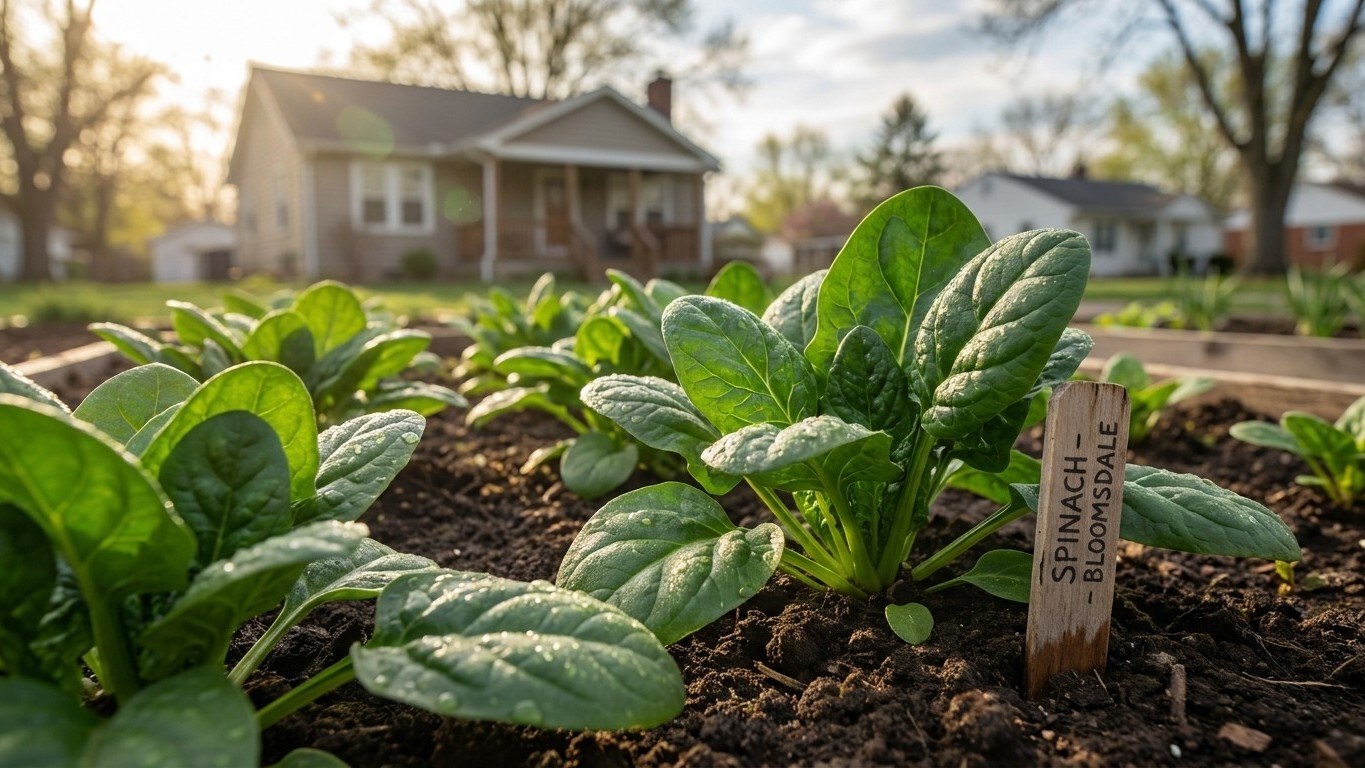

Spinach bolts in Georgia because of two forces working together: the long summer daylight hours that trigger flowering in this crop, and heat that pushes right past the temperature this plant tolerates. The spring window closes fast, typically within six to eight weeks of sowing, and the fall crop only works if you time it around soil that’s finally cooled down and a frost that hasn’t yet arrived.
The short answer
Atlanta gets 14 hours and 14 minutes of daylight on the longest day of the year. That number matters more than most gardeners realize, because spinach flowers, or bolts, in response to long days as well as warm temperatures. A cool summer wouldn’t change that calculus here. Even if a given June happened to run mild, the daylight itself would still be long enough to push the plant toward seed. Will Spinach Bolt Early in Georgia? Georgia doesn’t get a break on that front the way a shorter-day climate might.
But daylight is only half of what’s working against spinach in this state. Georgia also runs hot, averaging 35.8 days a year at or above 90 degrees. Spinach grows best where temperatures stay under 75 degrees, and that ceiling isn’t just a comfort threshold, it’s also roughly where the leaves start turning bitter. So in Georgia, the limiting factor isn’t day length alone and it isn’t heat alone. It’s both, arriving at almost the same time each year and closing the door from two directions at once.
That’s the practical reality anyone growing spinach here needs to accept early. In a lot of northern states, gardeners can sometimes stretch a spinach crop later into early summer because the heat hasn’t arrived yet, even though the days have gotten long. Georgia doesn’t offer that grace period. By the time day length alone would start pushing spinach toward bolting, the thermometer is usually already climbing past the 75-degree growth ceiling too. The two triggers stack instead of trading off, which is why spinach here has a narrower true growing season than the calendar might suggest.
None of this means spinach can’t be grown well in Georgia. It means the timing has to be tighter and the expectations have to be realistic. Spinach is a crop of the shoulder seasons here, not a summer crop, and not really a long-season spring crop either. Growers who treat it as a quick, cool-weather crop and plan two separate short windows, one in late winter into early spring and another in When to Sow Autumn Spinach in Georgia, tend to do far better than those who try to stretch a single planting across the season. The rest of this guide breaks down exactly how long each of those windows actually runs.
How long the spring window really is
- Start with the frost data. The last spring frost at the reference station, which sits near Atlanta, falls somewhere between March 11 and March 29 in a typical year. Spinach seed should generally go into the ground 2 to 3 weeks before that date, which puts a realistic sowing window somewhere in the range of late February through mid-March, depending on how far north or south of Atlanta a garden sits.
- Factor in that this window opens earlier in the warmer parts of the state, such as the coastal plain, and later in north Georgia and the mountains, where frost tends to linger. A gardener near the Georgia coast might be comfortable sowing in mid-to-late February, while someone in the mountains may need to wait closer to mid-March.
- Now account for how fast the season turns. Spinach grows best under 75 degrees, and Georgia’s spring doesn’t stay cool for long. Day length is also climbing steadily toward that 14-hour-14-minute peak through April and May, adding bolting pressure on top of the rising heat.
- Put those two pressures together and the usable spring window for spinach in Georgia works out to something in the neighborhood of six weeks, maybe stretching to eight in a mild, late-warming year. That’s the stretch between when the soil is finally workable and frost risk has passed, and when the combination of heat and long days makes the plant bolt or turn bitter.
- Treat that window as the target, not a guarantee. A late cold snap can delay sowing, and an early warm spell can shorten the harvest end of things. Either way, spring spinach in Georgia is a short, defined sprint rather than a long, relaxed season.
The autumn crop, and when the soil lets you sow
Fall spinach in Georgia has to thread a needle between two separate obstacles, one on each end of the calendar. Get either one wrong and the crop either won’t germinate or won’t have time to grow before frost shuts things down.
Soil that’s still too warm
The first obstacle shows up before you even plant. Spinach seed germination drops off once soil temperatures climb above 80 degrees, and Georgia soil holds onto summer heat well into what feels, on the calendar, like autumn. With an average of 35.8 days a year hitting 90 degrees or higher, much of it concentrated in the peak of summer, the ground itself stays warm for weeks after the air has started to feel like fall is coming. Sowing too early, while the soil is still baked from summer, means seed that simply won’t sprout reliably. The practical fix is patience: wait until soil temperatures have actually dropped, which in most of Georgia doesn’t happen until well into September, and check the ground rather than the thermometer reading for air temperature alone.
The frost that ends the season
The other obstacle sits at the far end of the calendar. The first fall frost at the reference station arrives somewhere between November 13 and December 1, though north Georgia and the mountains typically see frost several weeks earlier than that, and the coastal plain runs later and milder. Since the source for spinach growing data doesn’t publish a fixed days-to-maturity number for this crop, the practical guidance is to count back 50 to 75 days from whatever harvest date is realistic given local frost timing. If a Georgia gardener is targeting a harvest around mid-November, before frost risk becomes serious, that means sowing somewhere between late August and early October, with the exact date depending on how quickly the soil has actually cooled below that 80-degree germination threshold.
Put both obstacles together and the practical fall window in most of Georgia lands in September, sometimes stretching into early October in the warmer parts of the state. It’s a tighter window than many gardeners expect, but it’s also more forgiving than spring, since the crop is moving toward cooler weather and shorter days instead of racing against both heat and daylight at once. Several named spinach varieties, including Bloomsdale, Melody, Teton, and Olympia, are commonly grown for these shoulder-season plantings, though no maturity data or performance comparison for these specific varieties is published in the source used here.
Checking this against your own county
The frost dates and daylight figures in this guide come from a single reference station near Atlanta, and Georgia is too large and too climatically varied for one station to speak for the whole state. North Georgia and the mountains freeze several weeks earlier in fall and later in spring than the reference dates here. The coastal plain runs milder in both directions, often allowing a longer working season on both ends.
Before locking in a sowing date, it’s worth checking those local specifics against UGA Cooperative Extension, which maintains county-level offices across the state. A local extension agent can confirm frost timing and soil conditions specific to your area, which matters more for a crop with a window this tight than it would for something more forgiving.
Common questions
Can spinach survive a light frost in Georgia?
Spinach tolerates cold reasonably well once established, and the concern in this guide is less about frost damage to the plant and more about timing the crop so it matures before the frost date arrives, or after soil has warmed enough in spring for germination.
Why does my spinach bolt even when the weather still feels mild?
Bolting in spinach is triggered by long daylight hours in addition to heat. Even in a spell of mild weather, if the days have grown long enough, the plant can still flower and go to seed, which is part of why a cool summer doesn’t buy Georgia gardeners extra time.
Is fall or spring the better season for spinach in Georgia?
The fall window tends to be more forgiving, since the crop is heading into cooler weather and shorter days rather than racing against rising heat and lengthening daylight, though it requires more patience waiting for soil to cool below 80 degrees before sowing.
Does shade help extend the spinach season in Georgia?
This guide’s source material doesn’t provide data on shade’s effect on bolting timing for spinach, so no specific claim about shade extending the harvest window can be made here based on the available information.