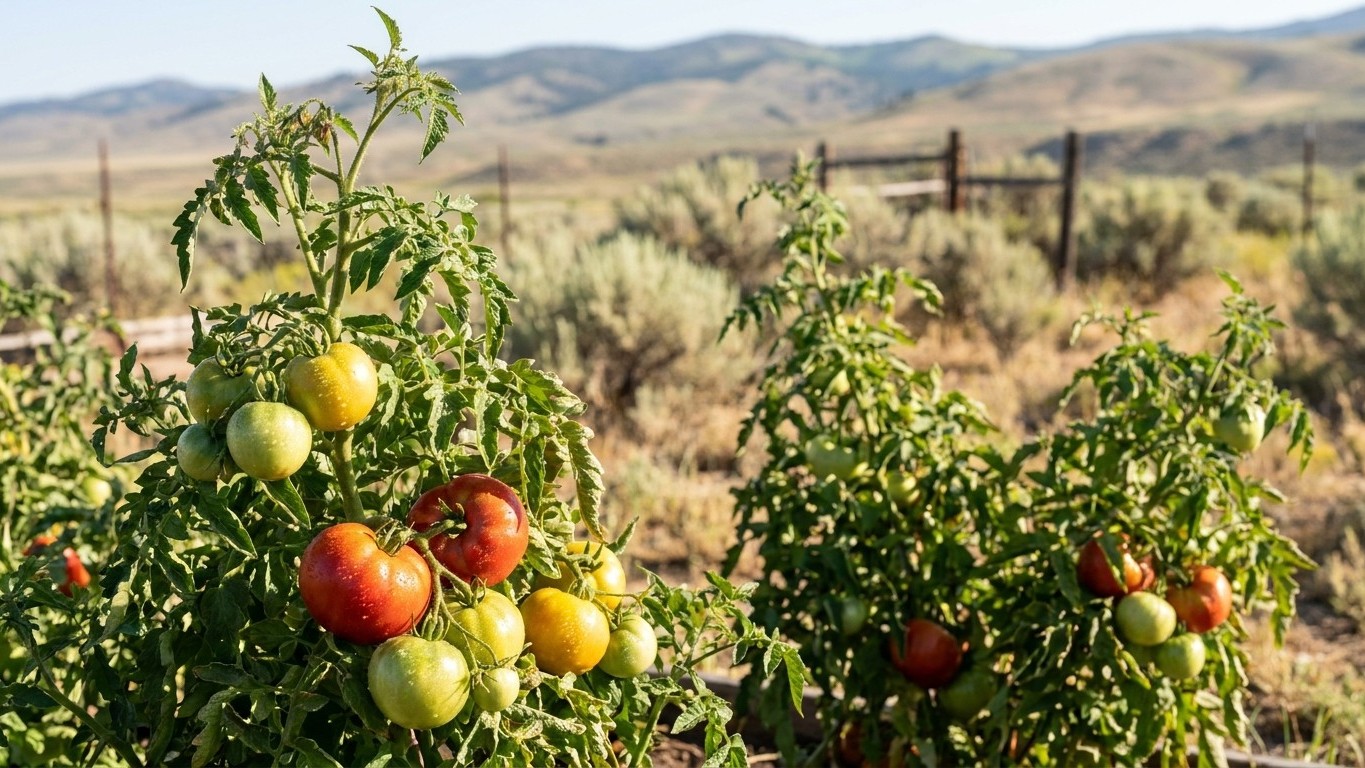

Georgia gardeners pick tomatoes based on color break, not size, and the real deadline each year is the first fall frost. In the Atlanta area that window runs November 13 to December 1 (NOAA NCEI, station USW00013874), but north Georgia and the mountains freeze weeks earlier, while the coastal plain stays milder. Anything still green when that frost lands has to come indoors to finish.
When to Pick Tomatoes in Georgia
A tomato doesn’t need direct sun to finish ripening. It needs warmth and ethylene, a gas the fruit produces itself once it hits a stage called “breaker,” when the blossom end shows the first hint of white, yellow, or pink against the green skin. Past that point, the vine is optional. That’s the mechanism that matters more than any calendar date: once a fruit breaks, picking it early costs almost nothing in flavor, and leaving it on the vine gains almost nothing once nights turn cold.
Ripening on the vine slows sharply once nighttime temperatures settle into the 50s, and it stops functionally once frost is forecast. That’s why the real trigger for a full-plant harvest in Georgia is the first fall frost window, not the calendar month. For the Atlanta metro area, that’s November 13 to December 1, based on NOAA’s 1991-2020 Climate Normals. But that figure comes from an urban airport station, and airports run warmer than the surrounding countryside. Gardeners in the mountains of north Georgia should expect frost several weeks ahead of that Atlanta window, and gardeners on the coastal plain often get several extra weeks past it.
The USDA Plant Hardiness Zone Map puts the whole state somewhere between 6a and 9b, a range wide enough to span a full growing season’s difference from Rabun County to the barrier islands. That range isn’t a single answer, and using it for a picking date only works if you name the reference point. Atlanta sits in the middle of that range; if your garden is in the mountains or on the coast, treat the Atlanta frost window as a starting reference, not your actual deadline.
| Region | Fall frost timing vs. Atlanta | What that means for harvest |
|---|---|---|
| North Georgia / mountains | Several weeks earlier | Plan the full harvest and plant-pull ahead of the Atlanta window |
| Atlanta / Piedmont | Reference window: Nov 13 to Dec 1 | Watch frost forecasts closely from early November on |
| Coastal Plain | Milder, often later | Vine ripening can continue past early December in most years |
Practically, that means checking the whole plant the moment a frost warning is issued for your county, not waiting for a hard freeze. Strip every fruit showing any color break, and decide separately what to do with the ones that are still fully green, since those need a different plan entirely.
What to do with the green ones
Not every green tomato is the same tomato. A mature green fruit is full-sized, has a glossy (not dull) skin, and has stopped growing, even though it hasn’t started to color yet. An immature green fruit is small, often matte or fuzzy-looking, and simply won’t ripen properly no matter how long you wait, because the seeds inside haven’t finished developing.
There’s a simple test if you’re unsure: cut one open. A mature green tomato has jelly-like gel surrounding fully formed seeds, and the seeds slide loose from the surrounding flesh rather than staying fused to it. An immature one has flat, underdeveloped seeds still attached to the inner wall, and cutting into it feels dense and dry rather than gelled. Immature fruit is better used right away, sliced and cooked, than saved for ripening it will never complete.
The whole-plant pull
When a hard freeze is close and dozens of green tomatoes are still on the vine, pulling the entire plant is often more efficient than picking fruit one at a time. Pull the plant by the roots, shake off loose soil, and hang it upside down somewhere sheltered and unheated, a garage, a covered porch, a shed. The stem and leaves hold enough stored sugar and moisture to keep feeding the fruit for days to weeks, and tomatoes ripen in sequence rather than all at once, which spreads out the harvest instead of dumping it on you all in one week.
Sort what you pick by size and by how close each fruit is to breaking. Fruit that’s already showing color goes in one group for quick indoor ripening; fully green, mature fruit goes in a second group for the longer wait. Don’t wash tomatoes before storing them either way. Extra moisture on the skin speeds up rot far more than it helps anything, so a dry wipe is plenty if they’re dusty from the garden.
Ripening indoors, and how long they keep
The fastest reliable method is a paper bag with a banana or apple tucked in alongside the tomatoes. Both fruits give off ethylene, the same ripening gas the tomato produces on its own, and trapping it in a closed bag concentrates the signal. Set the bag somewhere at room temperature, roughly 65 to 75 degrees, out of direct sun, and check it daily.
Direct sunlight on a windowsill is the wrong instinct here, even though it feels intuitive. Sun-ripening is a myth in the sense that matters: it’s heat and ethylene doing the work, not light. A sunny windowsill can overheat the fruit, causing it to soften and go mealy before it ever turns fully red, and uneven heating produces uneven color. A shaded countertop or the top of a cabinet does the job better.
Refrigeration is the opposite mistake, and it’s the one that ruins the most tomatoes every fall. Cold storage below roughly 55 degrees halts the ripening process outright and causes chilling injury, a breakdown of the cell walls that leaves the fruit mealy and flavorless even after it eventually reddens. If a tomato hasn’t finished ripening, the refrigerator is the last place it belongs.
Ripening indoors at room temperature typically spreads out over days to a few weeks, depending on the size of the fruit and how close it already was to breaking when picked. Smaller fruit and anything already showing color moves faster; large, fully green beefsteak-type tomatoes take the longest. Check the bag daily and pull each tomato out as soon as it colors, since leaving a ripe one in with green ones risks it going soft or moldy before you get to it. Once a tomato is fully ripe, treat it like any fresh tomato: room temperature, used within a few days, never refrigerated if flavor matters more than a few extra days of shelf life.
What goes wrong here
The single most common mistake is putting green tomatoes in the refrigerator “to save them.” It doesn’t save anything. It stops the ripening process cold and locks in a mealy texture that never fully recovers, even once the fruit is moved back to room temperature and finishes turning red.
A close second is picking immature fruit and expecting it to ripen like a mature green one. Small, dull-skinned tomatoes with underdeveloped seeds tend to shrivel rather than color, because the internal development that triggers ripening never got far enough along on the vine. Those are better used green, fried or pickled, than wasted waiting on a windowsill.
Windowsill ripening in direct sun causes its own damage: the fruit can overheat, softening on the sunny side well before the color catches up, which produces an unevenly ripe tomato that’s soft on one end and still green on the other.
Waiting too long outdoors is the seasonal version of the same error. Once frost actually touches a tomato, the cell walls rupture and the fruit turns soft and water-soaked, whether it’s green or ripe. That fruit won’t ripen further indoors, and it needs to be used or discarded immediately rather than added to a ripening bag, since it will just rot and take neighboring fruit down with it.
Finally, gardeners in the mountains sometimes plan around Atlanta’s frost window without adjusting for their own elevation, and end up caught by a freeze that arrives weeks before they expected it. The Atlanta figure is a reference point tied to one station, not a statewide guarantee.
Common questions
Can frost-touched green tomatoes still ripen?
Once frost actually damages the fruit, the flesh breaks down and turns soft and water-soaked. That fruit won’t ripen properly and should be used or discarded right away rather than saved in a ripening bag.
What temperature ripens tomatoes fastest indoors?
Room temperature, roughly 65 to 75 degrees, works best. Colder conditions slow ripening dramatically, and refrigeration below about 55 degrees stops it entirely while damaging texture.
Should I pick tomatoes before a light frost or wait?
Pick anything showing color break as soon as a frost warning is issued for your area. Fully green fruit can be pulled with the whole plant and hung to finish ripening indoors rather than risking frost damage on the vine.
Does the difference between zone 6a and zone 9b change when I should pick?
Yes. The USDA hardiness range for Georgia spans 6a to 9b statewide, and that range reflects real differences in when frost arrives. A garden in the cooler part of that range needs to plan its harvest well ahead of a reference date like Atlanta’s, while a garden in the milder part often has extra weeks to spare. For guidance specific to your county, Georgia’s UGA Extension office is the resource built for that.