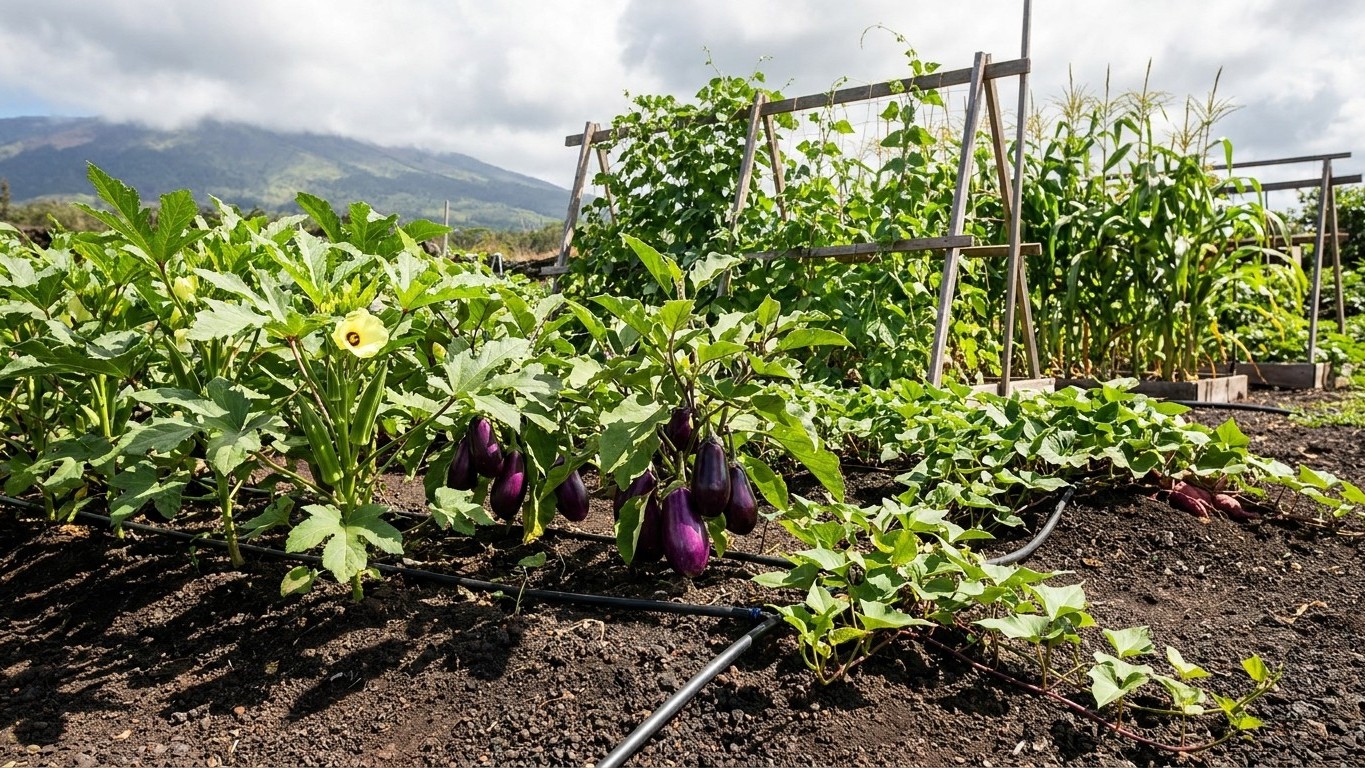

July in Hawaii isn’t ruled by a planting calendar tied to frost dates, because lowland Hawaii doesn’t have a frost season at all. What decides your July garden is elevation, rainfall pattern and whether you’re on the windward (wet) or leeward (dry) side of your island. Heat-loving crops go in almost everywhere; the real variable is how much water you’ll need to give them.
What goes in the ground in July

Most of Hawaii sits in USDA hardiness zones 9a through 13a, a range built entirely around average extreme minimum winter temperature, a number that barely moves in the islands and doesn’t drive your July decisions the way it would in a mainland garden. What actually decides whether a crop makes it this month is soil moisture and sun exposure, not a freeze risk that essentially doesn’t exist at garden elevations.
July sits deep in the dry season for leeward coasts (think West Hawaii Island, South Maui, Leeward Oahu), where irrigation becomes the deciding factor for anything you plant. On these dry sides, sweet potato, taro slips into wet patches or irrigated beds, dry-farmed beans, okra, eggplant, peppers and heat-tolerant tomato varieties all go in reliably if you can keep water flowing. Sweet corn and pole beans do well started direct in warm soil, since soil temperature is never the limiting factor here the way it is on the mainland.
Windward and higher-elevation gardens change the equation. At elevation, places like Kula on Maui or Volcano on Hawaii Island, July days run noticeably cooler, and that opens the door to crops that sulk in lowland heat: lettuce, brassicas, peas and salad greens can go in the ground with some afternoon shade. Below is a rough guide to how the same month plays out across exposures.
| Zone type | July conditions | Safe direct-sow or transplant |
|---|---|---|
| Leeward lowland (dry) | Hot, low rainfall, irrigation-dependent | Sweet potato, taro, corn, beans, okra, peppers, melons |
| Windward lowland (wet) | Warm, humid, frequent rain | Taro, banana, ginger, ti, tropical greens |
| Upland/elevation (cool) | Cooler days, drier air | Lettuce, brassicas, peas, herbs, strawberries |
Skip anything that needs a genuine cold spell to set fruit, garlic bulbing and most northern apple varieties simply won’t perform here regardless of the month.
What to start under cover
Without a frost window to count backward from, timing seed starts in Hawaii means counting backward from two other deadlines: the point where midday heat gets punishing for tender seedlings, and the shift into the wetter months that typically arrives around October in many areas. Starting seeds under 30 to 50 percent shade cloth for four to six weeks before transplanting gives young plants a buffer against transplant shock in full sun.
Brassicas and lettuce destined for upland gardens do best started under shade now, so they’re ready to move into cooler beds while July’s milder elevation temperatures still hold. Tomatoes and peppers for leeward lowland beds benefit from the same shaded start, since transplanting straight into unfiltered July sun stresses the roots before they’ve established.
The two failure modes here look different from a mainland garden but land the same way. Start too early under cover and seedlings get leggy and rootbound in cell packs while you wait for bed space or cooler afternoons. Start too late and young plants go into the ground right as the hottest, driest stretch of summer peaks, meaning they never get a mild window to establish before real heat stress sets in. Aim for seedlings with at least two true leaves and a firm stem before they leave shade cloth for open beds.
Herbs like basil, cilantro substitutes suited to heat (culantro does better than cilantro in lowland warmth), and green onions all start easily under light cover this month and transplant within three to four weeks.
What is ready to pick
July lands in the middle of harvest season for a wide range of Hawaii staples. Papaya bears more or less continuously where trees are established, and banana bunches planted months earlier are often filling out and ready to bag against fruit flies. Mango season varies by variety and elevation but many trees are dropping ripe fruit through midsummer.
Sweet corn planted in spring is coming ready now, with the tell being tight, dry-looking silks turning brown and kernels that spurt milky liquid when pierced with a thumbnail. Beans and okra planted earlier in the season are producing steadily, and picking every two to three days keeps plants setting new pods instead of bolting to seed.
Taro planted nine to twelve months earlier may be nearing harvest depending on variety, checked by gently probing soil at the base of mature plants for corm size. Sweet potato vines that have been growing since spring are often ready for a test dig, pulling one plant to check tuber size before committing to harvesting the whole bed.
For stored crops, onions and any winter squash held from an earlier harvest should get a check for soft spots or sprouting in the neck, humidity and heat in storage sheds move rot along faster here than in drier mainland climates.
The jobs that matter this month
Watering rhythm is the single job that carries the most weight in a Hawaii July, especially on leeward and lowland sides. Deep, less-frequent watering that soaks the root zone beats a light daily sprinkle, which mostly evaporates before it does any good in full sun. Mulching around root crops and vine crops right now holds that moisture and keeps soil temperature down, cutting how often you need to run irrigation.
Staking and trellising can’t wait once vining crops like beans, squash and melons start putting on growth, because Hawaii’s warm nights push vine growth fast and a sprawling, tangled bed becomes a pest and disease trap. Get supports in place before plants need them, not after.
Pest scouting matters more in July than almost any other month, since warmth and humidity favor fruit flies, armyworms and slugs simultaneously. Bagging young fruit on papaya, mango and citrus protects against fruit fly damage, and a quick evening check with a flashlight catches slugs and caterpillars before they strip a bed.
Succession sowing beans, corn and salad greens (in shaded upland beds) every two to three weeks keeps harvests coming instead of hitting one big glut followed by a gap. July also falls within the Central Pacific hurricane season, which runs from June through November, so checking that trellises, shade structures and drainage can handle a heavy rain event is worth doing before a storm forces the issue. Composting garden waste and turning existing piles keeps them from drying out and stalling in summer heat.
What not to do in July
The most common mistake is treating “warm” as the only variable and ignoring water. Planting a bed of thirsty greens or brassicas on the leeward side without a clear irrigation plan sets them up to bolt or die back within days, since July heat there strips soil moisture fast.
Another frequent error is moving shade-grown seedlings straight into unfiltered midday sun without hardening them off first. A few days of morning-only sun exposure before a full transplant prevents scorched leaves and stunted roots. Skipping this step because “it’s already hot everywhere anyway” is a costly shortcut.
Fertilizing heavily right as fruiting crops like tomatoes, peppers and beans are setting fruit can backfire, pushing leafy growth instead of fruit set if the mix is nitrogen-heavy. A lower-nitrogen, higher-phosphorus feed timed to flowering serves these crops better than a general all-purpose dose applied on a fixed schedule.
Finally, don’t assume every part of your island behaves the same way this month. Planting a crop that needs cool nights, like some lettuce varieties, in a hot lowland yard because it worked at a friend’s upland garden ignores the elevation difference that actually made it possible there.
Checking this against your own county
A statewide picture of July is a starting point, not a set of instructions for your specific yard. Elevation, windward versus leeward exposure and even which side of a single island you’re on can shift what’s realistic by weeks, sometimes by whole growing strategies. A garden in Hilo and a garden in Kailua-Kona sit in very different rainfall worlds despite being on the same island.
For county-level guidance tuned to your actual conditions, the University of Hawaii’s College of Tropical Agriculture and Human Resources extension service is the resource to check: https://www.ctahr.hawaii.edu/site/extension.aspx.
Common questions
Does Hawaii ever get frost that affects gardens?
No, not at inhabited elevations. Frost only occurs on the summits of Mauna Kea, Mauna Loa and Haleakala, well above where anyone gardens. Lowland and even most upland Hawaii gardens never see freezing temperatures.
What’s the biggest planting mistake people make in Hawaii in July?
Underestimating water needs on the leeward, dry side. Heat alone doesn’t kill a July planting nearly as often as inconsistent or insufficient irrigation does.
Can I grow cool-season vegetables like lettuce in Hawaii in July?
Yes, but generally only at elevation, where cooler upland temperatures mimic the conditions those crops need. At sea level in full summer heat, most lettuce and brassicas bolt or struggle.
Is July a good time to plant fruit trees in Hawaii?
It can work if you can commit to regular watering while roots establish, since there’s no dormant season forcing a wait. The bigger consideration is your rainfall zone and whether you’ll need to irrigate a young tree through the driest stretch of summer.