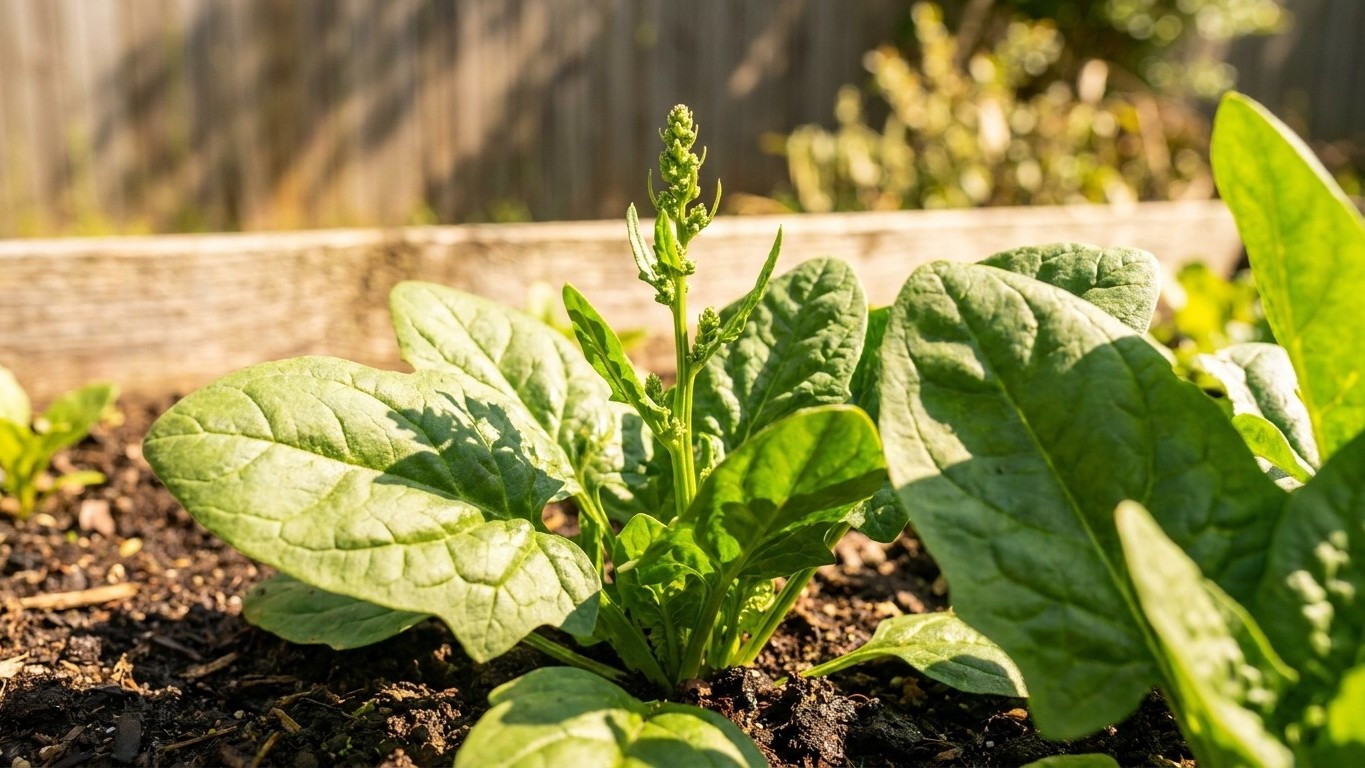

Cut spinach when the outer leaves are full-sized and the center is still a low, leafy rosette with no stalk rising. In lowland Hawaii that points to a cool-season crop, because frost never arrives and heat sets the deadline. After cutting, spinach keeps about two weeks at the very most, and only at 32°F. A home fridge gives it far less.
When spinach is ready in Hawaii
Cut spinach when the rosette carries a full set of palm-sized leaves and the center still sits flat and leafy, before any stalk climbs. In the lowlands the usual window runs from late fall into early spring. For a fall crop, plant so the plants reach harvest size before the weather turns. Spinach is sown directly in the ground, so those days count from sowing.
Why a frost calendar doesn’t work here
Most spinach advice starts with the last spring frost, and Hawaii has none to offer. At the Honolulu reference station, NOAA NCEI’s 1991-2020 climate normals show zero days per year at or below 32°F. Frost shows up only on the high summits of Mauna Kea, Mauna Loa and Haleakala, never where people garden. Timing here follows rainfall, elevation and whether your plot sits on the windward or leeward side.
Heat is the clock you can actually read. Spinach grows best where temperatures stay at or below 75°F, according to Utah State University Extension, and that same number is where the leaves start turning bitter. Honolulu reaches 90°F or more on average 18.7 days a year. Since 75°F is so much lower than 90°F, spinach passes its comfort limit on far more days than those 18.7.
Day length adds a second push. Spinach bolts in long days as well as in warm weather, so a cool spell does not fully protect it when days are long. Honolulu’s longest day runs 13 h 18, shorter than on the northern mainland. At low elevation, then, warmth does most of the damage, and it is why Will Spinach Bolt Early in Hawaii? is worth reading before you pick a sowing month.
How do you know the soil is cool enough to sow?
Spinach seed germinates poorly in soil above 80°F. In a warm region the autumn sowing is held back by warm soil, not by cold, and the window opens once the ground cools. A soil thermometer at seed depth, read in the morning, settles the question better than any calendar. Higher, cooler elevations open the window sooner and keep it open longer, and your local extension office can tell you how your slope compares.
Your local county or provincial extension office can suggest varieties suited to your area. Check each seed packet for its own timing.
Three signs say it’s time to cut:
- The outer leaves are broad enough to cook or toss in a salad.
- The center is still low and tightly packed, with no central stalk.
- Daytime highs are about to climb past 75°F, so waiting only risks bitter leaves.
Pick outer leaves and leave the growing center if you want a second cutting. If the plant is already stretching, cut the whole rosette at the base. Chewed leaves can also force your hand, and What Eats Spinach in Hawaii, and When explains who is likely behind it.
Keeping it, and for how long
The UC Davis Postharvest Technology Center puts spinach’s optimum storage temperature at 0°C, which is 32°F, with relative humidity of 95-98%. Its Produce Facts Sheet also says spinach is highly perishable and will not maintain good quality for more than 2 weeks. That is a ceiling reached only under ideal conditions. It is not a shelf life you can count on in a kitchen.
The same sheet says wilting, yellowing of leaves and decay are likely to increase after 10 to 14 days of storage. They come faster at the 5 to 10°C (41 to 50°F) common in distribution. That range matters at home, because it is also about what a refrigerator door holds. Leaves stored there yellow in days.
| Storage condition | Temperature | What the UC Davis sheet says |
|---|---|---|
| Optimum | 32°F, 95-98% relative humidity | Good quality for no more than 2 weeks |
| Beyond 10-14 days | 32°F | Wilting, yellowing and decay likely to increase |
| Common distribution conditions | 41 to 50°F | Decline comes faster |
Two things follow for a Hawaii garden. First, the clock starts at cutting, so harvest in the cool morning and get the leaves indoors quickly. Warm leaves carried through a hot yard begin the decline before they reach the fridge. Second, humidity is half the formula. At 95-98% the air around the leaves is almost saturated. Cold, dry air pulls moisture out of them, and they wilt even when the temperature is right.
Treat two weeks as the outer edge and plan to eat the spinach well before then. A bunch that is already a few days old when it reaches your counter has used up part of its time. Plan meals around that clock. Cook the older leaves first, and use the freshest for salads.
Where in the house that actually is
A domestic fridge runs warmer than 32°F, and its door runs warmer still, in the 41 to 50°F range that makes spinach yellow within days. The spot closest to the optimum is the back of the bottom shelf, away from the door and away from the light. Cold air settles low and the back gets the least warm air each time the door opens.
That shelf will not reach 95-98% humidity unaided, so you build it. Put the leaves in a bag. A loosely closed plastic bag traps the moisture the leaves give off. Add a damp paper towel or a damp cloth wrap, which keeps the air around the leaves wet without leaving them sitting in water. If you cut a whole rosette with the stems attached, stand the cut ends in a little water and cover the leaves with a bag.
The back of the bottom shelf, in a bag with a damp wrap, is the one move that matters. Skip it and the door’s warmth cuts the keeping time to days, long before the 10 to 14 days at which the UC Davis sheet says yellowing and decay start to rise. Garden spinach is cut fresh and carries no store-bought head start, so it deserves the best spot you have.
Check the bag every couple of days. Replace a wrap that has dried out, and drain any pooled water, since a puddle at the bottom of the bag brings decay. If a few leaves have gone limp but are still green, a quick cold-water soak can bring them back for cooking. Yellow leaves will not recover, and slimy leaves belong in the compost.
If you are gardening for the whole season, Growing Spinach in Hawaii covers the rest of the crop, from sowing through harvest.
Common questions
Can I cut the same spinach plant more than once?
Yes, as long as the center keeps producing leaves. Take the outer leaves and leave the growing center alone. Once a stalk rises or the leaves turn bitter, usually after warm weather arrives, the plant is finished and a whole-plant cut is the better move.
How long does cut spinach keep in the refrigerator?
The UC Davis Postharvest Technology Center says spinach will not maintain good quality for more than 2 weeks, and that is at 32°F and 95-98% humidity. A home fridge runs warmer, so expect less. Wilting, yellowing and decay tend to increase after 10 to 14 days even in good conditions.
Can I grow spinach through a lowland Hawaii summer?
It is a struggle. Spinach grows best at 75°F or below, bolts in long days and warm temperatures, and germinates poorly in soil above 80°F. Cooler, higher-elevation gardens do better, and in the lowlands the cool months are the safer bet.
Does spinach need frost to taste sweet?
Hawaii’s lowlands never get one, so the question doesn’t apply. What matters for flavor here is staying under the 75°F threshold where leaves turn bitter. Cut early in the day, keep the plants watered, and harvest before heat arrives.