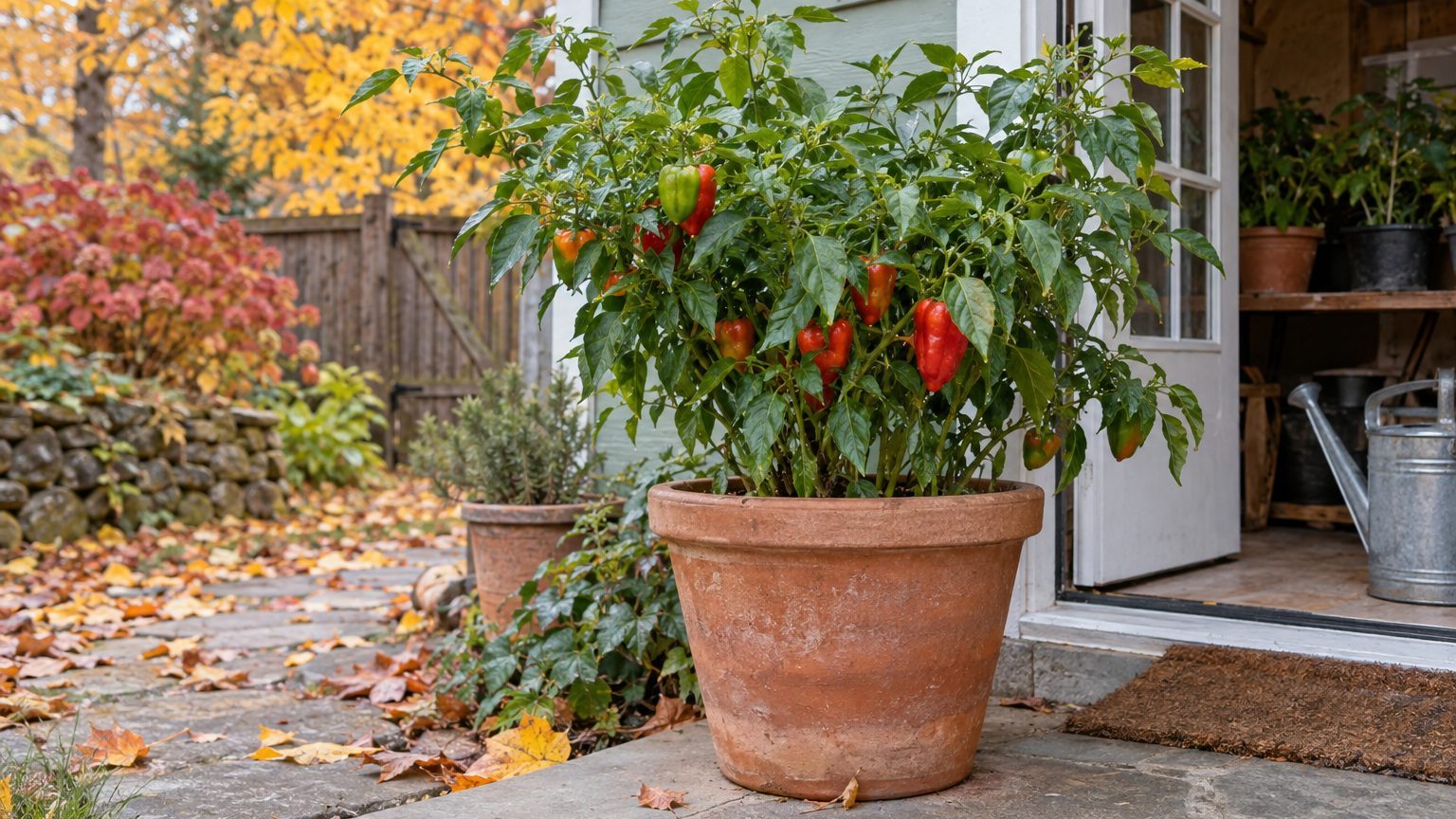

Your pepper plant, still heavy with fruit while the nights cool, does not have to end up on the compost pile. Cut it back, lift it, pot it in fresh soil and bring it indoors before frost, and it can carry over to next season. Decide now whether you want a resting plant or one that keeps trying to fruit, because that choice sets where the pot lives. Today, look up your first frost date and set aside a clean pot and a bag of fresh potting soil.
A pepper is a perennial that frost kills

The University of Maryland Extension describes the pepper as a “warm-season perennial, grown as an annual plant in Maryland.” That is the whole reason overwintering works. The plant is not built to be thrown away each fall. Gardeners treat it that way because frost ends it outdoors. A plant you bring in ahead of frost can be kept for next season. If you are new to the crop, the page on growing peppers covers how it behaves in a normal season.
The steps below come from a Colorado Master Gardener (Denver County) answer on Ask Extension about overwintering habanero peppers indoors. The question was about habaneros, so read the steps as the method for that plant. Do all of it before frost, and use the first frost dates by state to see how much time you have.
- Prune off all but three of the main branches before frost.
- Remove the plant from the ground or its pot.
- Replant it in a clean pot with fresh, unused potting soil.
What the pruning does
Cutting back to three main branches leaves a plant you can carry through a doorway and fit on a windowsill or shelf. It also removes most of the foliage the roots would otherwise have to feed in a pot, in a room with less light than the garden gave it. Pick any ripe fruit first, then cut. The cut itself is the one step you cannot undo, so make it only when you are sure you are bringing the plant inside.
Why the pot and soil matter
The Colorado answer calls for a clean pot and fresh, unused potting soil. Garden soil and last season’s potting mix are what you leave behind. A plant lifted from the ground goes into a pot sized to its root ball, not to the old canopy. Wash a reused pot before you fill it. That one habit keeps whatever lived in last year’s soil from riding along into the house.
Treat for pests before it comes in
Anything you carry indoors brings its hitchhikers with it. The University of Maryland Extension advises that, before moving plants indoors, you treat them with a houseplant insecticide such as a horticultural oil labeled for houseplants or insecticidal soap, to reduce the chance of pests. Note the wording. The goal is to reduce the chance, not to guarantee a clean plant.
Choose a product that is labeled for houseplants, and follow the label on how to mix it, where to spray and how often. The label also tells you which plants it is safe on. Do the treatment while the plant is still outside, so any spray and runoff stay out of your living room.
The Colorado and Michigan answers do not cover pests, so the Maryland guidance is the one to follow. If you are bringing in more than peppers, the page on when to bring houseplants inside covers the timing and the acclimating that go with it.
Cool and dry, or warm and lit
Once the plant is indoors you have two routes. They serve different goals and use different sources, so do not blend their numbers into one set of conditions.
| Route | What the source says | Source |
|---|---|---|
| Resting plant | Try to maintain temperature between 50 and 60 if possible. Water infrequently to keep it from becoming bone dry. | Colorado Master Gardener (Denver County), Ask Extension |
| Plant you want fruit from | Nighttime temps greater than 50°F and daytime temps around 70°F. Artificial lighting will be required. Do not over fertilize or over water. | Ask Extension (Washtenaw County, Michigan) |
The resting plant
The Colorado Master Gardener answer asks you to try to keep the temperature between 50 and 60 “if possible.” The source does not state the unit. Since the Washtenaw County answer gives its figures in °F, a cool room is the reasonable reading, but check with your county extension office if you want certainty. If you are in Canada, check local guidance too, because indoor and frost conditions differ.
The watering instruction is just as plain. Water infrequently, and keep the plant from becoming bone dry. The source gives no schedule. Judge by the soil in the pot, and lean toward less rather than more.
The plant you want fruit from
The Washtenaw County answer on Ask Extension says that if you are going to try for fruit, the plant needs warmth: nighttime temps greater than 50°F and daytime temps around 70°F. It also says artificial lighting will be required. The source gives no hours or light type, so check the manual of whatever grow light you buy. It adds that you should not over fertilize or over water.
That is a harder winter than the resting route, and the source frames fruit as something to “try” for, not something to expect. Plan on caring for the plant through the season and treat any fruit as a bonus.
Back outside
The University of Maryland Extension says to move plants back outdoors after the danger of frost has passed. Your own last-frost timing, or a local forecast you trust, sets that moment, not the calendar on the wall. A plant that has spent the winter indoors has had a very different life from one in the garden, so give it a few mild days outdoors before you commit it to the ground or leave the pot out overnight.
Harvest before you do any of the cutting. The page on harvesting and storing peppers covers how to pick the fruit you are about to lose and keep it afterward. If you are bringing in other tender plants as well, the guide on how to overwinter geraniums follows a similar routine.
Common questions
Can I leave my pepper plant in the ground over winter?
The Colorado and Washtenaw County answers treat it as a plant you lift and bring indoors. The Colorado answer says to remove it from the ground or its pot. The University of Maryland Extension says peppers are grown as annuals in Maryland, which is the point: frost ends the plant outdoors. Nothing here supports leaving it out.
Do I need a grow light for the cool route?
The Washtenaw County answer says artificial lighting will be required, and that is in the context of getting fruit. The Colorado answer for a resting plant does not mention lighting. If you are unsure how much light a resting plant needs, ask your county extension office.
How often should I water an overwintering pepper?
The sources give no schedule, so any number you find is not from them. The Colorado Master Gardener says to water infrequently and keep it from becoming bone dry. The Washtenaw County answer says not to over water. Feel the soil before you add any water.
Will it give me peppers all winter?
Not as a promise. The Washtenaw County answer says that if you are going to try to get fruit, the plant needs warm nights, warm days and artificial light. Even then it describes an attempt, not a guaranteed harvest. A resting plant is not trying to fruit at all.
Rules and recommendations change, so confirm current guidance with your state or county extension office before acting.