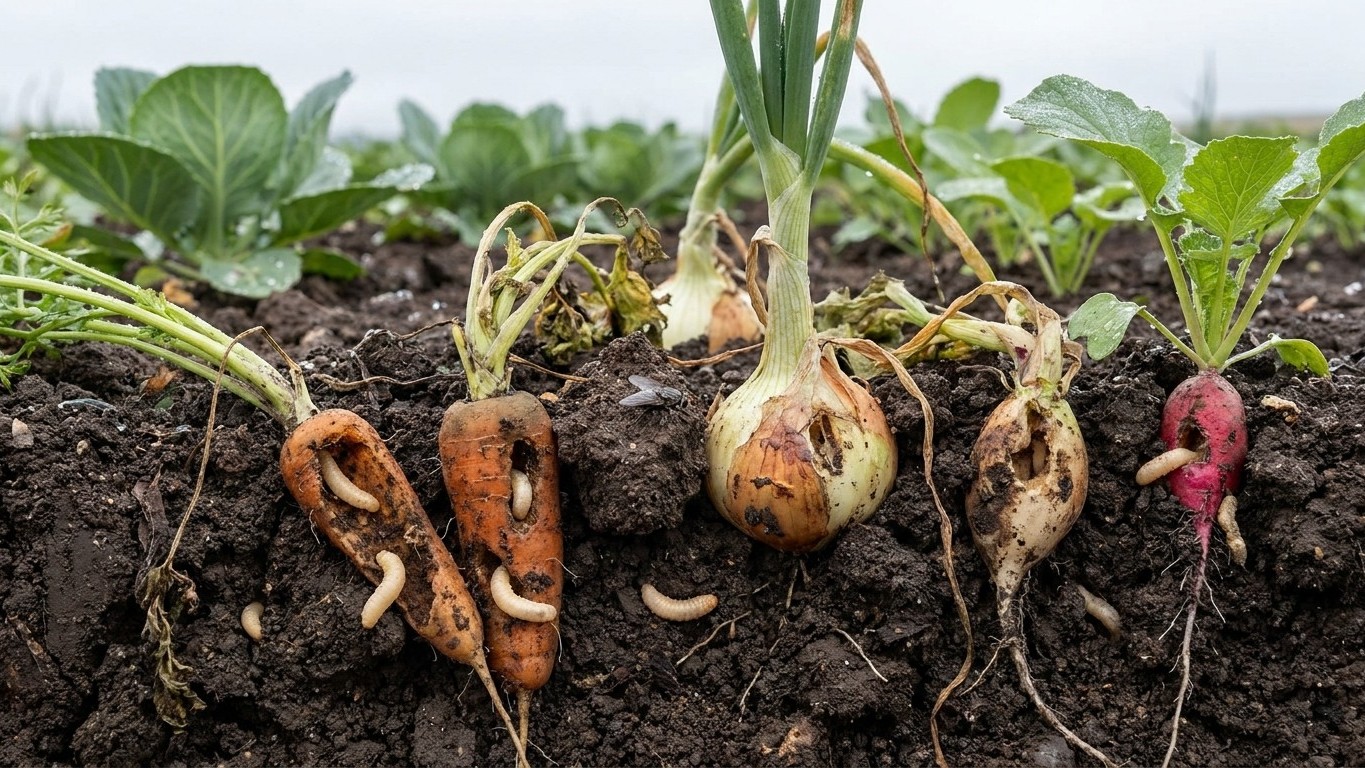

The best unusual roots for Idaho are the patient, cold-tolerant ones: parsnips, salsify, scorzonera, rutabaga, horseradish and Jerusalem artichoke. Heat-hungry roots like sweet potatoes and yacon are a gamble outside the warmest valleys. Idaho covers everything from low river valleys to short-season mountain basins, so this page picks by crop type and then shows how to adjust. For the wider picture, start with Growing Unusual Root Crops in Idaho.
The short answer for Idaho
The decision comes down to season length and summer heat. The only frost data this page has comes from the Boise station, a low valley, and it is the most generous climate in the state. There, the last spring frost falls between April 23 and May 7, and the first fall frost between October 7 and October 21. Those are NOAA NCEI 1991-2020 Climate Normals, specifically the 32F freeze probabilities in the 30-70% band. They are a probability of a freeze, not a calendar promise. A May 3 freeze in a “May 7” year is ordinary.
Counting from the late end of spring to the early end of fall gives 153 days between frosts. Counting from the early end of spring to the late end of fall gives 181. That is a decent window for Boise and a daydream for much of the rest of the state, where seasons are shorter and colder. Roots that need a long, warm run are the ones to question first.
| Type | Examples | Fit for Idaho | Why |
|---|---|---|---|
| Cold-tolerant, slow | Parsnip, salsify, scorzonera, horseradish | Strong choice statewide | Sweeten with cold, tolerate frost, and can be harvested after the first fall freeze |
| Cold-tolerant, quicker | Rutabaga, turnip, daikon-type radishes | Strong choice, including higher ground | Better suited to short seasons and cool nights than most roots |
| Hardy perennial tubers | Jerusalem artichoke | Strong choice, even in the colder zones | Spreads on its own and survives winter in the ground |
| Long-season, mild-leaning | Celeriac | Valleys only, and only with an early start | Needs a long, steady season and consistent moisture |
| Heat-demanding | Sweet potato, yacon, oca | Experimental, low valleys at best | Frost ends the season abruptly, and heat is needed to fatten the roots |
If you want exact sowing windows, When to Plant Unusual Roots in Idaho covers that in detail.
What will not work here
The first thing to fail is the tender, heat-loving group. A sweet potato vine dies at the first frost whether or not the roots have sized up, and in Boise that frost can arrive as early as October 7. Anywhere higher and colder, the margin shrinks to nothing. Yacon and oca have an even bigger problem: both want a long season that ends late, and the dates above give them 153 days at best on the valley floor.
Celeriac is the quieter failure. It is not a heat crop, but it is slow, and a slow crop sown after the last spring frost can run out of calendar before it fills out. In a valley, an early indoor start rescues it. In a short-season basin, expect a golf-ball-sized root where you hoped for a baseball. A beginner who buys a packet because the catalog photo looks impressive is the one who pays for this.
Watering habits are the other trap. Idaho’s valley gardens run on irrigation, and the page has no rainfall figure to quote, so I will not invent one. What matters is the pattern: a root crop that gets a good soak, then a long dry stretch, then another soak, splits and forks. Parsnips and salsify are especially prone to this, because their whole value is one clean, deep taproot. Weekly watering will not carry them through a hot, dry spell. Mulch and steadier moisture matter more than any variety name.
Sowing too early is the third failure, and the frost dates make it easy to see. At the early edge of the Boise window, April 23, a freeze is still more likely than not in many years. Slow-germinating seed such as parsnip can sit in cold ground for weeks, and a crusted surface after a hard rain can stop the seedlings entirely.
Winter itself is the one thing you do not need to fear. The Boise coldest-month mean daily minimum is 25.4 F. That is an average, not a record low, but it shows that hardy roots like parsnips and horseradish live comfortably through a typical valley winter. The roots that fail here fail because of the front end of the season, not the back.
What changes across Idaho
Idaho spans USDA Plant Hardiness Zones 3b to 7b in the 2023 map, which uses 1991-2020 normals. That is a huge range, and it means there is no single answer for the state. The zone system rests on one variable only, the average annual extreme minimum temperature, so it tells you about winter survival and says nothing about how long your growing season is. Two gardens in the same zone can have very different frost dates.
Boise sits near the milder end of that range and is the reference city for every dated figure on this page. Gardens in the northern panhandle, on the high plateaus of eastern Idaho, and in mountain valleys sit well outside it. For them, treat the Boise frost dates as a best case that your garden will probably not match. The page does not have frost data for those areas and will not borrow a neighbor’s.
If you garden in the north or at altitude, shift three things. Lean toward the quicker, hardier crops in the table, such as rutabaga, turnips and Jerusalem artichoke. Sow every slow crop as soon as the soil allows rather than waiting for a “safe” date. And protect early seedlings with row cover. Skip the heat group entirely, or grow it in containers you can bring inside.
Gardeners on the warmer valley floors have more room to experiment. Celeriac with an early start and a single trial row of sweet potatoes are reasonable bets. The USDA map lets you enter your ZIP code to see your own zone, so check it there rather than guessing from the state’s range. Then read the zone for what it is: a winter-survival number, not a season-length one.
Where to check this for your own county
A county recommendation beats a state one, and this page is the state one. The most useful next stop is University of Idaho Extension, the land-grant extension service, which has local offices and publications written for Idaho conditions.
When you get there, look for two things. First, a local planting calendar for your county, or the nearest one that matches your elevation, with frost dates specific to your area. Second, any variety trials run in your county or a similar climate. A parsnip that thrives in a trial plot at your elevation is worth more than a catalog’s general claim. Ask the county office directly if the website does not list root crops, since many extension programs focus on common vegetables and may not publish anything on salsify or scorzonera.
This page has no Idaho-specific extension calendar for unusual roots to cite, so it does not pretend to. What it has is the Boise frost normals and the statewide zone range. Use them to narrow your choices, then let your county’s local data make the final call on timing and variety.
Checking this against your own garden
Your own observations outrank every date above, and three of them need no equipment.
The first is soil warmth by feel. A hand pushed a few inches into the bed in the morning tells you a lot. If the soil still feels cold and damp, slow seed like parsnip will sit and rot. If it feels merely cool, you can sow. A bed that warms earlier than your neighbor’s is a south-facing, well-drained microclimate, and it is worth using for your slowest crops.
The second is the first flush of male flowers on squash or cucumbers. Male blooms appear before female ones, and their arrival tells you when your garden has warmed enough to support heat-loving plants. If that happens weeks later than in a typical valley year, your garden runs cool, and tender roots like sweet potatoes are not worth the space.
The third is the first true leaves on direct-sown seedlings. The first leaves are only seed leaves, and the true leaves that follow mean the root is genuinely established. If they appear slowly or the seedlings stall after a cold night, your season is short for that crop. Write down the date each year. After two or three seasons, your own notes will beat any generic calendar.
Common questions
Can I grow sweet potatoes in Idaho?
Only as an experiment, and mainly in the warmest low valleys. Frost ends the season abruptly, and the Boise first-frost window of October 7 to October 21 is the best case in the state. In colder areas, containers you can move indoors are safer.
Will parsnips survive an Idaho winter in the ground?
Generally yes in the milder parts of the state. The Boise coldest-month mean daily minimum is 25.4 F, well within parsnip tolerance. In the coldest zones, mulch heavily or lift the roots before the ground freezes hard.
What is the easiest unusual root for a beginner?
Jerusalem artichoke is the least demanding, since it is a hardy perennial that comes back without fuss. Plant it where you want it permanently, because it spreads. Rutabaga is the next easiest.
When should I sow unusual roots in Idaho?
That depends on your elevation. The Boise last spring frost falls between April 23 and May 7, but colder areas run later. See When to Plant Unusual Roots in Idaho, and confirm with your county extension office, since the Boise dates will run early for much of the state.