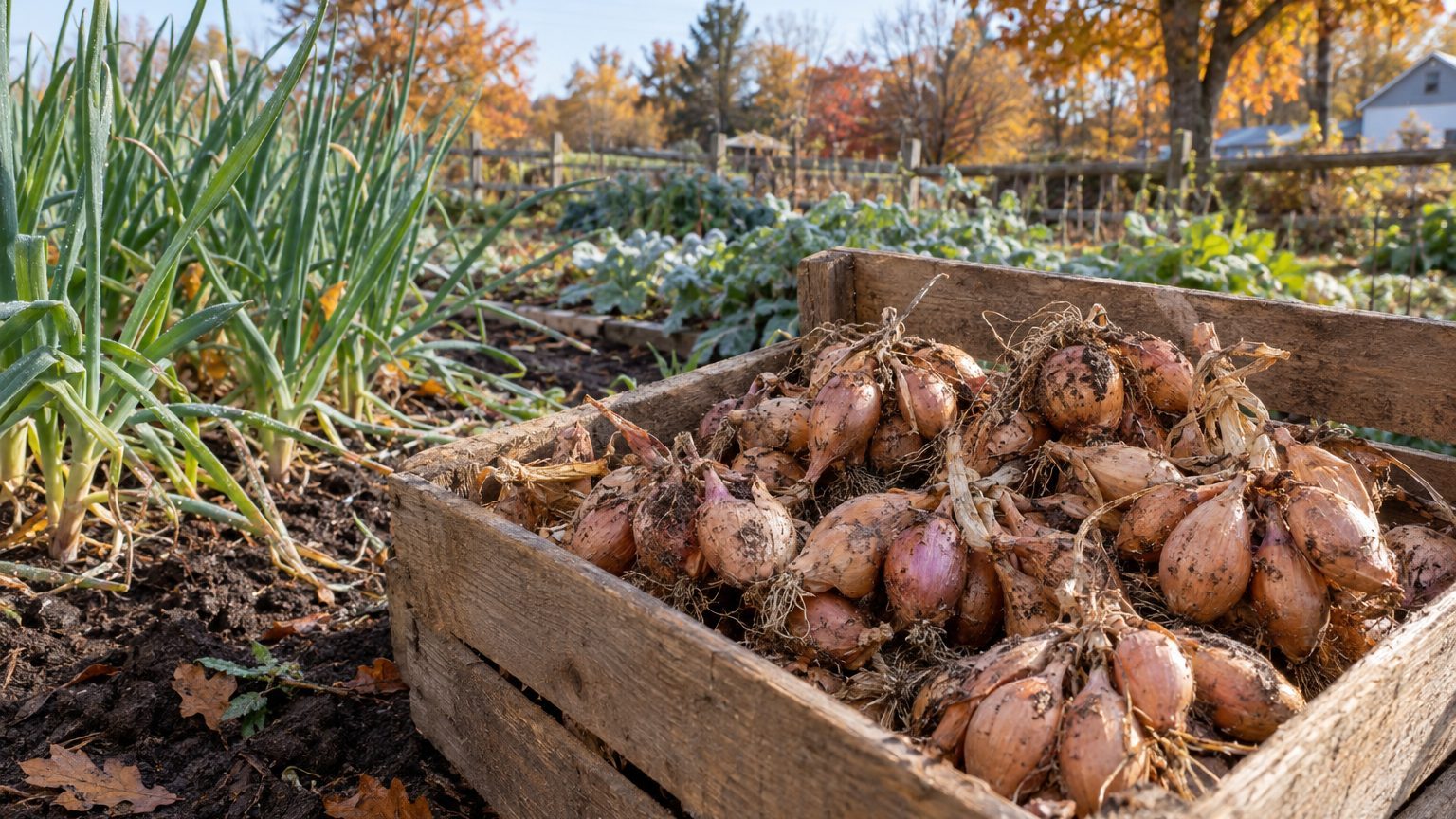

For most of Texas, the best shallot is a bulb-grown type (planted from sets) that matures quickly. Plant it in fall across the mild south and in early spring where winters bite. Seed-grown and slow-storage types are the gamble here. This page does not have county cultivar trial data, so it sorts shallots by type rather than by brand. For the wider picture, start with Growing Shallots in Texas.
The short answer for Texas
The shallot’s problem in Texas is the calendar, not the cold. At the Houston reference station (Intercontinental Airport, IAH), NOAA’s 1991-2020 Climate Normals put the last spring 32°F freeze in a band from February 4 to March 1. Those dates are a probability, not a deadline. Inside the band, the odds that another freeze is still coming run between 30 and 70 percent. The first fall freeze falls between December 1 and December 19, with the same kind of odds. The mean daily minimum of the coldest month is 43.7°F.
That last number matters most. Shallots shrug off frost, so winter hardiness is rarely what decides success on the Gulf end of the state. What decides it is how many cool, leafy weeks a bulb gets before summer heat shuts down growth. Houston is only the mild end of Texas, and its window should never be read as a statewide planting calendar. A fast-maturing set planted in fall uses that cool stretch well. A variety that needs months more to finish does not.
This table sorts the main types by how they fit Texas conditions.
| Type | Where it fits in Texas | Main risk |
|---|---|---|
| Bulb-grown, fast-maturing (sets) | Nearly everywhere: fall planting in the south, early spring in the north | Disease carried on poor stock |
| Larger yellow or red types | Gulf Coast, Central and East Texas, where speed matters | Shorter storage life than some traditional types |
| Gray or “true” French types | Cooler, drier parts of the state, with more care | They tend to be slower and fussier in heat and humidity |
| Seed-grown | Only where the cool season runs long enough | Heat arrives before the bulbs size up |
If you can only pick one rule, pick this one: favor sets, favor speed, and let your own region’s planting window decide the date. The sibling page on When to Plant Shallots in Texas covers timing.
What will not work here
Spring planting on the Gulf Coast is the classic failure. Houston’s last-freeze band ends by March 1 at the latest, and warmth builds fast after that. A shallot set pushed into the ground in March has a short stretch of cool weather before bulb-sizing runs into heat and wet soil. The result is small bulbs, early bolting, or rot.
Slow-maturing, storage-oriented types fail for the same reason. They are bred for places where the cool season drags on. In much of Texas it does not, so the bulbs never finish before the heat arrives. The same goes for growing from seed in most of the state. A seed-grown crop has to build leaf from scratch, and that takes weeks a Texas spring rarely offers.
Humidity punishes tight spacing. Along the Gulf, mornings stay damp and rain can come in long spells. Crowded foliage stays wet, and fungal problems such as downy mildew and neck rot take hold. Give plants room so air can move through the row. Heavy clay soil common around Houston makes matters worse, because water sits around the bulbs. Raised beds or ridged rows fix more shallot problems on the coast than any variety choice.
The opposite problem shows up in the dry west and the Panhandle. A hot, dry summer will defeat anyone who waters once a week. Shallots have shallow roots, so a deep weekly soak leaves the top few inches bone-dry between visits. Gardeners there do better with lighter, more frequent watering during bulb sizing and a layer of mulch to hold moisture.
Cold is the failure in the north. Hardiness is not the issue for the bulbs themselves, but a fall planting that sprouts hard and then meets a deep freeze without mulch can suffer heaving or damaged tops. Copying the Houston dates anywhere else invites exactly that. Even within Houston, Hobby airport runs about two weeks milder than IAH, so a single “Houston” date is already too coarse.
What changes across Texas
Texas is not one garden. The USDA Plant Hardiness Zone Map (2023 edition, built on 1991-2020 normals) runs from zone 6a to 10a across the state. That scale rests on one variable, the average annual extreme minimum temperature. A spread that wide means there is no single answer for Texas shallots, only a range of answers.
The Houston figures above sit at the warm end. The Panhandle freezes months earlier in fall and months later in spring. Hill Country and North Texas land somewhere between, each with its own quirks. A gardener in the north or at higher elevation should shift in three ways. Plant later in fall, or switch to early spring planting as soon as the soil can be worked. Mulch fall plantings so the first hard freeze does not heave them. Expect harvest to come later, since the cool season starts and ends later there.
The warm south shifts the other way. Plant earlier in the fall window and push for harvest before the heat arrives. Skip anything that needs a long finish.
Do not guess your own zone from memory or from a neighbor. Look yourself up on the USDA map by ZIP code, then read the nearby county’s guidance with that zone in mind. Zones tell you about winter survival. They say nothing about when heat arrives, which is the limit that matters most for shallots here.
Where to check this for your own county
Your state extension service is the best next stop. In Texas, that is Texas A&M AgriLife Extension, which has offices that serve every county. Two things are worth finding there.
- The local planting calendar for onions and shallots, which usually states the right window for your part of the state.
- Any varieties trialed in your county, with notes on yield, storage and disease under local conditions.
Your county agent or Master Gardener volunteers can often tell you which sources of sets have performed locally and which have not. They also know which years brought freezes, floods or drought. A published guide cannot know that.
A county recommendation beats a state one, every time. This page is the state one. It can tell you which types make sense across Texas and why, and it can warn you off the obvious mistakes. It cannot know your soil, your elevation or the cold pocket at the bottom of your yard. When the extension office and this page disagree, go with the extension office.
One caution on sources: this page has no county-by-county trial results. Anyone who gives you a confident “best variety” for your county without citing local trials is guessing.
Checking this against your own garden
Your own observations outrank every date on this page. Three are easy to track, and none needs an instrument.
First, soil warmth by feel. Dig a handful from planting depth in the morning. If it feels cool and crumbles easily, it is ready for fall sets. If it is cold, sticky or soggy, wait. A bed that warms early compared to a neighbor’s tells you that yours is a sheltered or sunny spot, so your window may open earlier.
Second, the first true leaves. Watch how quickly green tips emerge after planting. Fast, even sprouting means the soil is workable and the timing is about right. Slow or ragged emergence points to cold, wet or compacted soil, and tells you to adjust next year.
Third, the first flower stalk. A shallot that sends up a seed stalk early is reacting to stress, usually a swing between cold and warm weather or a late planting. Note the date. It shows you how much cool time your spot actually delivers before heat takes over. Keep a simple log of these three signs for a season or two, and your garden will give you a calendar better than any chart.
Common questions
Can I grow shallots from seed in Texas?
You can, but it is a gamble in most of the state. Seed-grown crops need a long cool season, and Texas heat usually arrives before the bulbs size up. Sets are the safer route.
Should I plant shallots in fall or spring?
It depends on where you are. Fall planting suits the mild south, where winter barely chills (Houston’s coldest month averages a minimum of 43.7°F). Colder northern areas lean toward early spring. Your county extension calendar settles it.
Will Texas winters kill shallots?
Seldom on the Gulf end. Hardiness zones run from 6a to 10a across the state, so the colder north needs more care. Mulch fall plantings there to protect against heaving.
Can I use the Houston planting dates elsewhere in Texas?
No. The Houston window is the mild Gulf extreme, and even Hobby airport runs about two weeks milder than IAH. Use it only as a reference point for how the state’s range stretches.