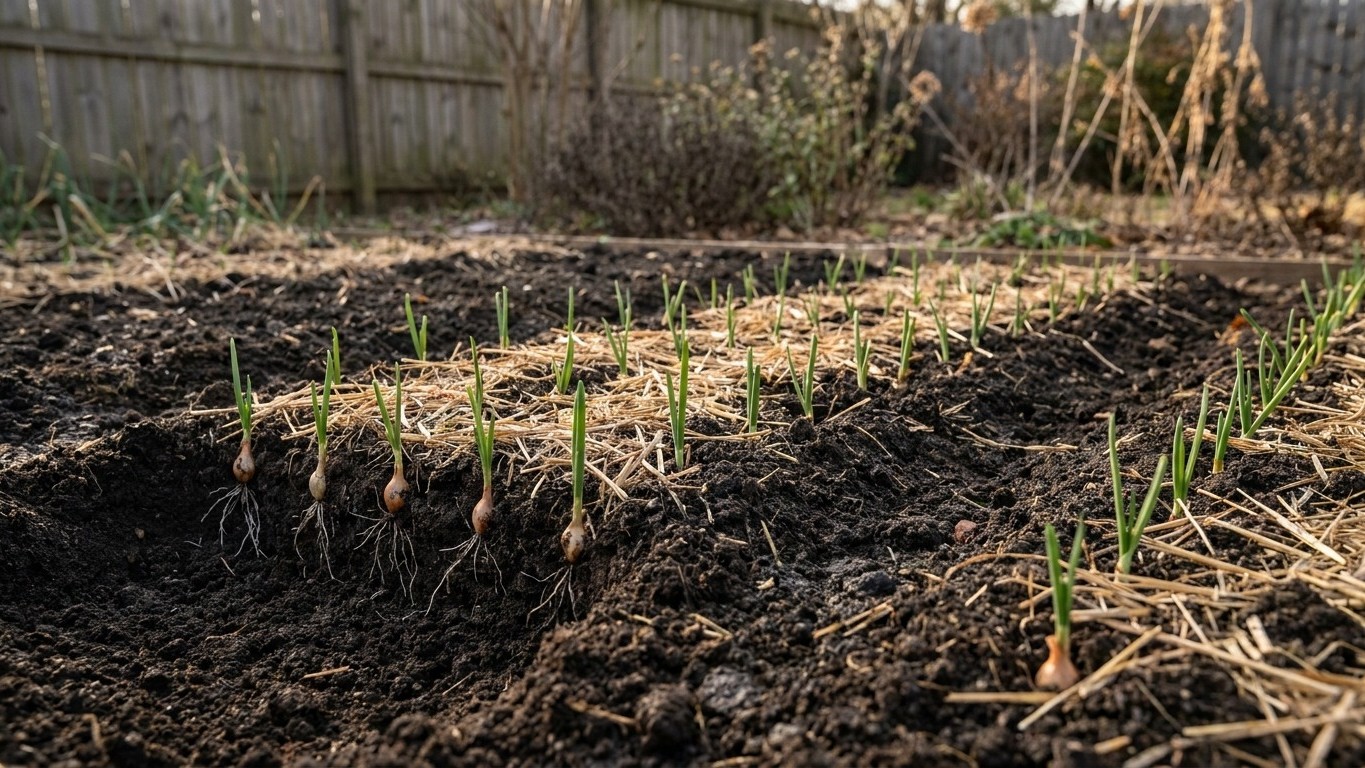

Garlic has fewer enemies in New Jersey than tomatoes or squash, but the ones it has keep a strict schedule. Soil pests and digging animals go after cloves in fall. Maggots and slugs show up in the wet of spring. Thrips and mites take over as summer heat builds toward harvest. Every one of those windows can be counted from a single date: the first fall freeze.
The short answer for New Jersey
The first fall freeze at the Newark airport reference station falls between November 4 and November 16, according to the NOAA NCEI U.S. Climate Normals 1991-2020 (the 30-70% probability band for a 32F freeze). Garlic goes in around that date, so the first pests to reach the cloves are the ones living in the soil, which is still warm enough for them to feed.
That range is a midpoint, not a safe date. In one year out of two the freeze comes later than the date you planned around, and it is an airport figure besides. Suburban and rural gardens typically see the first fall frost one to two weeks earlier, and more than that at elevation. Treat the dates as a reference-city starting point, then adjust.
Here is how the pest calendar hangs on that anchor, since garlic is planted in autumn and lifted the following summer:
- Fall, around planting: wireworms (the larvae of click beetles), seedcorn maggots, and squirrels or chipmunks digging up freshly set cloves. Wireworms are most common where lawn or sod was recently turned into a bed.
- Winter, under mulch: voles tunneling beneath the straw and chewing cloves from below.
- Spring, as shoots grow: onion maggots laying eggs near the base of the plant, and slugs rasping soft new leaves.
- Early summer, before harvest: onion thrips scarring leaves with silvery streaks, and bulb mites working into the bulbs.
One pest ignores the calendar. Stem and bulb nematodes are microscopic worms that travel in infected seed garlic, then live in the soil for years. They show up as swollen, twisted, stunted plants in any season.
Working it out for your own garden
A state is not one climate, and New Jersey proves it. The same pest windows slide earlier or later depending on where your bed sits, so it helps to do the arithmetic yourself instead of trusting a single date.
Step one: find your own frost date
Start with the NOAA band, November 4 to November 16. If you garden in a suburb or on rural ground rather than beside a runway, subtract the one to two weeks the reference notes describe. That gives roughly October 21 to November 9. This is my subtraction from the published figures, not a number any agency has issued for your town, and it is still a midpoint. Half of all years, the freeze lands after it.
The ocean, ridgelines and sandy soils can push your result a couple of weeks either way. A garden near the shore holds heat longer. One on a hilltop in the north loses it sooner.
Step two: lay the pest windows over it
Once you have your date, the garlic calendar falls into place around it. Planting happens before the freeze, and the When to Plant Garlic in New Jersey: Counting Back From the First Frost page works through how far ahead of it. Everything the soil pests do to cloves happens in that stretch, so it is the time to look under the surface. Dig a test hole near the bed and check for pale, hard, wire-like larvae. Their presence means the soil needs attention before you plant, not after.
Mulch goes on after your frost date, once the ground has actually cooled. Straw laid over warm soil gives voles a head start on a winter shelter. In spring, when green shoots are up and the thaw has finished, pull the mulch back an inch or two from the stems. Slugs and maggots both prefer the damp, sheltered base of the plant.
Counting forward from the thaw, begin checking leaves weekly for the silvery streaks that mark thrips. Those pests build up when warm, dry spells arrive, and they matter most in the weeks before the lower leaves start to yellow. Lift the bulbs when that yellowing begins, since garlic left in wet summer soil is exposed to mites and rot a little longer than it should be.
What changes across New Jersey
The state runs from the Kittatinny ridges in Sussex County down to the Cape May shore, and the pest calendar follows the climate. Here is where the dates shift and what that does:
| Area | What moves the dates | Pest consequence |
|---|---|---|
| Northwest highlands (Sussex, Warren, higher ground in Morris) | Elevation brings earlier frost than the airport figure | Shorter fall window for soil pests, longer vole season under snow cover, plus plenty of deer and rodents |
| Urban northeast (Essex, Hudson, Union) | Pavement and buildings hold heat, so frost comes closer to the reference date or a bit later | Warm soil stays active longer, so squirrels and chipmunks keep digging |
| Pine Barrens (Burlington, Ocean, Atlantic interior) | Sandy soil drops heat fast, and cold air pools in low spots | Frost can hit early in hollows, while wireworms favor beds cut from old turf |
| Shore (Monmouth, Cape May) | Ocean water slows the arrival of freezing weather | Later planting, a mild winter that keeps rodents active, and damp spring conditions that suit slugs |
The table speaks in tendencies, not guarantees. A south-facing slope in Warren County can behave like a lower, warmer garden, and a frost pocket in the southern interior can behave like a northern one.
The size of those gaps is easier to appreciate by contrast. In a high-desert state, the same counting-back method lands on very different dates, as the When to Plant Garlic in New Mexico: Counting Back From the First Frost page shows, and the varieties that cope there, covered in Garlic Varieties That Suit New Mexico Winters, differ from the ones that suit a humid Atlantic state. For the local picture, Growing Garlic in New Jersey gives the broader overview.
The mistakes this climate punishes
New Jersey winters are neither reliably harsh nor reliably mild, and that unpredictability is what trips people up. A few errors cost crops here more than elsewhere.
Planting too early in a warm fall. A run of mild October weather tempts gardeners to plant well ahead of their frost date. Cloves then send up green growth before winter, which is soft, exposed and easy prey for early slugs and for any frost that does come. Early planting also stretches the period in which wireworms and maggots can reach the cloves.
Mulching while the soil is still warm. A thick straw layer applied in early autumn, before the ground has cooled, is an invitation to voles. They move in under the cover and eat the cloves through winter. Wait until the soil has chilled, and keep the layer loose rather than packed.
Buying the wrong seed. Nematodes arrive in infected planting stock, and once they are in a bed they persist for years. Grocery-store bulbs are poor seed for that reason, since their origin and health are unknown. Buy certified or reputable seed garlic, and discard any bulb that looks swollen or soft at the base.
Replanting in the same bed. Garlic or onions grown in the same ground year after year let nematodes, maggots and mites build up. Rotating to a new bed for several seasons is the simplest way to break that cycle.
Choosing the wrong type for the coast. Hardneck garlic wants a real cold spell, and in the milder southern and shore counties a mild winter can leave it with weak, uneven growth that pests find easy to exploit. The Garlic Varieties That Suit New Jersey Winters page explains which types match which part of the state.
Leaving mature bulbs in the ground. New Jersey summers are humid, and bulbs left in wet soil after the lower leaves have yellowed give mites and rot more time to get started. Lift on schedule, and cure the bulbs in a dry, shaded spot.
Checking this against your county
The dates in this piece come from one airport station, so they describe a reference city rather than your yard. For county-level frost figures, and for current local reports of which pests are active in your area, contact Rutgers Cooperative Extension. Your county office can also tell you whether a pest is reported near you and which seed sources they trust. Pest pressure varies a good deal from one season to the next, so no calendar replaces a local report.
Common questions
What eats garlic most often in New Jersey?
Soil pests in fall (wireworms and seedcorn maggots), digging squirrels and chipmunks, voles under winter mulch, onion maggots and slugs in spring, and onion thrips in early summer. Nematodes are rarer but do the most lasting damage once established.
Do deer eat garlic?
Garlic is not a favorite, and many gardeners find deer leave it alone. In the northwest highlands, where deer numbers are high, they may still trample or nibble young shoots, so check the bed after snow and thaw.
When is the first fall frost in New Jersey?
At the airport reference station, the first 32F freeze falls between November 4 and November 16, per the NOAA NCEI U.S. Climate Normals 1991-2020. That is a midpoint, so in one year out of two it comes later. Suburban and rural gardens typically see it one to two weeks earlier, and higher ground earlier still.
How do I know if nematodes are in my garlic?
Look for stunted, yellowing plants with twisted or swollen stems, and bulbs that are soft or shriveled at the base. Because they travel in seed stock, the best defense is clean planting material. If you suspect them, ask Rutgers Cooperative Extension about testing before you replant that bed with any allium.