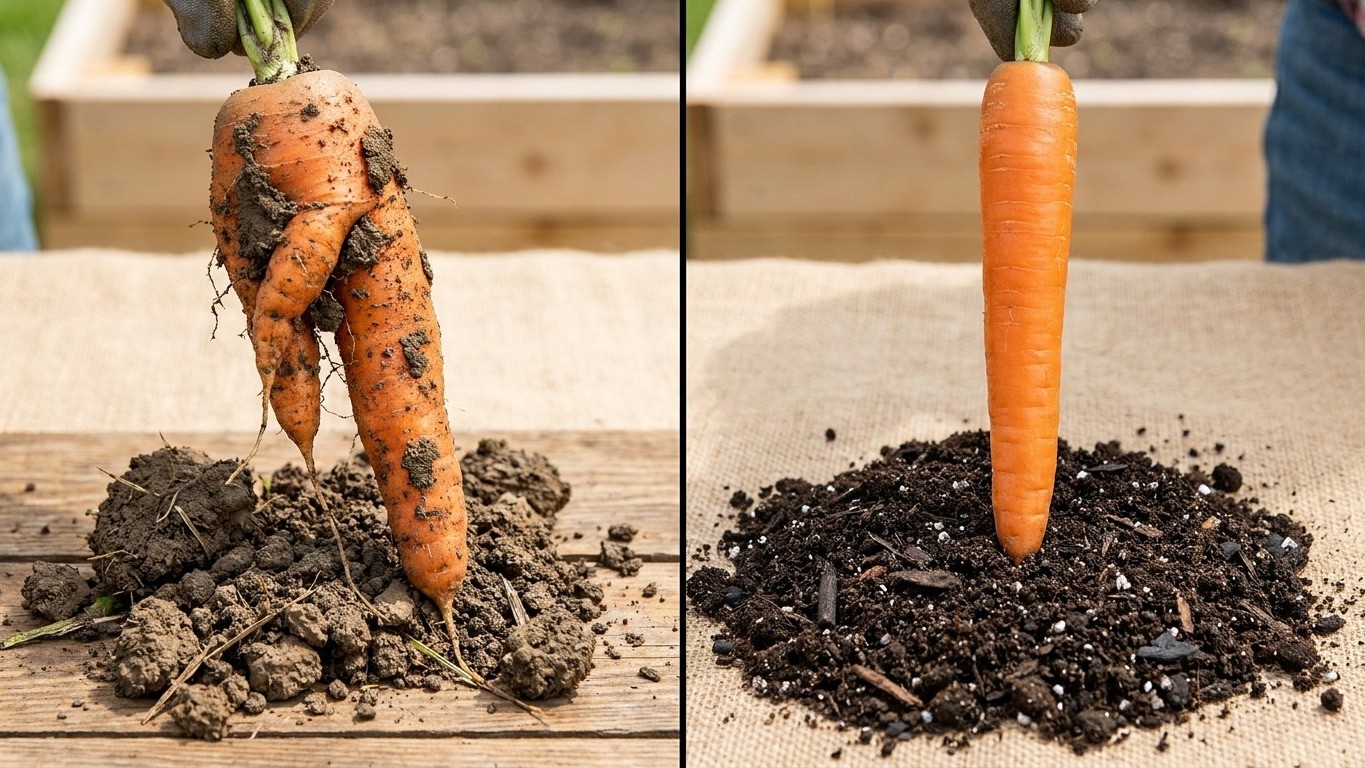

None of the eight pests University of Illinois Extension documents for this state are specialist carrot feeders. Most “something is eating my carrots” damage in Illinois gardens turns out to be a generalist insect that wandered over from a squash patch or a potato row, or it’s not an insect at all: it’s the state’s heavy, poorly drained clay forcing the root to fork instead of growing straight. Sorting out which is which starts with the actual list.
Which pests attack carrot in Illinois

University of Illinois Extension documents eight species for this territory: Bagworm, Brown marmorated stink bug, Colorado potato beetle, Japanese beetle, Jumping worms (Amynthas spp.), Spotted lanternfly, Squash bug (Anasa tristis), and Squash vine borer. That’s the full, sourced list for this state. It’s short on purpose, and it doesn’t get padded here just because a carrot page needs more villains.
Most of this list has nothing to do with carrot
Walk the list one by one and the pattern is clear. Bagworm feeds on conifers and a handful of woody shrubs, not vegetable foliage. Colorado potato beetle is a nightshade specialist: potato, tomato, eggplant. Squash bug and squash vine borer are cucurbit feeders, built for squash, pumpkin, and cucumber vines, and carrot belongs to a completely different plant family. Spotted lanternfly targets tree of heaven, grapevine, and other woody hosts. Jumping worms aren’t plant feeders at all: they’re invasive earthworms that consume leaf litter and organic matter in the soil, which can change soil structure but doesn’t mean chewed foliage above ground.
That leaves two generalists: Japanese beetle and brown marmorated stink bug. Both feed on a wide range of plants and can turn up in a vegetable bed that also happens to grow carrots nearby, but neither is a documented carrot specialist. The extension service documents eight species for this state, and not one of them is built to target carrot specifically. That single fact should reset expectations before diagnosing anything in a home bed.
When each one shows up, and what it does first
Because none of the eight documented species specializes in carrot, there’s no published calendar tied to carrot damage from this list. The one calendar figure that does apply to the crop itself comes from the growing timeline: carrots run 70 to 100 days from seeding to harvest, counted from the day seed goes into the ground, since this crop is sown in place and never transplanted.
Early weeks: thin, tender rows
In the first stretch after seeding, while rows are still thinning and tops are short, there’s little for a wandering Japanese beetle or stink bug to bother with. These are generalists looking for lush, established foliage or fruiting structures elsewhere in the garden, not thin carrot seedlings competing for light.
Mid-season: full canopy
Once the ferny carrot tops fill in, that’s the window where a Japanese beetle adult might land and feed briefly on foliage, or a brown marmorated stink bug might rest on a leaf while moving between host plants. This is opportunistic, not targeted, and it rarely does meaningful damage to the root below.
Approaching harvest
As the 70- to 100-day window closes and roots size up, whatever the soil has been doing underground finally becomes visible. This is when forked, stubby, or split roots show up at pulling time, and it’s almost never an insect that caused it.
Telling the damage apart from everything else
A chewed carrot top and a forked carrot root usually have different causes, and mixing them up leads to the wrong fix. Illinois’s representative state soil, the Drummer series, runs 8 percent sand, 31 percent clay, and 61 percent silt, and it’s classified as poorly drained. Carrots want deep, sandy, well-drained ground; heavy or rocky soil makes the root fork, according to Utah State University Extension. That single mismatch explains a lot of what gardeners blame on bugs.
| What you see | Likely cause | What settles it |
|---|---|---|
| Forked, stubby, or split roots | Heavy clay or a rock in the row | Uniform across the bed, no chew marks, worse where soil is compacted |
| Ragged holes in the ferny tops | Generalist feeder passing through (Japanese beetle, stink bug) | Insect actually present on the leaf, damage scattered rather than concentrated |
| Yellowing, wilted tops, wet soil | Waterlogging in poorly drained ground | Older leaves yellow first, soil stays saturated after rain |
| Grainy, coffee-ground-like castings on the surface | Jumping worms in the topsoil | No leaf tissue is missing; worms thrash when the soil is disturbed |
None of this replaces an actual look at the bed. If the symptom doesn’t clearly match one of these patterns, that’s a question for a local extension office rather than a guess made from a photo.
What actually works here, and what is a waste of time
Given that no documented species in this state specializes in carrot, the more useful fix is usually about soil, not spraying. Utah State University Extension recommends working plenty of compost into heavy ground and double digging the bed before planting, since that’s what actually loosens clay enough for a straight root to form. On soil like the Drummer series, with its high clay and silt content and poor drainage, that step matters more than anything aimed at insects.
A few things worth doing:
- Loosen the bed a full spade depth or more before seeding, working in compost rather than planting straight into unamended clay
- Raise the bed a few inches if drainage is consistently slow after rain
- Keep the carrot row away from squash and cucumber plantings, since squash bug and squash vine borer build up on cucurbit debris nearby
- Thin seedlings early so roots aren’t competing and crowding into rocks or clumps
What’s a waste of time: treating the bed for an insect that isn’t documented as a carrot feeder in this state, or reaching for any general-purpose treatment before confirming an insect is actually present and feeding. This site doesn’t recommend specific products or active ingredients; a local extension office is the only source that knows what’s labeled for use in Illinois, and whether it’s warranted at all.
Where to check this for your own county
A statewide list from University of Illinois Extension describes what’s documented across Illinois, not what’s living in one particular backyard. Pest presence shifts county to county and even bed to bed, shaped by nearby crops, soil, and years of local weather that a state-level list can’t capture.
The most useful next step is contacting the University of Illinois Extension office for the county where the garden sits. Local staff can confirm whether a specific insect is actually present, whether the damage matches soil conditions instead, and whether anything documented for the state has been reported nearby recently. A sample or a clear photo brought to that office settles more than any general list can.
The soil figures on this page describe the mapped surface of a representative state soil series, not a measurement of any one garden bed, so a home soil test through the same county office is the only way to know what’s actually under a specific carrot row before deciding whether to amend it, raise it, or leave it alone.
Common questions
Does Illinois have a documented carrot pest?
Not on the list University of Illinois Extension publishes for this state. That list covers eight species built around trees, nightshades, cucurbits, and invasive soil worms, none of them specialists on carrot.
Can Japanese beetles damage carrot plants?
They can feed on carrot foliage as generalists passing through a garden, but they aren’t documented as targeting carrot specifically, and this kind of feeding rarely affects the root itself.
Why do carrots fork in Illinois gardens?
Usually the soil, not an insect. The state’s representative soil is heavy in clay and silt and poorly drained, and Utah State University Extension notes that heavy or rocky ground makes carrot roots fork.
Do jumping worms hurt a carrot bed?
They don’t eat carrot foliage or roots. They consume organic matter and leaf litter in the topsoil, which can change soil structure over time, but the damage isn’t the same as an insect chewing a plant.