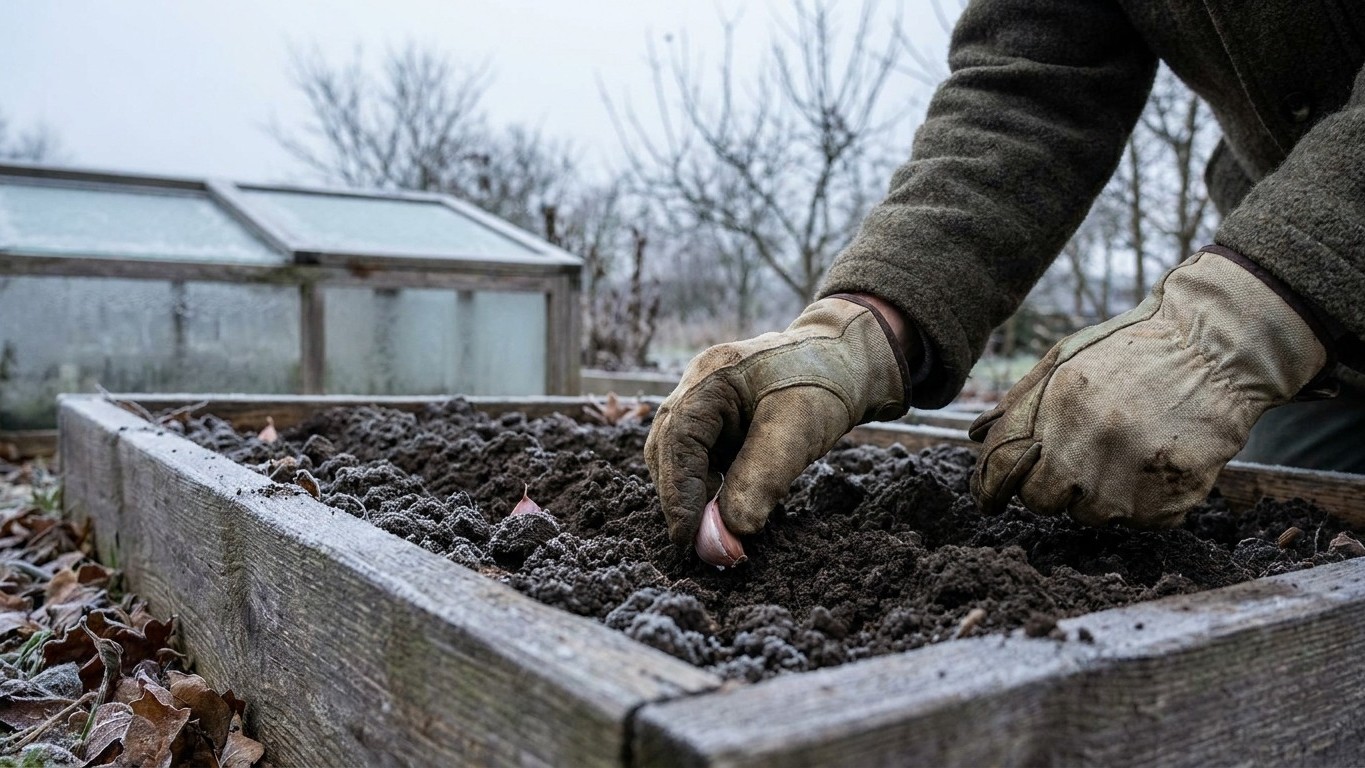

January in Illinois means frozen or semi-frozen ground across nearly the whole state, so nothing goes into open soil outdoors for most gardeners. What you can still do: plant garlic or shallots if the ground in the far southern counties is workable, set up cold frames and low tunnels, put in bare-root and dormant stock where soil allows, and force rhubarb or chicory indoors for an early harvest.
What goes in the ground in January

The decision here is never the calendar, it is soil temperature and the frost window. Illinois sits in USDA Hardiness Zone 5a-7b, and the reference city of Chicago sees its last spring frost fall between April 11 and April 22, based on NOAA’s 1991-2020 Climate Normals. January is roughly three months before that window even opens in the north, and the ground itself is frozen solid in most winters from the Wisconsin border down through central Illinois. Direct-sowing anything outdoors this month is not a gamble, it is a non-starter.
The far southern tip of the state, near Cairo and the Ohio River counties, sits closer to zone 7a-7b and gets more thaw days. If the soil there is workable, not muddy, not frozen at the surface, garlic cloves and shallot sets can still go in the ground. Both are hardy alliums that root before the ground locks up again and resume growth once it warms, so a late planting window in the deep south is real, not wishful.
Everywhere else, the honest move is to work with structures instead of open ground. Cold frames and low tunnels built over existing beds trap enough heat to keep hardy greens alive through a hard winter, and they let you tuck in spinach or mache seed for germination once daylight lengthens. Bare-root fruit trees, roses, and cane fruit can go into the ground on the rare thaw day when the soil is workable, since dormant roots do not need warm soil the way seedlings do.
Indoors, this is the month for forcing. Rhubarb crowns dug and brought into a dark, cool space will push tender pink stalks weeks ahead of anything outdoors. Belgian endive (forced chicory root) works the same way, producing pale, tight heads in a dark cellar or box in about three to four weeks. Neither needs a garden bed at all.
What to start under cover
The math for indoor starts runs backward from the last frost window, not forward from January 1. Onions and leeks started from seed need 10 to 12 weeks of growth before they go outside, so counting back from an April 11-22 frost window in the Chicago area lands the sowing date squarely in mid-to-late January for northern and central counties. That makes onions and leeks the safest under-cover start this month.
Celery and celeriac run on a similar clock, 10 to 12 weeks, and both are slow enough that a January start under grow lights is reasonable rather than early. Peppers, by contrast, only need 8 to 10 weeks before transplant, which puts their ideal start closer to early or mid-February for most of Illinois. Starting peppers now risks the first failure mode gardeners hit this time of year: seedlings get rootbound and leggy in small trays long before the soil outside is warm enough to take them.
The second failure mode is the opposite problem, waiting too long. Slow growers like leeks and celery, if started in March instead of January, simply run out of season, since they still need their 10 to 12 weeks and the transplant window does not move to accommodate a late start.
| Crop | Weeks needed before last frost | Approximate start window (Chicago-area frost dates) |
|---|---|---|
| Onions (seed) | 10-12 weeks | Mid-to-late January |
| Leeks | 10-12 weeks | Mid-to-late January |
| Celery / celeriac | 10-12 weeks | Late January |
| Peppers | 8-10 weeks | Early-to-mid February |
Southern Illinois gardeners, working with an earlier frost window than the Chicago reference figures, can shift all of these dates roughly one to two weeks earlier. Northern counties near the Wisconsin line should lean toward the later end of each range.
What is ready to pick
Little to nothing comes out of an open Illinois garden bed in January. That is simply the season. What keeps a household fed from the garden this month lives under cover or in storage instead.
Kale and leeks that were left in the ground through fall often survive under a blanket of snow, since snow itself insulates soil better than bare exposure to cold air. Pull back the snow, check that the crown or stalk is still firm, and harvest as needed rather than all at once. Cold-frame greens, spinach, mache, arugula sown back in fall, keep producing small pickings through winter as long as the frame is vented on sunny days to avoid rot.
Indoors, sprouts and microgreens are the fastest fresh food a January garden can produce, ready in 5 to 14 days depending on the seed, and they need nothing more than a tray, water, and a windowsill.
Storage crops need a hands-on check this month. Winter squash should feel hard with no soft spots; any squash going soft at the stem end should be used first, not left to spread rot to the rest of the pile. Potatoes kept in a dark, cool spot can start sprouting eyes if the storage area warms even slightly, a sign to move them to a colder spot or use them soon. Onions that feel soft at the neck or show mold at the root end should be pulled from storage immediately, since one soft onion can take down a whole bag.
The jobs that matter this month
A quiet-looking month still carries real deadlines, and skipping them costs the whole season ahead, not just January.
Pruning and plant care
Dormant pruning of fruit trees, grapevines, and cane fruit is best done now, while the plant is fully asleep and you can see its structure without leaves in the way. Cuts made on dormant wood heal faster and bleed less sap than cuts made once growth starts. This is also the window to check stored crops one more time, since a single rotting potato or squash left unchecked will spread mold through everything touching it.
Ordering and planning
Seed catalogs move fast, and the more unusual varieties, particular pepper types, heirloom tomatoes, specific onion sets, sell out weeks before spring planting even starts. Ordering now, rather than waiting for warmer weather to feel like planning time, is the difference between growing what you wanted and settling for whatever is left on the shelf. This is also the natural point to sketch out crop rotation for the coming season, moving nightshades and brassicas to beds they were not in the previous year to cut down on soil-borne disease buildup.
Soil, tools, and structure
Soil testing done now gives lab results back before spring amending needs to happen, and any lime or sulfur added to correct pH needs weeks to work into the soil before planting. Turning compost, even a half-frozen pile, keeps the decomposition process from stalling completely. Cleaning and sharpening pruners, loppers, and shovels now means no delay once the ground thaws enough to work it, and repairing raised bed frames or fencing while nothing is growing avoids trampling emerging plants later.
What not to do in January
The most common mistake this month is trusting the air instead of the soil. A stretch of 50-degree days can feel like spring, but soil several inches down often stays near freezing for days or weeks after the air warms, and any warm-season seed or transplant set into that cold soil will simply sit and rot rather than grow.
A close second mistake is uncovering cold frames or removing winter mulch too early after a mild spell. Illinois winters are not done just because one warm week arrives, and stripping protection off overwintered greens or perennial crowns leaves them exposed to the next hard freeze with no buffer left.
Feeding nitrogen this month is also the wrong move for anything still dormant or overwintering outdoors. Nitrogen pushes soft new growth, and soft new growth is exactly what a hard freeze kills first. Established perennials and dormant fruit trees do not need feeding until they show active growth in spring.
Working wet or partially frozen soil is another quiet trap. Walking on or digging into soil that is thawed on top but frozen underneath compacts it in a way that takes a full season to reverse, squeezing out the air pockets roots depend on later. If a bed is not fully workable, leave it alone rather than forcing a task that could wait two more weeks.
Starting warm-season seedlings like tomatoes or peppers indoors too early belongs on this list too. It feels productive, but it produces leggy, rootbound plants that transplant poorly compared to a batch started on the correct backward-counted schedule from the local frost window.
Checking this against your own county
A state-wide month is a starting point, not a set of instructions for your specific yard. Illinois spans USDA zones 5a to 7b, and the frost figures cited here come from a single Chicago-area weather station, not a statewide guarantee. Elevation, distance from Lake Michigan’s moderating effect, and simple north-to-south distance can shift real frost dates by one to two weeks or more in either direction, and rural or low-lying gardens often see frost linger later in spring and arrive earlier in fall than airport station data suggests.
For a planting calendar built specifically around your county, check the University of Illinois Extension, which tracks regional variation across the state in more detail than any single reference city can.
Common questions
Can I plant anything outdoors in Illinois in January?
In most of the state, no. Ground is typically frozen from the northern border through central Illinois. Only the far southern counties, in the milder end of zone 7, may have workable soil for garlic or shallots on occasional thaw days.
Is it too early to start seeds indoors in January?
For slow growers like onions, leeks, and celery, January is often the right window, counting back 10 to 12 weeks from the local last-frost date. For faster crops like peppers, starting in January usually means leggy, rootbound seedlings by transplant time.
What can I still harvest from an Illinois garden in January?
Overwintered kale and leeks under snow cover, cold-frame greens like spinach or mache, and indoor sprouts or microgreens. Everything else is coming from storage, so check squash, potatoes, and onions regularly for soft spots.
Should I prune fruit trees in January?
Yes, dormant pruning while the tree has no leaves and is fully asleep is the standard approach, since cuts made now heal faster than cuts made once spring growth starts.