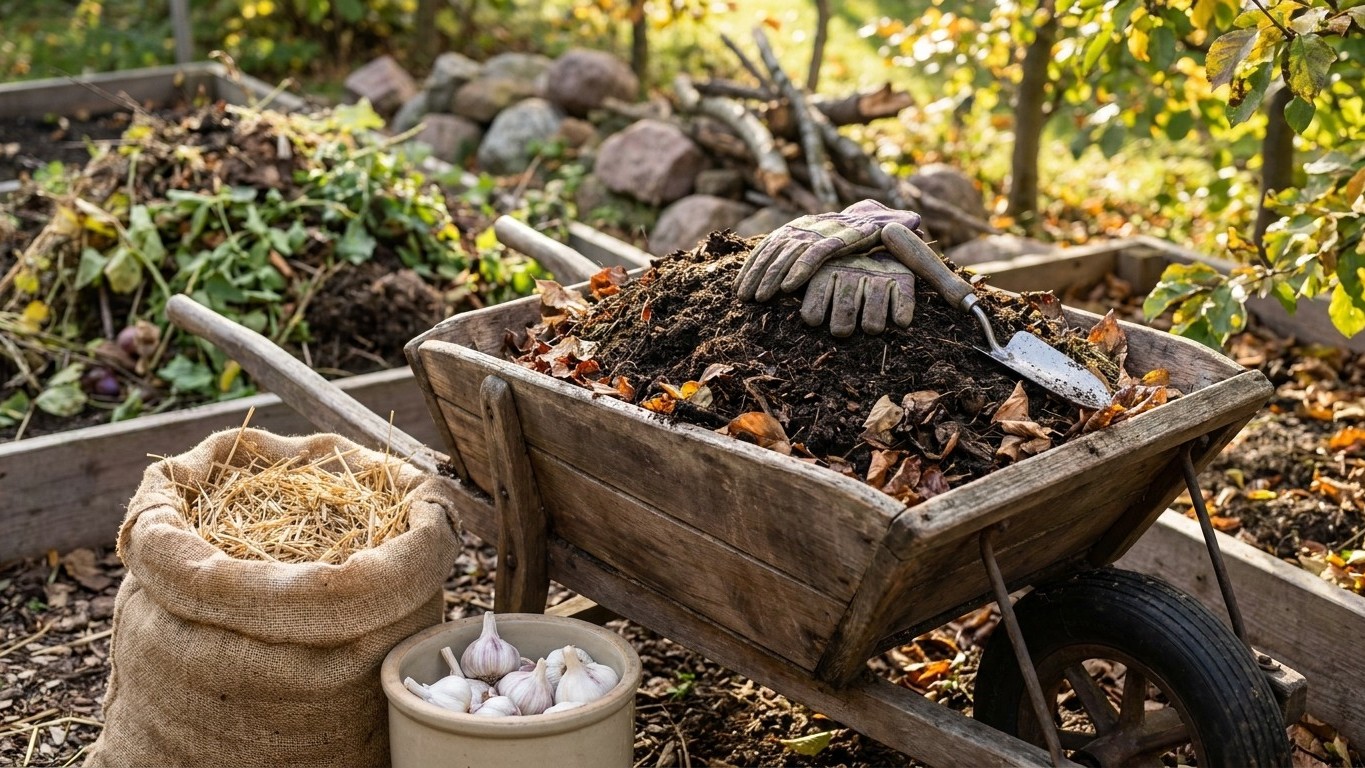

Garlic wants loose, well-drained soil built up with finished compost and a source of phosphorus and potassium worked in ahead of planting, with fresh nitrogen and raw manure left out entirely until spring. The single action that follows: dig a spade’s depth into your bed before you plant a single clove, check how the soil drains and crumbles, and amend based on what you actually find there rather than on habit or what worked in a neighbor’s bed.
Why this matters for garlic

Garlic goes into the ground in autumn and doesn’t come out until the following summer. That nine-month stretch is exactly why a soil mistake made in October is so easy to shrug off at the time and so expensive later. A clove planted into compacted clay or ground still hot with fresh nitrogen doesn’t fail on the spot. It roots poorly through winter, limps through spring, and only shows the damage at harvest, as small bulbs, single thin wrappers, or cloves that rotted quietly underground before you ever saw a problem.
Drainage matters more than almost anything else you’ll read about garlic soil. The clove sits through freeze-thaw cycles and spring rain with no leaves yet to pull moisture out of the ground, so waterlogged soil suffocates roots long before you notice wilting, because there’s nothing above ground to wilt. If you’re new to the crop entirely, it’s worth backing up to the basics in Growing Garlic before you start amending, since soil prep only pays off if the planting depth and spacing that follow it are right too.
When to do it
Soil prep for garlic isn’t tied to a date on the calendar. It’s tied to two things: the first hard frost in your area, and whether the ground is still workable. Compost and slow amendments go in several weeks before you plant, giving them time to start breaking into a form roots can actually use. Planting itself typically happens as the weather cools but before the ground locks up hard for winter, which is why the exact week shifts so much from one region to the next.
Extension services don’t fully agree on how close to the first frost you should plant. Some favor going in earlier, giving roots more time to establish before real cold arrives. Others recommend waiting until nights are reliably cold so the clove doesn’t push top growth that then gets nipped back. Both camps agree that the soil work happens before any of that, not on the same day as planting. A cold, wet clove pushed into freshly turned, unsettled ground has a harder time than one going into soil that’s had a few weeks to resettle.
Because frost timing varies so much by state and even by county, check the specific window for your area with NOAA’s climate data or your state land-grant extension office rather than borrowing a date from a gardening forum based in a different climate entirely.
How to do it
Start with a soil test if you haven’t done one in the last few years. It’s the only way to know your actual pH and nutrient levels rather than guessing. Garlic does best in soil that sits close to neutral rather than strongly acidic or strongly alkaline, and a test will tell you whether you need to correct with lime or sulfur, or whether you can skip that step altogether.
Working the bed
Loosen the top eight to ten inches of soil rather than just scratching the surface. Garlic roots down further than most gardeners expect, and a shallow, crusted layer over compacted subsoil will stunt bulb size even if the topsoil looks fine. If you’re working heavy clay, raised beds or mounded rows solve a lot of drainage problems that no amount of amending will fix on their own.
Work in a generous layer of finished compost, roughly two to four inches spread over the bed and turned into that loosened layer. Compost improves structure in both directions: it opens up clay and helps sandy soil hold water and nutrients longer. This is also the point to add slow-release minerals rather than fast nitrogen. Bone meal or rock phosphate supplies phosphorus, which supports root development through the winter months when the clove is doing all its early work underground. Sulfate of potash or greensand adds potassium, which several sources tie to bulb size and overall vigor.
| Amendment | Main nutrient | When to add | Caution |
|---|---|---|---|
| Finished compost | Organic matter, slow-release N-P-K | Worked in before planting | Must be fully broken down, not fresh |
| Aged manure | Nitrogen, organic matter | Months ahead, well composted | Fresh manure burns roots and carries weed seed |
| Bone meal or rock phosphate | Phosphorus | Worked in at bed prep | Slow to break down, needs lead time |
| Wood ash | Potassium | Light dusting, worked in | Raises pH, skip on already alkaline soil |
Leave fast nitrogen sources out of the fall bed entirely. That includes fresh manure, blood meal in any real quantity, and high-nitrogen fertilizer blends. Nitrogen pushes soft, leafy top growth, and a clove that puts energy into leaves instead of roots going into winter is more likely to suffer cold injury and rot than one that rooted quietly without much above-ground growth at all.
Once the clove is in and the bed is amended, a mulch layer goes on top to buffer the soil against temperature swings and moisture loss over winter. How thick that layer needs to be and when to pull it back in spring is its own topic, covered in Mulching Garlic: How Thick, and When to Pull It Back.
What goes wrong
The most common mistake is treating garlic soil prep like prepping for tomatoes: a heavy hit of nitrogen-rich manure right before planting. It doesn’t show up as a problem in October. It shows up the following spring as lush, floppy foliage that’s more vulnerable to cold snaps, and by harvest as bulbs with thick necks and poor storage life because the plant spent its energy on leaves instead of bulking the bulb.
The failures and their tells
- Poor drainage: cloves rot silently over winter, visible in spring only as bare gaps where nothing emerged.
- Compacted subsoil: top growth looks normal all season, but bulbs at harvest are undersized and misshapen.
- Fresh manure or weed-seed-heavy amendments: a flush of weeds a few weeks after planting that outcompetes slow garlic seedlings for the rest of the season.
- Skipping the soil test and adding lime blindly: pH pushed too far alkaline, which can lock out micronutrients and show up as pale, slow growth months later.
If a section of a bed does rot out or gets crowded by weeds early, it isn’t always a total loss. Weaker shoots that survive but clearly won’t bulk into full bulbs can often still be pulled early and used as Green Garlic: Harvesting Early for the Mildest Flavour of the Year, which salvages something from a bed that had a rough start.
How this changes across the country
Winter severity changes what your soil needs to do for the crop, even if the amendments themselves stay similar. In states with long, hard winters, such as Minnesota, North Dakota, and Maine, the ground freezes solid and stays that way for months. Drainage still matters, but the bigger risk is frost heave pushing cloves partway out of loosened soil, which is one reason a solid mulch layer matters more in those states than almost anywhere else.
In milder states along the Gulf Coast and parts of the Southeast, such as Louisiana, Georgia, and Florida, the ground rarely freezes hard, and the bigger risk flips to the opposite problem: soil that stays wet and warm through winter invites rot rather than heave. Growers in those regions often lean harder on raised beds and coarser, faster-draining amendments, and lighter on manure and organic matter that holds moisture.
Coastal and Pacific Northwest growers, in states like Washington and Oregon, deal with high rainfall rather than deep freeze, which again points toward drainage as the priority over cold protection. The right mix of compost, amendments, and mulch depends on which of these problems your climate actually hands you, not on a single national recipe. Because the specifics shift so much by state and even by county, check planting windows and soil guidance for your exact area with your state’s land-grant extension office rather than applying advice written for a different climate.
Common questions
Can I use fresh chicken manure on my garlic bed in the fall?
Not straight from the coop. Fresh manure is too high in nitrogen for a fall-planted crop and can burn roots outright. Compost it for several months first, or use a bagged, aged product, and work it in well ahead of planting rather than right before.
Do I need to add lime to my garlic soil every year?
Only if a soil test says your pH is genuinely off. Lime corrects acidic soil, but adding it blindly to ground that’s already close to neutral can push pH too high and cause its own set of nutrient problems. Test first, then decide.
Is a raised bed actually necessary for garlic?
Not strictly, but it solves drainage problems fast if you’re working with heavy clay or a wet site. A raised bed a few inches above grade lets excess winter and spring moisture drain away from the cloves instead of sitting around them.
Can I Plant Garlic in the same spot every single year?
You can, but it raises the risk of soil-borne disease building up over time, particularly issues that affect the whole allium family. Rotating garlic away from onions, leeks, and shallots for a few years between plantings in the same bed is a cheap way to avoid that risk entirely.