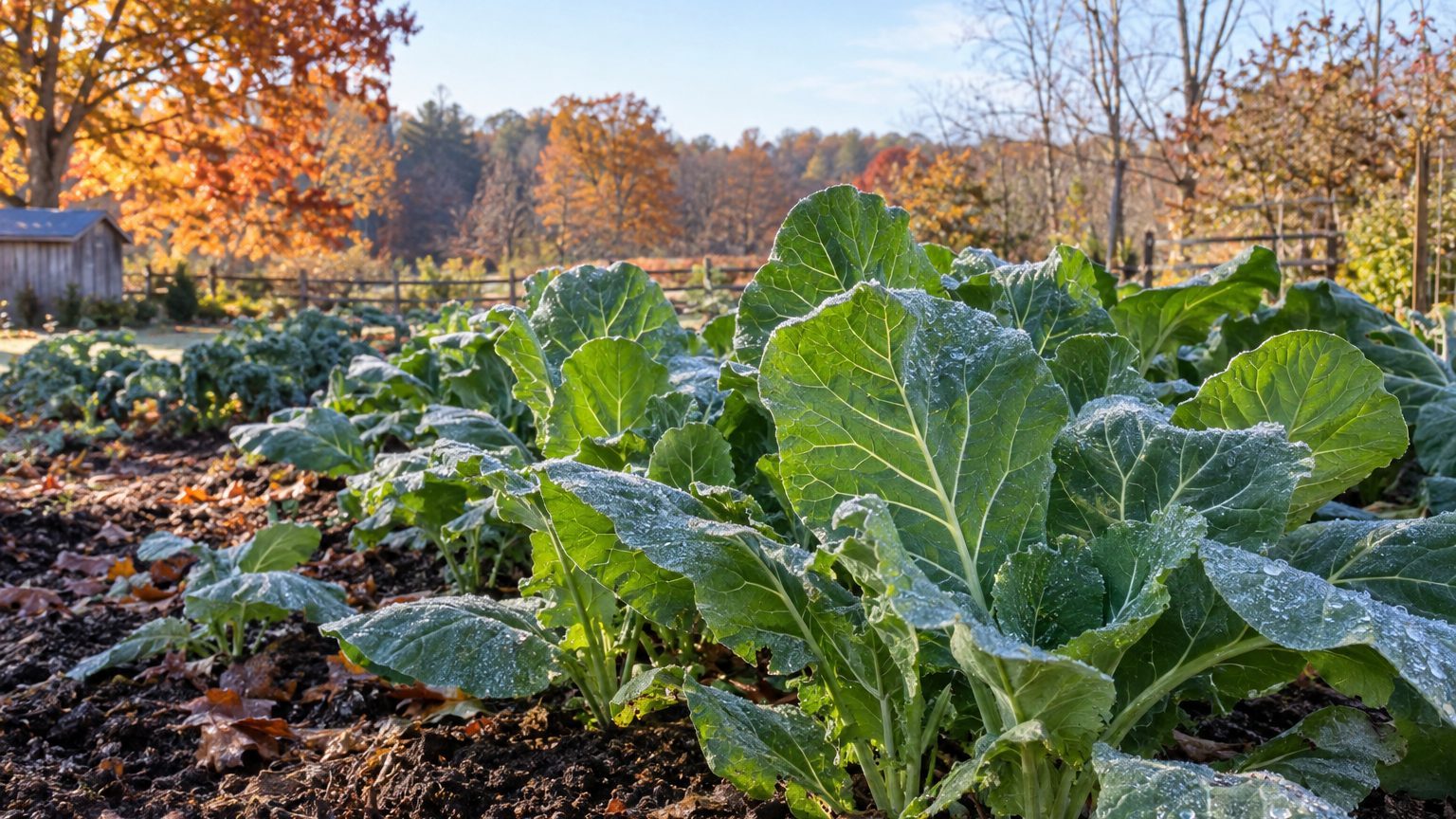

Plant collards in Indiana twice: in early spring, a few weeks before the last frost, and again in mid to late summer for a fall crop that frost sweetens. Both windows hang on two date ranges from the Indianapolis weather record. Spring transplants go out from late March into early April. Fall plantings need to be well established before late October.
The short answer for Indiana
For spring, start seeds indoors in February or March and set the transplants out from late March to early April. For fall, sow in the garden or transplant from July into early August. Those windows come from two ranges in the 1991-2020 NOAA Climate Normals for Indianapolis.
The last spring frost runs April 9 to April 21. The first fall frost runs October 21 to October 30. Each range is a probability of a 32°F freeze. The 30-70% band is the stretch of dates when the odds of that freeze still happening (spring) or arriving (fall) sit between 30 and 70 percent. Neither is a calendar deadline. Purdue adds that roughly a 10% chance of a 32°F event remains after the published spring date.
| Planting | Window | Anchored to |
|---|---|---|
| Spring seeds, started indoors | February into March | About six to eight weeks before transplanting |
| Spring transplants, set outdoors | Late March to early April | Ahead of the April 9 to April 21 range |
| Fall crop, sown or transplanted | July into early August | Well before the October 21 to October 30 range |
Collards are among the hardiest garden greens and take light frost without damage, which is why spring transplants can go out before the frost range ends. The 10% leftover risk still matters on the early edge. Keep row cover, old bedsheets or overturned buckets ready for a clear, still night in the upper 20s.
Fall plants get the cold on a schedule you can plan around. Leaves that ripen in cool weather are sweeter and milder than leaves grown in July heat. For varieties suited to these windows, see The Best Collards and Greens for Indiana. For the full picture of the crop, start with Growing Collards in Indiana.
What will not work here

Waiting for warm weather is the most common mistake. A collard transplant set out in mid-May has only a few cool weeks before Indiana summer settles in. Humid heat then brings cabbageworms, aphids and tough, strong-tasting leaves. Spring plantings need to be in the ground in March or early April so the plants size up before June.
Late fall sowing fails for the opposite reason. Seed sown in September has to reach a usable size before the first fall frost range of October 21 to October 30, and by then the days are short and growth slows. A plant that is still a few inches tall when hard freezes arrive will not give you a real harvest. Sowing or transplanting from July into early August gives the plants time to grow before cold weather arrives.
Close spacing is a poor fit for Indiana summers, which are humid. Crowded collards stay wet after rain and dew, and wet leaves invite leaf spots and rot. Crowded plants also hide cabbageworms and aphids, so pests go unnoticed until the damage is done. Give each plant room for air to move through the row, and water at the soil rather than overhead.
Overwintering is unreliable too. The mean daily minimum of the coldest month at Indianapolis is 20.9°F. That is an average, so many nights run colder, and a stretch of hard cold can kill plants that looked fine in December. Collards sometimes come through a mild winter with a mulch layer, especially in the southern part of the state. Treat any spring regrowth as a bonus. Do not count on it. If you want greens in late winter, plan a fresh spring sowing.
Finally, setting out tender, soft-grown seedlings straight from a warm windowsill is a common failure. Indoor seedlings that skip hardening off are scorched by wind and sun and set back by a cold night. Give them a week of gradually longer outdoor time before they go into the bed.
What changes across Indiana
Indiana spans USDA hardiness zones 5b to 7a under the USDA Plant Hardiness Zone Map (2023), so there is no single answer for the whole state. The system is built on one variable, the average annual extreme minimum temperature, so it tells you about winter survival and not about heat or rainfall.
The dates above use Indianapolis as the reference point. Southern Indiana runs earlier in spring and later in autumn than the north by a fortnight or more. A gardener near the Ohio River can often set out spring transplants earlier than one near the Michigan line, and can usually keep fall plantings going longer into the season. Overwintering with mulch is likelier to work in the south.
Gardeners in the north should shift in two directions. In spring, add a fortnight or more to the dates and wait for the soil to thaw and drain. In fall, move the planting window earlier in the summer, so the plants have more time to grow before the first frost. A cold, low spot in a field or yard behaves like a garden farther north, even in the south of the state.
Gardeners in the south can stretch both ends. Seeds can start earlier indoors, and a fall planting can go in a little later in summer. Mid-July is a safer target than late August. To find your zone, check the USDA map and look up your own ZIP code. Do not guess from a neighbor’s garden.
Where to check this for your own county
A county recommendation beats a state one. This article gives the state picture, built around Indianapolis. A county office knows local frost pockets, soil types and the pest pressure in your area. Purdue Extension is the state’s land-grant extension service, with an office in every county.
Two things are worth looking for there. The first is the local planting calendar, which gives sowing and transplant dates for cool-season greens tied to your county’s frost record. The second is the list of varieties trialled in your county, meaning the collards and other greens that have been grown side by side in local conditions and rated for yield, bolting and disease. A variety that does well in a trial a few counties over is a safer bet than one chosen from a seed catalog.
County offices also tell you how to get a soil test, which is worth doing before the first spring planting. Collards are heavy feeders, and a test shows whether the bed needs lime or fertilizer. Master Gardener volunteers answer questions about local pest and disease problems, and these are often the best source on which cabbageworm or aphid pressure to expect that year.
Checking this against your own garden
Your own observation outranks every date in this article. Three things are worth watching.
- Soil warmth by feel. Push your bare hand into the bed. If the soil feels cold and sticky, wait. A bed that crumbles easily and feels cool but not icy is ready for transplants. A south-facing wall or a raised bed will pass this test days before open ground.
- The first true leaves. Seedlings first show a pair of rounded seed leaves, then true leaves that look like small collard leaves. Once a seedling has a few true leaves it can go through hardening off. Slow seedlings point to a cool spot, low light or poor drainage.
- Where frost shows up first. Walk the yard on a clear, still morning after a cold night. The spots with white frost on the grass are your cold pockets. The ones still green show where the microclimate is warmer, and those are the spots for the earliest spring planting and the longest fall season.
Keep notes for a season or two: the date of your last spring frost, the day the first transplants went in, the day you first harvested. Those few lines become your own planting calendar.
Some gardeners also time this by the Moon: when to plant collard greens by the moon, as almanac tradition rather than fact.
Common questions
Can I start collards from seed directly in the garden in Indiana?
Yes, in both seasons. For fall, direct sowing from July into early August works well because the soil is already warm. For spring, direct seeding in late March works, but indoor-started transplants give plants a head start before warm weather.
Will frost kill my collards in October?
Light frost will not. Collards tolerate it, and the cold improves the flavor. The first fall frost at Indianapolis falls between October 21 and October 30, and the plants usually keep producing past that. A hard freeze after a long cold spell is what ends the harvest.
Is it too late to plant collards in August?
Early August can still work, especially in the southern half of the state, if you use transplants. Seed sown that late has less time to grow before cold weather slows it. In northern Indiana, aim for July.
Can collards survive an Indiana winter?
Sometimes. The mean daily minimum of the coldest month at Indianapolis is 20.9°F, and plants may survive a mild winter with mulch, mostly in the south of the state. A hard cold snap can kill them, so do not rely on overwintering.