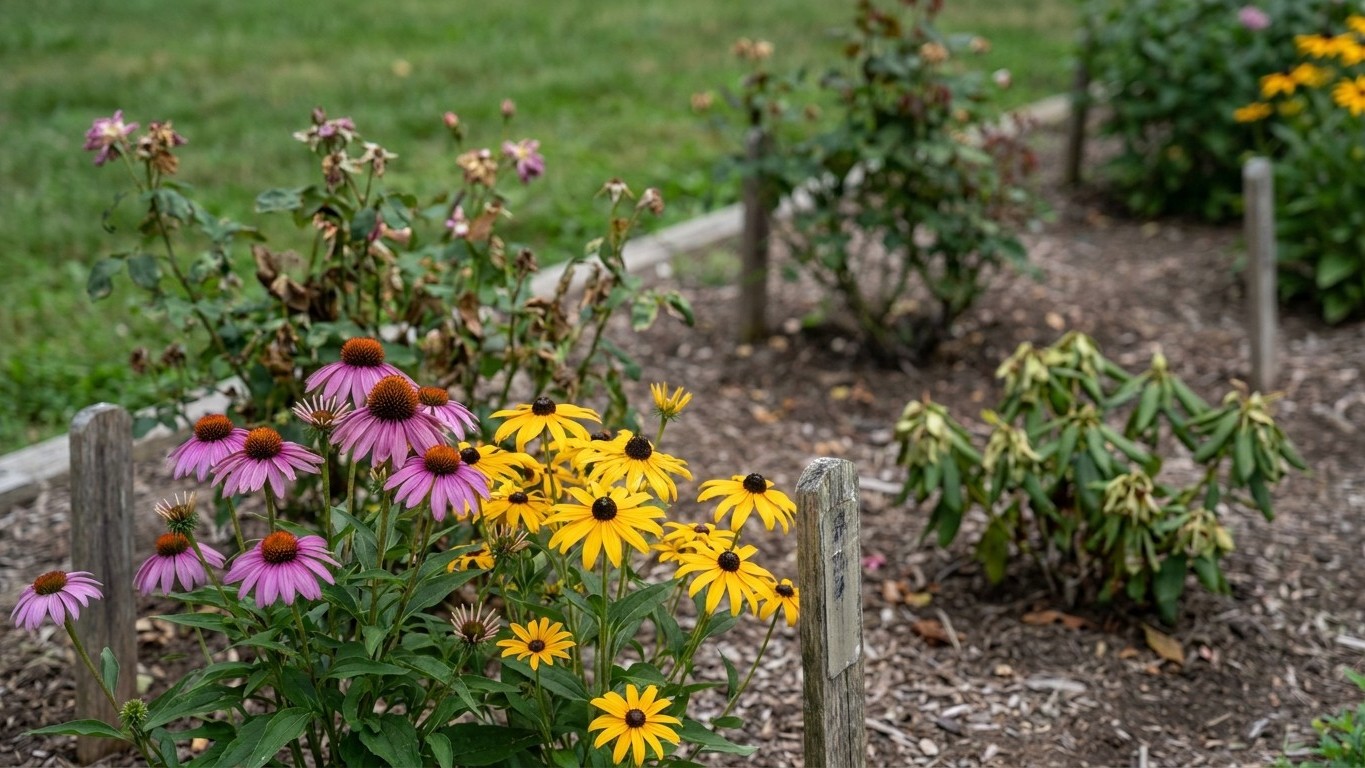

Flowers that handle Indiana’s swing from bitter January nights to sticky, 90-degree summer afternoons thrive here: purple coneflower, black-eyed Susan, garden phlox, daylilies and most perennials rated hardy to USDA zone 5. NOAA’s 1991-2020 climate normals put Indianapolis’s coldest month at a mean nightly low of 20.9F, and the USDA Plant Hardiness Zone Map (2023, based on those same 1991-2020 normals) places the state across zones 5b to 7a. Before you buy anything, find your own zone on that map rather than assuming Indianapolis applies, and pick tags that list a hardiness zone at or below yours.
What thrives in Indiana

Some flowers shrug off an Indiana winter and then rot in an Indiana July, and that’s the real test here, not just whether something survives the cold. Coneflower, black-eyed Susan, garden phlox and daylilies pass both halves of that test, which is why they show up in so many yards across the state. Before you plant anything, check the tag for a hardiness zone at or below your own, since that number, not the picture on the label, is what actually tells you whether it belongs in your soil.
A flower that does well here needs to clear both hurdles. Cold hardiness rated to at least USDA zone 5 covers the winter side of the state, since the statewide range runs from 5b in the north to 7a in the far south along the Ohio River. On the summer side, plants need tolerance for humid heat, not just heat. That rules out a lot of Mediterranean natives that handle dry 95F afternoons but rot in a wet Indiana July.
The plant families that check both boxes
The Asteraceae family carries an outsized share of Indiana’s reliable performers: coneflower (Echinacea), black-eyed Susan (Rudbeckia), and asters all combine cold-hardy roots with foliage that shrugs off humidity. The mint family (Lamiaceae) does nearly as well, with salvias, nepeta and bee balm tolerating both the cold snaps and the muggy stretch. Daylilies (Hemerocallis) are close to bulletproof across the whole zone range the state covers.
Where Indiana gardeners run into trouble is with plants bred for drier climates further west. Iowa gardeners face a similar cold-and-heat combination, and the same short list of tough perennials shows up on both states’ better-performing rosters, which is worth knowing if you’re cross-shopping catalogs; see our guide to flowers that actually thrive in Iowa for how that comparison plays out. Lavender is the classic example of a plant that survives the cold here but resents the humidity, since its foliage is prone to rot when summer nights stay warm and damp. Plant it in the driest, most open spot in the yard if you grow it at all, and expect shorter-lived plants than gardeners in drier states report.
Native plants worth the space
Native plants earn their space by needing less once they’re established, and in a state with Indiana’s summer heat load, less watering is not a small thing. A native perennial has spent generations adapting to exactly this pattern of cold winters and humid 90-degree stretches, so its root system is already built for it. That means less irrigation after the first year or two, less fertilizer, and far less disease pressure than an imported ornamental asked to do the same job.
Species worth planting
- Purple coneflower (Echinacea purpurea), native to the wider eastern and central United States, blooms through the hottest part of summer and feeds goldfinches once it goes to seed.
- Black-eyed Susan (Rudbeckia hirta), also native across the broader Midwest, self-seeds readily and fills gaps in a new border fast.
- Wild bergamot (Monarda fistulosa) draws bumblebees and hummingbirds and holds up better in humidity than the showier Monarda didyma cultivars.
- Butterfly milkweed (Asclepias tuberosa), native to the broader central and eastern U.S., is the host plant monarch caterpillars need, not just a nectar source for adults.
- New England aster (Symphyotrichum novae-angliae) closes out the season in September and October, right when most other perennials have finished.
The pollinator case for natives goes beyond honeybees. Specialist native bees, the ones that only visit a handful of plant species, depend on natives that a lot of ornamental breeding has bypassed entirely for bigger flowers or longer bloom times. Monarch butterflies specifically need milkweed as a larval host plant, not just any nectar source, which is why butterfly milkweed earns a spot even in a border planted mostly for looks.
None of this means native plants are maintenance-free the first year. They still need regular watering to get established, same as anything else, and a native bought as a small plug will take a full season or two before it shows the drought tolerance it’s known for. Buy them small and be patient rather than paying a premium for a mature plant that skips that establishment period.
Perennials that come back

What comes back reliably in Indiana depends on where in the state’s 5b-to-7a range you’re gardening, and the plant tag is only useful once you know your own zone. Peonies, daylilies, hostas, garden phlox and coneflower return without fuss almost anywhere in the state, since all of them are rated hardy well below zone 5. Russian sage, now often sold as Salvia yangii, does nearly as well and adds silvery foliage that holds up through the humid stretch.
Reading a plant tag against your zone
A tag that says “hardy in zones 7-10” is telling you the plant will not survive an Indianapolis winter as a perennial, since even the warmest slice of the state only reaches zone 7a along the Ohio River. Treat those as annuals, or as bulbs to dig and store, rather than expecting them back next spring. Lantana, gaura and many of the tender salvias like Salvia guaranitica fall in this category: gorgeous all summer, gone the first hard freeze, and worth budgeting for as a yearly purchase rather than a one-time investment.
| Perennial | Typical hardiness | Behavior in Indiana |
|---|---|---|
| Daylily (Hemerocallis) | Zone 3-9 | Reliable perennial statewide |
| Garden phlox (Phlox paniculata) | Zone 4-8 | Reliable perennial statewide |
| Russian sage (Salvia yangii) | Zone 4-9 | Reliable perennial statewide |
| Lantana camara | Zone 8-11 | Grown as an annual |
| Elephant ear (Colocasia) | Zone 8-11 | Grown as an annual or dug and stored as a tuber |
Compare that to a much cooler maritime climate like Prince Edward Island, where the plant list that comes back reliably looks quite different again; see our page on flowers that actually thrive in Prince Edward Island for how a shorter, cooler summer changes the calculus. In Indiana, the humidity and heat load matter as much as the winter cold when deciding what to trust as a perennial.
Putting a border together
A border that looks good all season is built in layers, not planted all at one height and hoped for the best. Put the tallest plants, like Joe Pye weed or tall garden phlox, at the back or center of an island bed, mid-height perennials like coneflower and black-eyed Susan in the middle band, and low edging plants like creeping phlox or dwarf coreopsis along the front. This is basic staging, but skipping it is the single most common reason a new border looks flat by July.
Succession of bloom
No single plant blooms from Indiana’s April thaw through the October frost, so a border needs a rotation. Early spring bulbs and creeping phlox carry the first weeks, peonies and early salvias take over by late spring, coneflower and black-eyed Susan carry the long hot stretch through summer, and asters and Russian sage close out the season into fall. Map out what blooms when before you buy, not after, or you’ll end up with a border that peaks in June and goes quiet the rest of the year.
Repeating a color two or three times through a bed does more for a cohesive look than any single showpiece plant. A drift of purple coneflower echoed by a patch of Russian sage on the other side of the bed reads as designed, where one of each of ten different plants reads as a collection rather than a garden.
Leave room at planting time even though it looks sparse the first season. A coneflower or daylily planted at its mature spread will look like a gap for the first year, but crowding perennials in for an immediate full look means digging half of them out in two years when they collide. Mulch the bare soil between new plants rather than filling it with more plants, and let the border fill in on its own schedule.
Local help
Purdue Extension maintains plant lists and county-level advice tailored to Indiana’s growing conditions, and it’s the first stop before you commit to anything unusual: extension.purdue.edu. Most counties also run a Master Gardener program through that same extension network, staffed by volunteers who’ve grown these plants in your specific soil and microclimate, not just in Indianapolis. For more on Indiana’s growing season and other garden topics by month, our Indiana guides hub covers the rest of what a season here throws at you.
Common questions
Can I grow lavender in Indiana or is it a waste of money?
It’s not a waste of money, but treat it as a plant that needs help rather than a set-and-forget perennial. Lavender tolerates Indiana’s winter cold reasonably well but struggles with humid summer nights, so plant it in the driest, most open, best-draining spot you have and don’t crowd it with other plants.
Why did my perennials from a southern catalog die over winter?
Most likely the plant’s rated hardiness zone didn’t match yours. Check the tag against your actual USDA zone, which the 2023 USDA Plant Hardiness Zone Map puts somewhere between 5b and 7a depending on where in Indiana you are, and skip anything rated hardy only to zone 7 or warmer unless you’re prepared to treat it as an annual.
Do I need to deadhead coneflower and black-eyed Susan?
You don’t have to, and leaving the spent flower heads through fall and winter feeds goldfinches and other seed-eating birds. Deadhead only if you want a tidier look or want to prevent the aggressive self-seeding both plants are known for.
When is it safe to plant tender annuals outside in Indiana?
Wait until after your local last frost date has passed. NOAA’s 1991-2020 climate normals put that window at Indianapolis between April 9 and April 21, with roughly a 10% chance of a freeze even after that per Purdue Extension’s caution, so keep a cover on hand if you plant on the early edge of the range, and note that southern Indiana tends to clear frost earlier and northern Indiana later.
Related guides
- Flowers That Actually Thrive in Michigan, and the Ones That Struggle
- Flowers That Actually Thrive in Ohio, and the Ones That Struggle
- Flowers That Actually Thrive in Iowa, and the Ones That Struggle