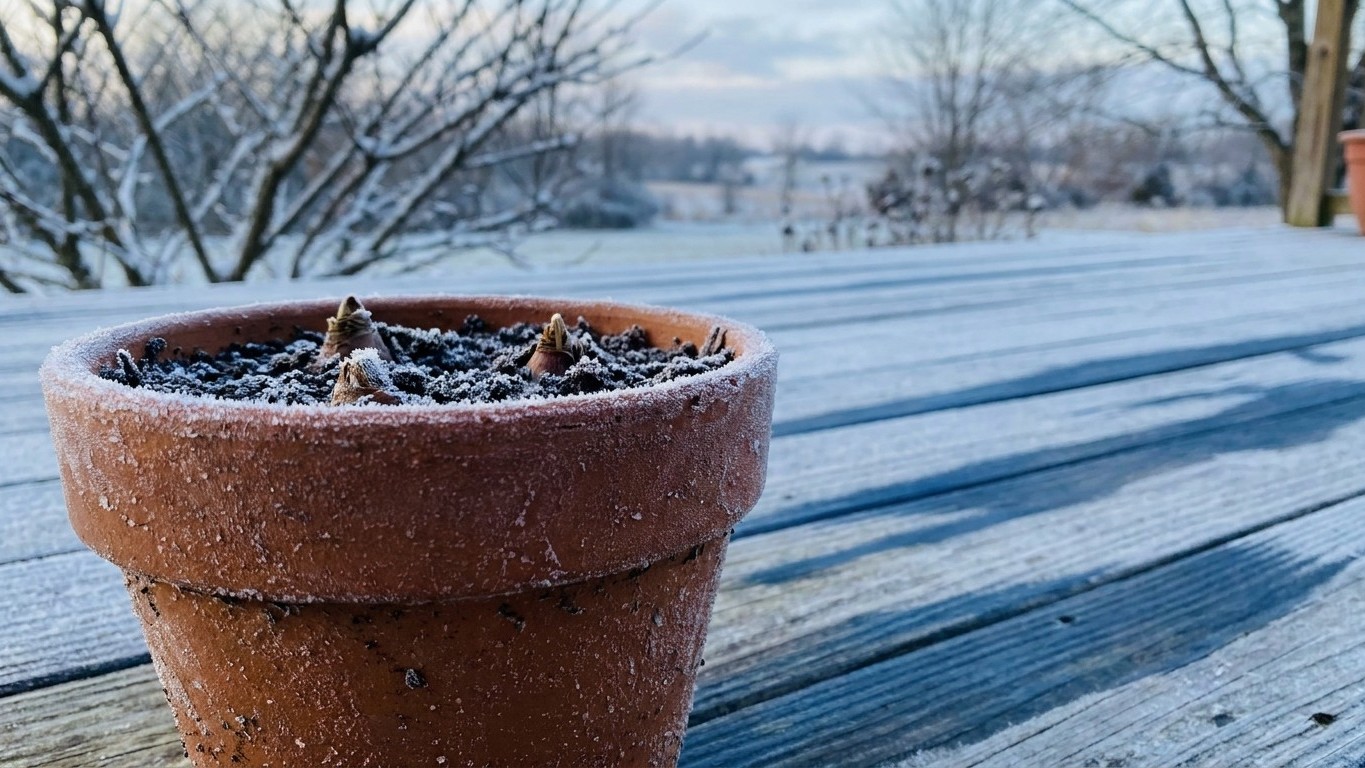

Indiana winters bring plenty of cold to break bulb dormancy in the ground, so forcing isn’t a climate necessity here the way it is in mild-winter regions. The real hazard is the container itself: a pot has no soil mass around it to buffer temperature swings, and it can freeze solid in a way an in-ground bed never does. That single fact changes how you plant, where you store the pot, and which bulbs are worth the trouble.
Why this matters in Indiana

The coldest-month mean minimum at the Indianapolis reference station is 20.9°F, according to NOAA NCEI Climate Normals for 1991-2020. That’s a full 24 degrees below the 45°F threshold a spring bulb needs to satisfy its chilling requirement. Over a typical Indiana winter, ground temperatures stay below 45°F for well past the 12 to 14 weeks most bulbs ask for. So if your bulbs are going into a garden bed, they don’t need any help from you. The soil does the work.
Containers flip that logic. A pot sitting on a porch or patio has air on every side, front, back, top and bottom. There’s no surrounding earth to hold heat overnight or slow the drop during a cold snap. That means the soil in a pot tracks the air temperature far more closely than garden soil does, and it can freeze all the way through, roots and all, in conditions the same bulb would shrug off if it were planted a foot down in a bed.
This is where the USDA Plant Hardiness Zone Map matters. Indiana spans zones 5b through 7a, based on the average annual extreme minimum temperature for 1991-2020. Northern counties sit closer to 5b, where that extreme minimum runs toward -15°F. Southern counties lean toward 7a, closer to 0°F. A bulb rated hardy in the ground for zone 5 or 6 can still die in a pot in the same yard, because the pot doesn’t get the insulation the ground provides. Growers commonly account for this by treating a container as roughly two zones colder than the ground it sits on, though that adjustment isn’t a published USDA figure, it’s a practical allowance nurseries and extension offices use when advising on pot placement.
So the situation in Indiana is not a shortage of cold. It’s a mismatch between how cold a pot gets and how cold the ground gets at the same address. Anyone Growing Spring Bulbs in Containers here needs a plan for the container’s winter, separate from any plan for forcing bulbs into early bloom indoors.
How to do it here
Whether you’re forcing bulbs for a January windowsill or simply trying to keep a potted tulip or crocus alive through an Indiana winter, the sequence below covers both. Follow it in order, and check each step against your own thermometer rather than a guess.
- Choose a container with drainage holes, and pick one rated at least two hardiness zones tougher than the bulb’s own rating if it’s going to sit outside all winter. If you can’t find a pot rated that hardy, plan to move it instead.
- Pot the bulbs in fall, in a well-draining mix, at the planting depth listed on the bulb’s packaging. Water once after planting, then let the soil dry toward the surface before the first hard cold arrives.
- Decide on a cold source for forcing: an unheated garage that reliably stays above freezing but under 45°F, or a refrigerator crisper drawer. Check the garage with a thermometer over a few days before committing bulbs to it. A space that freezes solid will kill the bulb along with the flower bud inside it.
- If using a refrigerator, keep the bulbs away from ripening fruit. Fruit releases ethylene gas as it ripens, and ethylene damages the flower bud inside a bulb before it ever gets a chance to open.
- Track the cold period. Most spring bulbs need 12 to 14 weeks below 45°F before they’re ready to bloom. Mark a calendar rather than trusting memory.
- If the plan is to overwinter the pot outdoors rather than force it indoors, move it into an unheated garage, an enclosed porch, or sink the whole pot into a garden bed and mound mulch over the rim once temperatures start approaching that 20.9°F coldest-month average.
- After the chilling period ends, bring forced pots into bright, moderately warm indoor conditions. Bloom typically follows within two to three weeks, depending on the species.
Which bulbs are worth it
Some bulbs reward this whole process, others just sit there sulking no matter how carefully you time the cold. Cold requirement length and stem height are the two things that decide it: a bulb with a short chilling need forces fast, and a short, sturdy stem stays upright in a pot where a tall one topples.
- Paperwhite narcissus — needs no cold period at all, forces from a dry bulb straight into bloom, which makes it the easiest option for anyone starting out.
- Hyacinth — short cold requirement, sturdy stem, reliable bloom on a windowsill or in a small pot.
- Crocus — compact, low stem height means no toppling, forces well within the standard 12 to 14 week window.
- Muscari (grape hyacinth) — small and low-growing, chills quickly, holds up in a shallow container.
- Tazetta-type daffodils — shorter chilling need than trumpet daffodils, and since a forced bulb typically won’t repeat the performance next year in a pot anyway, there’s nothing lost by using it up.
- Tall tulip varieties — a long stem in a shallow pot topples easily once the flower opens and adds weight to the top.
- Giant alliums — top-heavy once flowering, and the root mass needed to support that height rarely fits a container built for indoor display.
- Fritillaria — a long, exacting cold requirement and an odor some growers find unpleasant indoors, which makes it a poor match for forcing compared to easier bulbs.
Where a tulip or hyacinth was purchased purely for one season of container color, forcing it costs nothing in the long run. Most forced bulbs, tulips especially, rarely bloom well a second time regardless of what you do with them afterward, so using up their one show indoors in January isn’t a waste.
What goes wrong, and when you can still fix it
Leaves but no flower
Plenty of green growth with no bud in sight means the cold period ran short. The flower bud inside the bulb needs the full 12 to 14 weeks below 45°F to finish forming; cut that window short and the bulb only manages leaf growth. This can’t be fixed for the current bulb this season. If it’s a hardy species, plant it out in a garden bed where it will get a full natural winter and likely flower normally next year.
Flower buried in foliage on a short stem
A bud that opens low and hidden among the leaves usually means the bulb was moved into warmth before it had built enough root growth during the cold period. Rushing the warm-up stage shortens the stem that would normally push the flower above the foliage. There’s no way to correct this once it’s happened. Note the timing and give the next batch the full recommended cold period before moving it into light and heat.
Rot in the pot
A bulb that turns soft, mushy, or moldy sat in soil that never drained properly. If you catch it early, while the bulb is still firm and only the surrounding soil looks waterlogged, repotting immediately in a fresh, well-draining mix can save it. Once the bulb itself has gone soft, there’s no rescue, and it should be discarded rather than replanted.