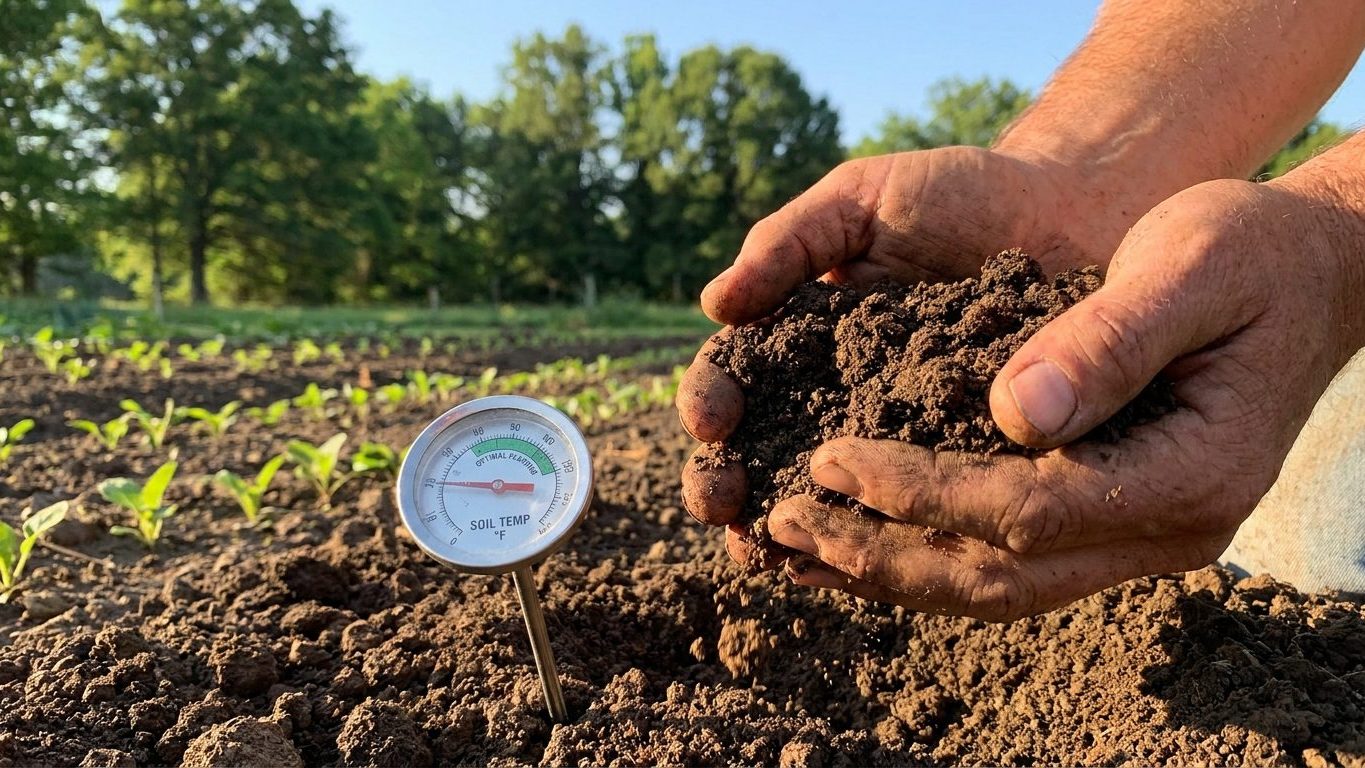

Winter Squash in Indiana goes in the ground once soil temperatures climb into the mid-60s, typically mid-to-late May, and comes off the vine before the first hard frost in October. The state’s roughly six-month frost-free window is long enough for most types to mature fully, but timing still depends on which part of Indiana you’re gardening in and how the summer’s heat and rain play out.
When the soil is warm enough in Indiana

Every gardener wants a date. The honest one, sourced from the NOAA NCEI 1991-2020 Climate Normals at the Indianapolis station (USW00093819), puts the last spring frost somewhere between April 9 and April 21. That’s a band, not a single day, because frost probability is a curve, not a switch. The 30-70% range means there’s still real uncertainty on either edge of it, and Purdue’s own guidance adds a further caution: even after the published spring date, there’s roughly a 10% chance of a 32°F event. Plant on the early edge of that window and keep row cover or an old sheet within reach.
Here’s the part that matters more than the calendar: frost date is a proxy, not the actual trigger. Winter squash seeds don’t care about frost risk directly. They care about soil temperature, and soil takes time to warm even after the air stops threatening to freeze. Cold, wet soil in late April will rot squash seed before it germinates, frost or no frost. That’s why experienced growers in this region wait until soil has warmed well past the frost date rather than rushing seed in the ground the week after the “average” last freeze.
North versus south changes the math
The Indianapolis figures are a central reference point, and Indiana is a long state. Southern counties along the Ohio River typically see their last frost run earlier in spring and their first fall frost run later in autumn, by two weeks or more compared to the northern tier near Lake Michigan. A gardener in Evansville is working with a meaningfully longer season than one in South Bend, even though both fall under the same statewide hardiness range of 5b-7a on the USDA Plant Hardiness Zone Map (2023, built on 1991-2020 normals). That zone map is based on a single variable, the average annual extreme minimum winter temperature, so it tells you almost nothing about spring soil warm-up or summer heat. Use it for perennials, not for deciding when to direct-sow squash.
Because local variation is real and this page can’t know your exact county, the most useful next step is checking with Purdue Extension, which tracks soil temperature and local frost trends county by county. They can tell you what growers nearby are actually seeing this season, which beats any statewide average.
How long the season lasts here
Put the two frost dates together and Indiana’s frost-free window runs from roughly 183 to 204 days, depending on where in each date range a given year falls. The short end comes from pairing the latest spring frost (April 21) with the earliest fall frost (October 21). The long end comes from pairing the earliest spring frost (April 9) with the latest fall frost (October 30). Either way, that’s six and a half to nearly seven months of growing time, which puts Indiana in comfortable territory for winter squash. This isn’t a state where growers are scrambling to squeeze a crop into a short summer.
What does that length actually buy you? For most vegetables, a season this long opens the door to succession sowing, staggering plantings every few weeks to spread out harvest. Winter squash doesn’t work quite that way, since the whole point is a single fruit set that matures and cures before frost, not a rolling harvest of fresh eating. But the generous window does mean something practical: if a first sowing fails to germinate, gets eaten by cutworms, or rots in a cold snap, there’s usually still time for a second attempt in late May or even early June without running out of season before frost. In a shorter-season state, that safety net wouldn’t exist.
It also affects whether transplanting makes sense. Squash resent root disturbance, and direct-seeding is usually the better default. But in a year running toward the shorter end of Indiana’s window, or for gardeners in the northern counties losing those extra two weeks, starting seed indoors three to four weeks ahead and transplanting carefully (using biodegradable pots to avoid disturbing roots) can buy back time that a direct-sown crop would otherwise lose. For a broader look at staggering plantings across different crops and how that changes by growing zone, see our succession sowing guide.
Heat and water in Indiana

Indianapolis averages 14.6 days a year at or above 90°F, per NOAA’s 1991-2020 Climate Normals. That’s a moderate heat load, not the kind of relentless summer that forces irrigation just to keep plants alive, but enough to matter during the weeks when fruit is filling out. Squash vines under sustained heat stress will drop blossoms and slow fruit development, so a stretch of 90°F days in July or August is worth watching, even if it’s not an everyday occurrence here the way it is farther south.
Rainfall tells the more interesting story. Summer brings about 12.6 inches of rain across June, July, and August, out of 43.6 inches for the year, with June the wettest month at 4.95 inches and August the driest at 3.2 inches. That decline through the summer is the detail worth planning around: August is exactly when many winter squash are sizing up and starting to cure their rind, and it’s also the driest month of the growing season. A vine that cruised through a wet June can hit a dry patch right when it needs consistent soil moisture most.
What moderate rain and moderate heat mean together
This isn’t a hot, dry territory where irrigation is the whole story, and it isn’t a cool, damp one where mildew and slow ripening dominate either. Indiana sits in between, which cuts both ways. The early-summer rain (June’s nearly 5 inches) keeps soil moisture comfortable during establishment, but that same moisture, combined with warm nights, creates conditions where powdery mildew and other foliar diseases can take hold on squash leaves by midsummer. Meanwhile the drier back half of summer means a rain gauge on the property, not the seasonal average, is what actually tells you whether to water. The NOAA figures are a 1991-2020 normal for one reference station; a slope, a sandy patch, or a particularly dry August can leave an individual garden thirstier than the regional number suggests. Watering deeply and less often, and mulching to hold moisture through August’s dry stretch, does more for fruit development than chasing the statewide average.
Which winter squash suit Indiana
Given a season running 183 to 204 days, moderate heat, and a rain pattern that turns drier right as fruit matures, three things should drive the choice of type, not one. First, the long frost-free window means most winter squash types have enough time to mature fully here, so season length alone won’t force you toward only the earliest options, the way it would in a state with a much shorter summer. Second, the modest but real heat load (14.6 days above 90°F) rewards types that hold up under a few stretches of hot weather without dropping blossoms, and benefits from siting that gives roots some afternoon shade or at least consistent soil moisture during those spells. Third, and this is the one Indiana gardeners underweight most often, the humidity from that early-summer rain combined with warm nights makes disease resistance to powdery mildew a real consideration, not a nice-to-have.
This page won’t name specific varieties, and that’s deliberate rather than an oversight. Variety trials change year to year, new disease-resistant lines get released, and what performed well in a Purdue trial plot two counties from you is a far more reliable guide than any list a general article could offer. The named varieties that actually matter are the ones your county’s extension office has tested against Indiana’s specific disease pressure and summer weather, not a generic recommendation written for the whole country.
Purdue Extension publishes updated variety trial results and can point you to squash types bred or selected for resistance to the powdery mildew and other foliar diseases that this state’s summer humidity tends to favor. That’s the resource worth checking before buying seed, not a generic list. Between the long growing window and the moderate summer conditions described above, Indiana gardeners have more flexibility than they might expect, but the final decision on type still comes down to what’s proven itself against local disease pressure, and that answer changes by county and by year.