
Collards handle Kansas better than most greens people try here: they shrug off the state’s brutal summer swings and keep producing right up to a hard freeze. The short version is simple. Get transplants or seed into warm soil in spring, plan on one long autumn harvest rather than a mild-winter cut-and-come-again crop, and pick a fast, disease-tolerant type because the growing window is comfortable but not infinite. The reasoning behind each of those calls is what actually changes depending on where in the state you garden.
When the soil is warm enough in Kansas

The question gardeners actually want answered is a date, so start there. At Wichita’s reference weather station, NOAA’s 1991-2020 Climate Normals put the last spring freeze somewhere between April 4 and April 18, based on the 30-70% probability band for a 32°F freeze. That’s the window, not a single day, and it’s a probability rather than a promise: some years the cold breaks earlier, some years a late snap arrives after the calendar says it shouldn’t.
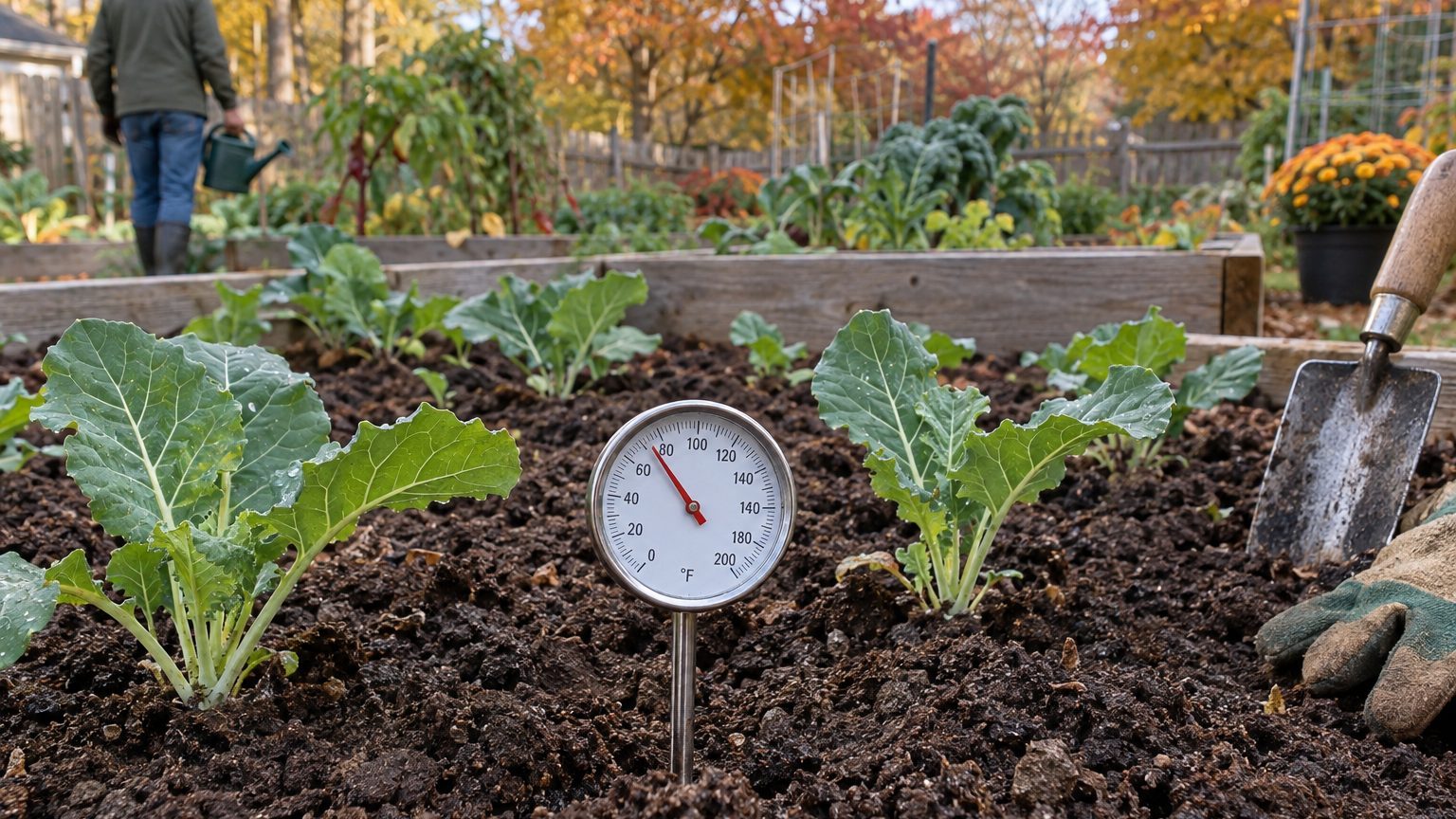
Here’s the part that trips people up. That frost date tells you when the air stops freezing. It does not tell you when the soil is ready. Collard seed germinates poorly in cold ground, and even healthy transplants sulk and stall if the root zone hasn’t caught up with the air temperature. Soil is slow to warm because it holds onto winter’s chill longer than the atmosphere does, so the practical planting date usually falls a week or two after that frost window closes, once the top few inches of a garden bed have actually warmed through, not just the daytime air above it.
Suburban and rural gardens complicate this further. The frost dates above come from an airport weather station, and airport sites tend to run warmer than low-lying yards, wooded lots, or anywhere with poor cold-air drainage. Expect your own last frost to land later than Wichita’s number, sometimes by a week or more, and treat the citywide figure as a reference point rather than a guarantee for your specific plot.
Bed prep matters as much as timing. Collards are brassicas, and so are turnip and rutabaga, along with cabbage, kale, and mustard. All of them share the same soil-borne diseases and the same pest pressure, so tucking collards into a bed that grew any of those crops last season isn’t really rotating anything, it’s just repeating the same risk under a different name. If you’re planning bed assignments for the year, our crop rotation guide for brassicas walks through how to actually break that cycle.
Skip pesticide brand names when you’re managing early-season pests like flea beetles or cabbage worms. What matters is the practice: row cover at transplant time, regular scouting, and rotation, not a specific product off a shelf. And if you’re storing any root crops from the same brassica family over winter, judge them by what you see and feel, not by how long they’ve been in storage. A soft spot, a weeping patch, or a moldy crown means that root is done, regardless of how good the rest of it looks.
How long the season lasts here
Put the two frost windows together and you get the shape of the Kansas growing year. Spring frost risk fades out between April 4 and April 18, and the first fall freeze moves in between October 23 and November 2, again from NOAA’s 1991-2020 Normals at the Wichita station. Stack the earliest fall date against the latest spring date and you’re looking at a shorter, more conservative window; stack the latest fall date against the earliest spring date and it stretches out further. Either way, the frost-free stretch runs somewhere around six and a half months, depending on where your county falls inside that spread and how any given year actually behaves.
That length is generous by cool-climate standards, and it changes what’s realistic to plant. Six-plus months is enough room for a spring sowing and a second, later planting aimed squarely at fall, since collards actually improve in flavor once nights turn cold. Where the window runs shorter, closer to the tighter end of that range, the safer move is to treat the first sowing as the only one and put your energy into timing it well rather than gambling on a second round that fall frost might cut off early.
A longer window also changes the transplant-versus-direct-seed calculation. With months of margin, a slow-to-establish transplant has time to recover from stress and still produce a full crop. With a tighter window, every week counts, and a gardener has to weigh whether checking transplants for rootbound stress or disease before they go in the ground is worth the days it costs versus direct-seeding and thinning in place.
If you want to actually plan out spring and fall plantings so they don’t collide or leave a gap, our succession sowing guide breaks down how to stagger collard plantings against a known frost window like this one, rather than guessing.
Heat and water in Kansas

Kansas summers are the reason collards get planted for fall here rather than treated as a spring-into-summer crop the way lettuce sometimes is. The heat runs long and dry stretches aren’t unusual, conditions that push leafy brassicas toward bitterness and bolting if they’re maturing in the thick of it. That’s the practical case for timing a planting so the crop is filling out as the weather cools rather than as it peaks.
The number that actually decides how this bed gets planned, though, isn’t a summer figure at all. It’s the winter one. At the Wichita reference station, the coldest month averages a daily minimum of 22.5°F, per NOAA’s 1991-2020 Climate Normals, and that’s the mean low, not the record cold snap and not the monthly average high. Collards can take a light frost without complaint and even sweeten from it, but a mean daily minimum in the low 20s across an entire month is well past what lets a plant simply stand in the garden through winter and get picked leaf by leaf.
That figure sorts Kansas into the autumn-crop category rather than the standing-crop category. In parts of the country where the coldest month stays mild, gardeners treat collards as a living pantry, harvesting outer leaves from November clear into March. In Kansas, that model doesn’t hold. The crop here runs its course through fall and finishes at the hard freeze, which is exactly why the fall frost date from the previous section matters more than any summer heat figure when you’re deciding how long to keep harvesting.
None of this rules out a fall planting timed to survive light frost and finish strong in cooler weather; it just rules out planning around an all-winter harvest the way a Gulf Coast garden might. If your summer runs unusually cool and damp in a given year, rather than hot and dry, expect the opposite problem: slower ripening and more pressure from mildew, which is its own argument for not leaning too hard on any single season’s weather pattern when you’re deciding what to plant next.
Which collards suit Kansas
Given a frost-free window running roughly six and a half months and a winter that rules out standing crops, three qualities matter more than any brand name on a seed packet: reasonably quick maturity, good disease tolerance in a humid Midwest summer, and a habit that tolerates being planted for a fall finish. That’s a description of a type, not a specific variety, and that’s deliberate.
This page won’t name a cultivar, and that refusal is itself the useful answer. Seed catalogs change their offerings from year to year, and what performed well in university trials three seasons ago may not be what’s being sold, or trialled, today. What stays reliable is the state’s own extension service, which tracks which types have actually held up against Kansas heat, humidity, and pest pressure in real field trials. Kansas State Research and Extension is the source for that, and it’s a far better guide than a generic seed rack.
The reasoning still narrows the search before you call them. A shorter frost-free stretch in your particular county points toward the earliest-maturing types on offer, since a slow one risks running out of season before it fills in. Kansas heat, especially in a plant that’s still small and getting established, rewards siting that gives the root zone some shade and airflow, whether that’s a partner crop, mulch, or simply avoiding the hottest, most reflective corner of the yard. And because humidity brings fungal pressure along with it, disease resistance deserves to be the first line item you check on any variety list, ahead of leaf color or texture.
Put those three filters together, spring soil timing, the actual length of your frost-free window, and disease pressure from summer humidity, and choosing a collard type for a Kansas garden stops being a guess. It becomes a short list you can hand straight to your local extension office and ask, plainly, which of these has actually done well here.