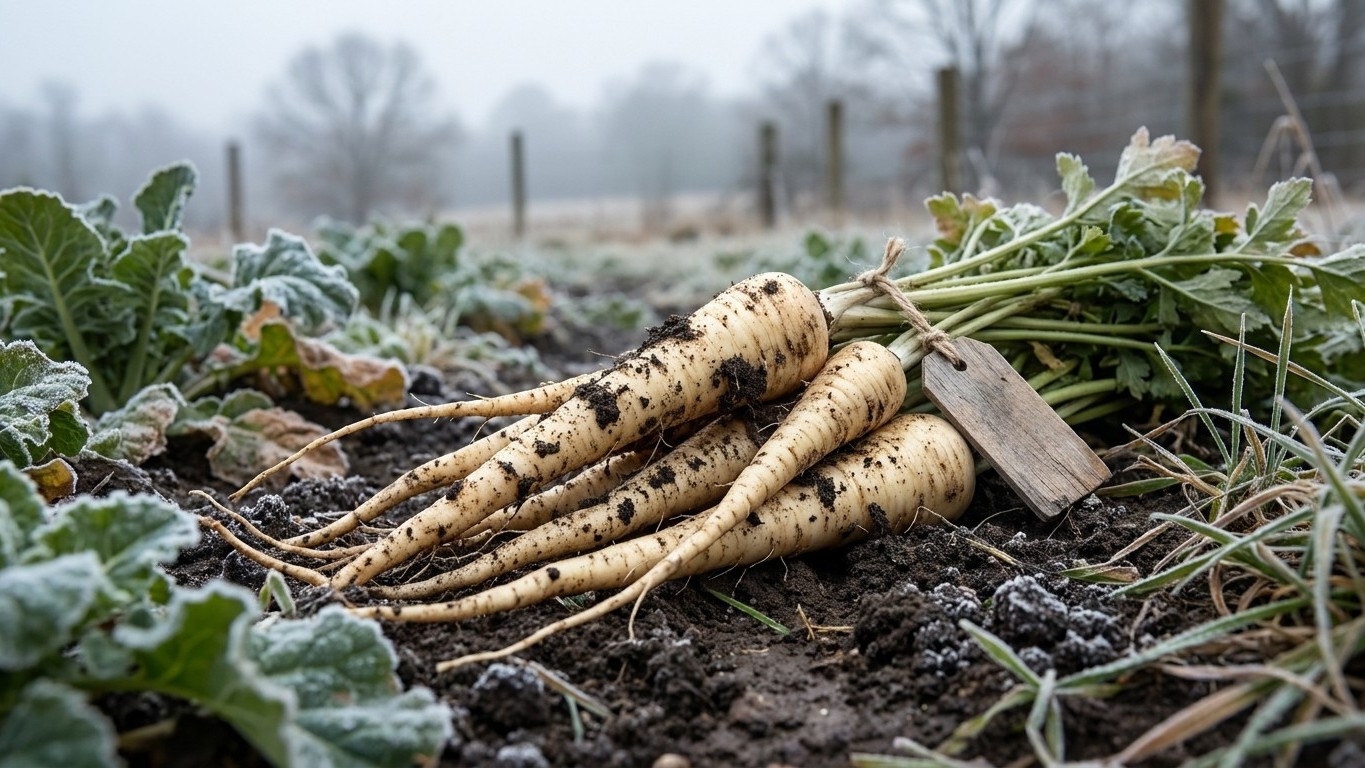

In Kansas, yes: parsnips left in the ground through the cold months will convert their starches to sugar. The reference station near Wichita logs a mean minimum of 22.5°F in the coldest month, cold enough to deliver the sustained, repeated frost exposure the crop needs. That’s the short version. What follows is the math behind it, the season window you’re actually working with, and the specific ways this crop trips up gardeners in Kansas soil and Kansas weather.
The short answer
The question that settles this isn’t “how cold does it get on the worst night of the year.” It’s whether the territory delivers several consecutive frosty weeks, night after night, cold enough to sit on the roots and trigger that starch-to-sugar conversion. A single hard freeze doesn’t do it. A string of mild winters with only occasional dips below freezing doesn’t do it either. What does it is a coldest month where the average low, not the record low, sits well under 32°F for weeks on end.
At the Wichita reference station, NOAA’s 1991-2020 Climate Normals put the mean daily minimum for the coldest month at 22.5°F. That’s not a fluke reading from one brutal night. It’s the average across an entire month, which means most nights in that stretch dip into the low-to-mid 20s or colder. A parsnip left in that ground isn’t getting one frost and calling it done. It’s getting weeks of repeated cold, exactly the exposure Utah State University Extension points to as the trigger for sweetening.
This matters because the sweetening mechanism has nothing to do with hardiness zone ratings. A hardiness zone tells you whether a perennial plant’s roots can survive winter where you live. It says nothing about how many frosty nights actually roll through your garden in a typical year. Kansas could sit in a zone that looks unremarkable on a map and still deliver the kind of long, cold winter stretch that a mild-zone coastal garden never sees. The zone number and the frost exposure are two different measurements, and only one of them decides whether your parsnips turn sweet.
So the plain read for this territory: parsnips grown here won’t just survive to harvest, they’ll actually improve if you leave them in the ground into and through the cold season. A 22.5°F average minimum in the coldest month is comfortably below the freezing threshold, and it holds there for weeks rather than days. That’s the difference between a parsnip that merely grows to size and one that develops the sweetness the crop is known for. Gardeners in territories where the coldest month barely dips below freezing don’t get this benefit no matter how patient they are. Kansas gardeners do, provided they let the roots sit through enough of that cold before pulling them.
Does the season fit?
Parsnips are sown directly in the garden bed, not started indoors and transplanted, and the clock starts the moment seed goes into soil. Utah State University Extension puts the full run at 100 to 120 days from seeding to maturity, with sowing timed 2 to 3 weeks before the last spring frost. Here’s how that lines up against the Wichita reference dates for this territory.
- Find the sowing window. NOAA’s 1991-2020 Climate Normals put the last spring frost at the Wichita reference station between April 4 and April 18. Counting back 2 to 3 weeks lands the sowing date in the mid-to-late March range, before the soil has fully shed its last frost risk.
- Add germination time. Parsnip seed is slow to sprout, 14 to 21 days is normal, and gardeners who don’t account for this often assume the seed failed and dig up perfectly viable soil to re-sow. Seedlings from a mid-to-late March sowing typically won’t show above ground until early-to-mid April.
- Run the 100-to-120-day clock. Counting forward from a mid-to-late March seeding, maturity lands somewhere between late June and late July, depending on where in that 100-to-120-day range this particular sowing falls.
- Check it against the first fall frost. The Wichita reference station’s first fall frost window runs October 23 to November 2. From a maturity date in late June or July, that leaves roughly three to four months of open season before the ground even sees its first frost.
- Score the fit. That gap is generous. The crop doesn’t just squeeze in before frost, it has months of slack, which means there’s no pressure to rush the sowing date and no risk of the season running out before the roots size up. The tight part of the calendar, if there is one, is at the front end: sowing too early into cold, wet March soil can rot slow-germinating seed before it ever sprouts.
Worth repeating: these dates come from one reference station. Suburban and rural gardens across Kansas typically see the last spring frost arrive later and the first fall frost arrive earlier than the airport station records, sometimes by one to two weeks, more at elevation. Check your own county’s frost history before locking in a sowing date.
What goes wrong here
- Forked, split roots from heavy or stony ground. Parsnips push a single taproot straight down, and anything that blocks that path, compacted clay, buried rocks, a hardpan a foot down, sends the root branching around the obstruction instead of growing straight. Utah State University Extension recommends deep sandy soil for this crop, and where the ground is naturally heavier, double digging the bed before sowing gives the root a clear column to grow through.
- Forked roots from overwatering. This is a separate cause from heavy soil, not a variation on it. Even in loose, well-worked ground, keeping the bed consistently saturated can cause the root to split or branch as it grows. The fix is watering deeply but less often, letting the top few inches dry between soakings rather than keeping the bed wet around the clock.
- Sowing too early into cold, wet soil. Because germination already takes 14 to 21 days, seed sown into soil that’s still cold and soggy from spring rain can rot before it sprouts at all. Waiting until the soil has warmed and drained a bit, even if that means sowing slightly later within the recommended window, protects germination without costing meaningful season length given how much slack this territory’s frost dates provide.
- Pulling the crop before the frost has done its work. Kansas’s coldest-month average of 22.5°F is more than cold enough to sweeten parsnips left in the ground, but only if they’re actually left there. Harvesting right at maturity, before the season’s frosty weeks arrive, skips the sweetening step entirely and delivers a starchy, plain-tasting root instead of the sweet one the cold winter is capable of producing.
- Treating the state’s soil reputation as a guarantee. Soil texture varies block to block, let alone county to county, so a general sense of what Kansas ground tends to be like isn’t a substitute for checking your own bed. A simple dig-and-feel test, or a soil test through a local extension office, tells you whether double digging is worth the effort before you commit a season to it.
Common questions
Can I harvest parsnips before the first frost if I’m short on patience?
You can, and the roots will be fully grown and edible. But skipping the frost exposure means skipping the sugar conversion Utah State University Extension describes, so the flavor will be flatter and starchier than a root left in the ground through several cold weeks.
How long after the first fall frost should I wait to dig them up?
The sourced guidance calls for several weeks of cool, frosty weather after that first frost, not just a single overnight dip. Given the Wichita reference station’s first fall frost window of October 23 to November 2 and a coldest-month average of 22.5°F, this territory has ample cold weeks to draw on before digging.
Why did my seed bed look empty for three weeks?
That’s normal. Parsnip seed germinates slowly, 14 to 21 days by Utah State University Extension’s figures, and gardeners who dig up the bed early assuming failure often destroy seed that simply hadn’t sprouted yet.
Does a colder hardiness zone automatically mean sweeter parsnips?
No. Hardiness zone measures whether perennial plants survive winter where you live, not how many frosty weeks roll through your garden. What decides sweetening is the actual frost exposure, measured here by the coldest month’s mean minimum, not a zone number on a map.