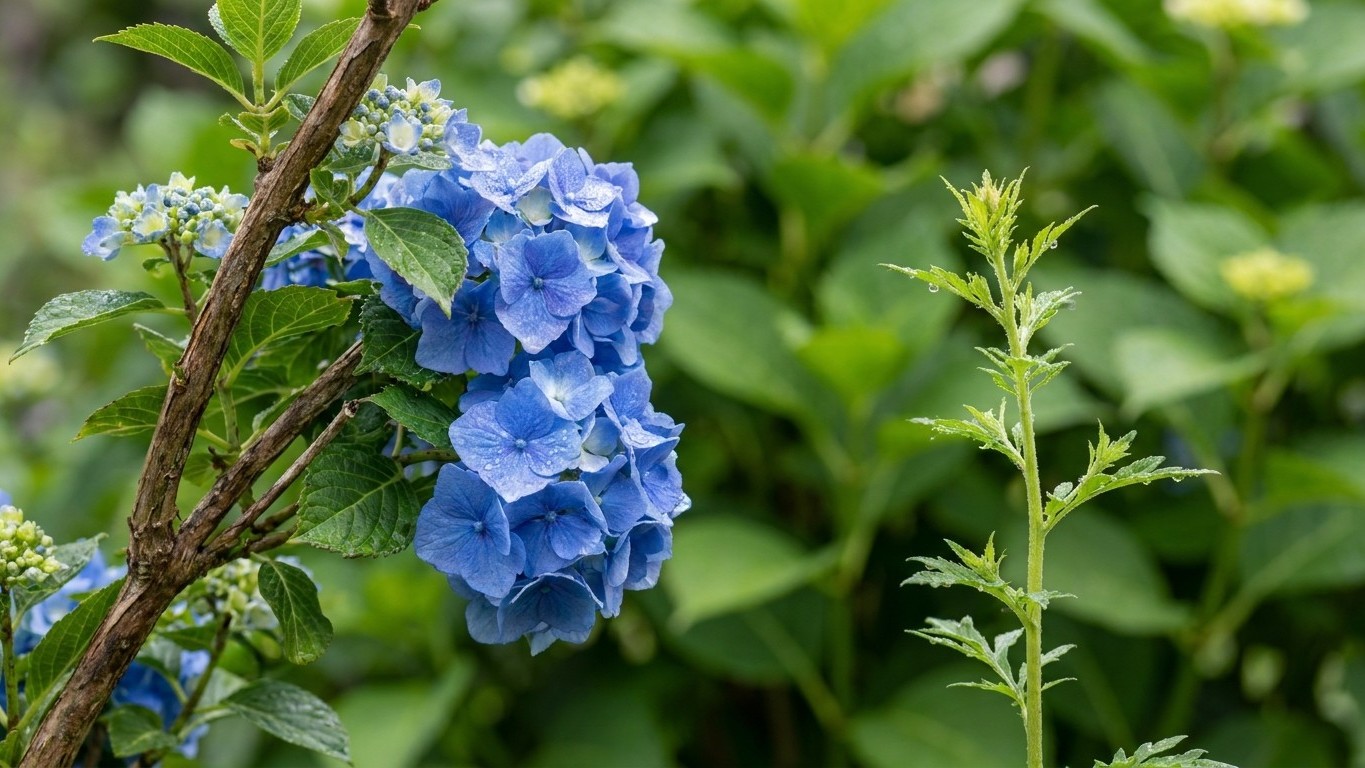

Most hydrangeas grown in Kansas get through winter without help. The exception is the bigleaf type, which sets next summer’s flower buds on this year’s stems and can lose them to a hard freeze or a cold snap after a warm spell. A wire cage filled with dry leaves, mulch over the roots, and a drink of water during dry spells cover most of the risk. The timing matters more than the materials, and the timing follows the frost dates.
What this comes down to in Kansas

At the Wichita airport reference station, the last spring frost falls between April 4 and April 18, and the first fall frost between October 23 and November 2. Winter protection goes on after that fall window has passed and the leaves have dropped, and it comes off in stages as the spring window arrives.
Those are airport figures. Suburban and rural gardens typically see the last spring frost later and the first fall frost earlier, often by one to two weeks, and more at elevation. A garden on the edge of town may need its protection on earlier in the fall and kept on later in the spring than the reference city suggests.
What actually damages hydrangeas in a Kansas winter?
Midwinter cold alone rarely does it. A bigleaf hydrangea hardens its buds through fall and tolerates a lot of cold once it is dormant. The damage usually comes from the sequence: a mild spell in late winter, buds that begin to swell, then a freeze that kills them. The stems survive and leaf out, but the shrub produces no flowers that summer.
Dry wind is the second problem. Kansas winters can go weeks without meaningful moisture, and roots in dry, frozen ground cannot replace what the stems lose to the wind. Stems on the exposed side of the shrub dry out and die back.
The USDA Plant Hardiness Zone Map puts the state between zones 5b and 7a. That system is built on one variable, the average annual extreme minimum temperature, so it says nothing about wind, dry soil or late-winter swings. A bigleaf rated for the zone on the tag can still lose its buds in a year when those other factors line up.
Which hydrangeas need protection at all?
Bigleaf and mountain hydrangeas bloom on old wood, so the buds themselves have to make it through winter. Oakleaf hydrangeas also bloom on old wood but are tougher. Panicle and smooth hydrangeas bloom on new wood, so even a stem frozen to the ground will still flower that year. Which Hydrangeas Survive a Kansas Winter ranks the types in more detail. Here the question is how to protect the ones that need it.
Working it out for your own garden
Start with two windows: first fall frost and last spring frost. The reference city gives October 23 to November 2 and April 4 to April 18. For a garden outside town, shift the fall window earlier and the spring window later by a week or two, and treat the result as a range.
For the fall, a first-frost window of October 23 to November 2 plus two to three weeks gives roughly mid to late November. By then the leaves have dropped and a few hard freezes have chilled the soil. Cover earlier and the cage holds warmth against the stems, which draws mice and invites rot. A wire fence cylinder a little taller than the shrub, filled loosely with shredded leaves or straw, works well. Add a layer of mulch over the root zone, kept off the base of the stems. Skip plastic, which traps moisture and heat on sunny days.
For the spring, the window opening in early April is the signal to start loosening, not to strip everything off. Open the sides of the cage on mild days and keep the leaves nearby. Remove the cage fully only after the later end of your own spring window has passed, which in an outlying garden can mean late April or early May.
Scratch a stem with a fingernail to see what survived. Green underneath means live wood. Brown and dry means dead, and that wood can be cut once the shrub has leafed out and the live buds are obvious.
| Hydrangea type | Blooms on | Winter protection that pays off |
|---|---|---|
| Bigleaf and mountain | Old wood | Wire cage with leaves, plus root mulch |
| Oakleaf | Old wood | Root mulch, cage in exposed spots |
| Panicle | New wood | Root mulch only |
| Smooth | New wood | Root mulch, cut back in late winter |
What changes across the state
Kansas climbs and dries from east to west. The eastern third gets more rain and snow, holds more humidity and stays somewhat milder. Gardens around Kansas City and across the east have an easier time with bigleaf hydrangeas, and the main risk there is a late freeze after an early warm-up.
Going west, elevation rises, rainfall drops and the wind picks up. Winters feel harsher even when the lowest temperatures are similar, because the air is drier and the wind is steady. Gardens in the western part of the state lose more stem moisture and usually need a windbreak, deeper mulch and winter watering. The same cage that is optional in the east can be the difference between flowers and none in the west.
North to south matters too, though less than east to west. Northern counties see the cold arrive earlier and leave later, and southern counties get the longer growing season and the earlier spring warm-ups, which is the setup for the buds-swell-then-freeze problem. That spread is part of why the state’s hardiness zones run from 5b to 7a.
Local setting can matter as much as region. A spot on the south or west side of a house warms sooner in late winter and wakes the buds early. An east or north exposure stays cooler longer and holds buds back until the worst freezes are past. Low spots collect cold air on still nights, so hydrangeas planted there often get hit by spring freezes that the neighbor’s uphill shrub avoids. Soil also plays a part, and Why Hydrangeas Are Pink in Kansas, and How to Turn Them Blue covers how it shapes bloom color.
The mistakes this state punishes

The first mistake is covering too soon. A warm October or early November makes it tempting to wrap right after the first frost. A cage on a plant whose soil is still warm shelters mice and holds moisture around the stems. Wait for the leaves to drop and the soil to chill, then cover.
The second is pruning old-wood hydrangeas in fall. Cutting a bigleaf back for tidiness removes the buds that would have bloomed. Leave the stems standing through winter and prune after leaf-out.
The third is unwrapping at the first warm week. March can bring days in the seventies, and a freeze often follows. Taking the cage off then exposes buds that have already started to swell. Open the sides on warm days and close them again when the forecast turns cold.
The fourth is skipping winter water. Dry, windy stretches without snow cover can pull a shrub’s stored moisture down. On a day above freezing, give the root zone a slow soak. This matters most for shrubs planted in the past season or two.
The fifth is planting a bigleaf in a wide-open, west-facing spot. A fence, a wall or a stand of evergreens on the windward side does more than any wrap. And plastic over a cage, however good the intention, causes more trouble than it prevents.
Checking this against your county
A reference-city frost window is a starting point. Your own last and first frost depends on your elevation, your exposure and how far you are from the airport. Your county office of K-State Research and Extension can tell you what the local frost pattern looks like and which hydrangeas do well nearby. For the broader picture of site, soil and care, see the state guide to growing hydrangeas in Kansas.
Common questions
Should I cut back hydrangeas before winter?
Not the bigleaf, mountain or oakleaf types, since their flower buds are already on the stems. Panicle and smooth hydrangeas can be cut in late winter, before new growth starts.
Do panicle hydrangeas need a winter cage?
Usually not. They bloom on new wood, so even stems damaged by the cold do not cost you that year’s flowers. Mulch over the roots is enough.
Why does my hydrangea look dead in spring?
Bigleaf hydrangeas leaf out late. Wait until the later end of your spring frost window has passed, then scratch a stem. Green underneath means it is alive. Cut away only what is brown and dry.
When should I take winter protection off?
Loosen it gradually once the spring frost window opens, and remove it fully after the later end of that window has passed in your garden. Outlying gardens run a week or two behind the reference city.