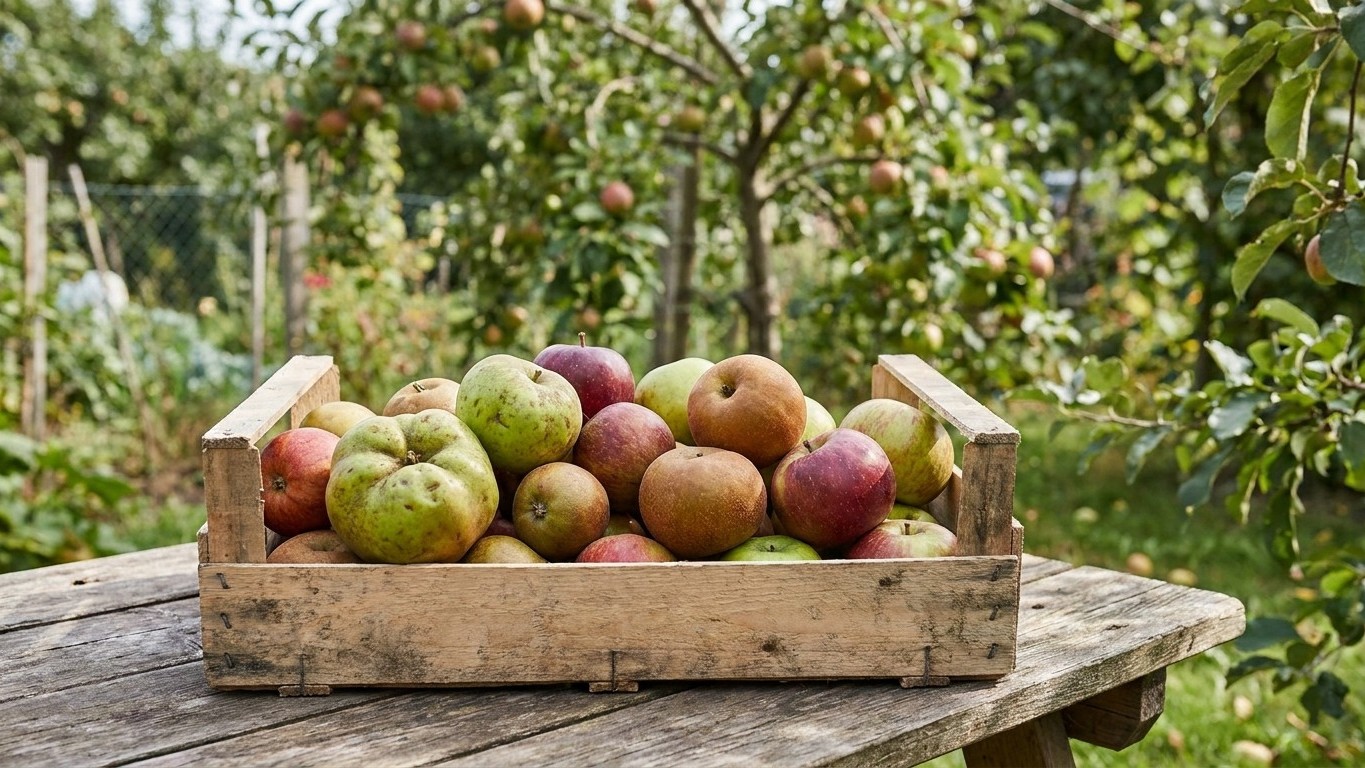

Most Louisiana apple trees produce a single crop that ripens sometime between June and August, well ahead of the punishing late-summer heat, and that fruit rarely lasts past a few weeks once picked. Mild winters and thick summer humidity work against the cold, dry storage apples need, so plan to eat, can, or freeze most of what you harvest rather than tuck it away for months.
When apples are ready to pick in Louisiana
The reference station for this region, New Orleans, records a mean daily minimum of 46.1°F in the coldest month, according to NOAA’s 1991-2020 Climate Normals. That single figure explains why apple growing here looks nothing like it does up north. Apple trees need a stretch of real cold each winter, measured in chill hours, to flower properly the following spring. A New England orchard banks that cold without effort. South Louisiana barely gets there, so every variety that fruits reliably in this climate is a low-chill selection bred to flower on far less accumulated cold than a Honeycrisp or a Gala would ever need.
That trait comes with a trade-off worth stating plainly. A tree that needs less cold to break dormancy also breaks dormancy earlier, and an early bloom sits closer to the tail end of the frost window rather than safely past it. NOAA’s data for this station puts the last spring frost between January 18 and February 8, and the first fall frost between December 17 and January 8, a freeze season that straddles the New Year and, in roughly one year out of seven, doesn’t produce a 32°F freeze at all. That record is too thin and irregular to use like a normal planting calendar. A low-chill tree can push blossoms during a warm spell inside that window and lose them to a freeze a week later. Low-chill is still the right choice for this climate, because the alternative, a higher-chill variety that needs real sustained winter cold, won’t flower here in most years at all. Accept the occasional frost-thinned bloom as the cost of getting any fruit set in the first place.
None of that gives you a picking date, because ripeness isn’t a calendar event here any more than it is anywhere else. It shows up as three signals: the background skin color shifting from green toward the variety’s mature shade, the seeds turning from white to brown, and the fruit separating from the spur with a gentle upward twist instead of tearing. Once the first ripe apples start dropping on their own, the rest of that tree’s crop is usually a week or two behind. Growers commonly plant low-chill selections such as:
- Anna
- Dorsett Golden
- Ein Shemer
Because bloom follows this region’s early, frost-exposed window rather than a reliable spring, ripening lands earlier in summer than the same variety would show farther north, and the exact week can shift by two or three from one year to the next depending on how mild that particular winter ran.
| Region | Winter severity | Frost pattern | What it means for apples |
|---|---|---|---|
| South Louisiana (New Orleans, NOAA reference station) | Mean min of coldest month: 46.1°F | Last spring frost Jan 18-Feb 8; first fall frost Dec 17-Jan 8; a 32°F freeze occurs in about 86.8% of years | Only low-chill varieties flower reliably; early bloom carries some frost risk |
| North Louisiana | No NOAA figure given here | Freezes more reliably each winter than the coastal reference station | More predictable dormancy; bloom generally pushed later in the season |
Which ones keep, and which must be eaten
The low-chill varieties that actually produce in Louisiana weren’t bred for the root cellar. Anna, Dorsett Golden, and Ein Shemer were selected because they can flower on limited winter chill, not because their flesh holds up in storage. That’s a different design goal than a Honeycrisp or a GoldRush, cultivars developed in colder climates where growers expect months of cold storage and bred fruit dense and thick-skinned enough to survive it. What you pick off a Louisiana tree tends to be softer-fleshed and thinner-skinned, which means it behaves more like an early-summer eating apple than a keeper.
Sorting at harvest matters more here than it would in a drier, colder state. Humidity and heat push bruised or insect-stung fruit toward decay fast, and one softening apple in a bag speeds up the ones around it. Set aside anything firm and free of blemishes for the refrigerator, and use anything already soft, bruised, or marked by insect damage the same day, in a pie, a sauce, or a batch of butter, rather than letting it sit and hoping.
Fire blight and general fungal pressure, both favored by warm, humid spring weather in the Gulf South, also show up as surface blemishes and stem-end damage that shorten a fruit’s shelf life even before it’s picked. A blemish-free apple from a tree that had a clean bloom season will simply outlast one that fought off disease pressure all spring.
None of this adds up to the extended storage life growers plan around in colder states. Even the firmer, later-picked fruit from a Louisiana tree is realistically a few-weeks proposition under refrigeration, not a months-long one. That’s not a flaw in technique; it’s a function of the varieties this climate can support and the disease pressure they face while ripening. Treat the harvest as a summer crop meant for near-term use, and plan the rest of the crop for freezing, canning, or drying rather than long cold storage.
Storing them through a Louisiana winter
The same mild winters that force low-chill varieties in the first place also rule out the storage tricks that work farther north. An unheated garage, a root cellar, or a cool breezeway can hold apples near freezing in a place with a real winter. In Louisiana, ambient temperatures during the coldest month average well above that, so those traditional storage spaces simply never get cold enough to slow the fruit down the way it needs. A refrigerator isn’t a fallback option here; it’s the only practical cold-storage tool most households have.
Set the fruit as close to the refrigerator’s coldest safe setting as it allows without freezing, and pack it in perforated plastic bags rather than sealed containers. The perforations let excess moisture escape so condensation doesn’t build up and rot the fruit, while still holding enough humidity that the apples don’t shrivel. Keep them away from ethylene-sensitive produce, since apples give off that ripening gas steadily and can push nearby vegetables toward spoilage faster than expected.
Check the batch weekly. One softening apple in a crisper drawer accelerates decay in the fruit touching it, so pulling a compromised apple early protects the rest of the batch. Given how short the realistic storage window already is for these low-chill varieties, that weekly check isn’t optional busywork, it’s what determines whether you get two weeks out of the harvest or four.
For anything beyond that window, preservation does more work than refrigeration ever will. Sliced apples freeze well for baking later in the year, applesauce and apple butter can be canned for shelf storage, and dehydrated slices hold for months without any refrigeration at all. For a crop that was never bred to sit in cold storage, converting the surplus into a shelf-stable form right after harvest is usually the more reliable plan than stretching refrigerator space.
What goes wrong here
The most common failure isn’t storage, it’s the bloom itself. In an unusually mild winter, even a low-chill variety can fail to accumulate enough chill hours to flower fully, leading to a sparse, uneven bloom and a light crop that has nothing to do with the tree’s health. That’s a direct consequence of how thin the region’s cold season runs some years, and it varies from one winter to the next in a way growers elsewhere don’t have to plan around.
The second common problem sits on the other side of the same coin: a bloom that happens right on schedule but lands inside the region’s irregular freeze window. Because the last spring frost here falls as early as January 18 in some years and as late as February 8 in others, an early-blooming low-chill tree can lose flowers to a late cold snap that a normal planting calendar wouldn’t have flagged.
Fire blight is the disease growers should watch for most closely, since warm, humid spring weather across the Gulf South favors it on apple and pear family trees alike. Blackened shoot tips and blossoms that wilt rather than set fruit are the signs to catch early.
One gap worth naming honestly: LSU AgCenter, the state’s extension service, publishes far more guidance on citrus, satsumas, and pears than on apples, because those crops suit Louisiana’s climate more comfortably. Growers won’t find a locally published, variety-by-variety chill-hour trial for apples the way they might for better-adapted fruit, so a lot of what works here comes down to grower experience rather than documented local research.
Common questions
Can apple trees survive Louisiana winters?
Survival isn’t the issue. A mean daily minimum of 46.1°F in the coldest month, per NOAA’s New Orleans data, is far too mild to threaten a dormant apple tree. The real constraint is chill accumulation for flowering, which is why only low-chill varieties produce fruit reliably here.
When should I pick apples in south Louisiana?
Watch the tree rather than the calendar: skin color turning toward the variety’s mature shade, seeds turning brown, and fruit separating easily from the spur. Because bloom here follows an earlier, frost-exposed window than in colder states, ripening generally lands earlier in the summer too, and the exact week shifts with how mild that winter ran.
How long do Louisiana-grown apples keep?
Plan on a few weeks under refrigeration, not months. These varieties were bred for low-chill flowering, not shelf life, and Louisiana’s humidity accelerates decay in anything bruised or blemished. Use damaged fruit immediately and save the firmest, cleanest apples for the fridge.
Does north Louisiana grow apples differently than south Louisiana?
Yes. North Louisiana freezes more reliably each winter than the New Orleans reference station used for south Louisiana figures, which gives trees a more predictable dormancy and pushes bloom later into a safer window. No specific NOAA figures for north Louisiana are included in the data behind this article, so treat that difference as a general pattern rather than a precise threshold.