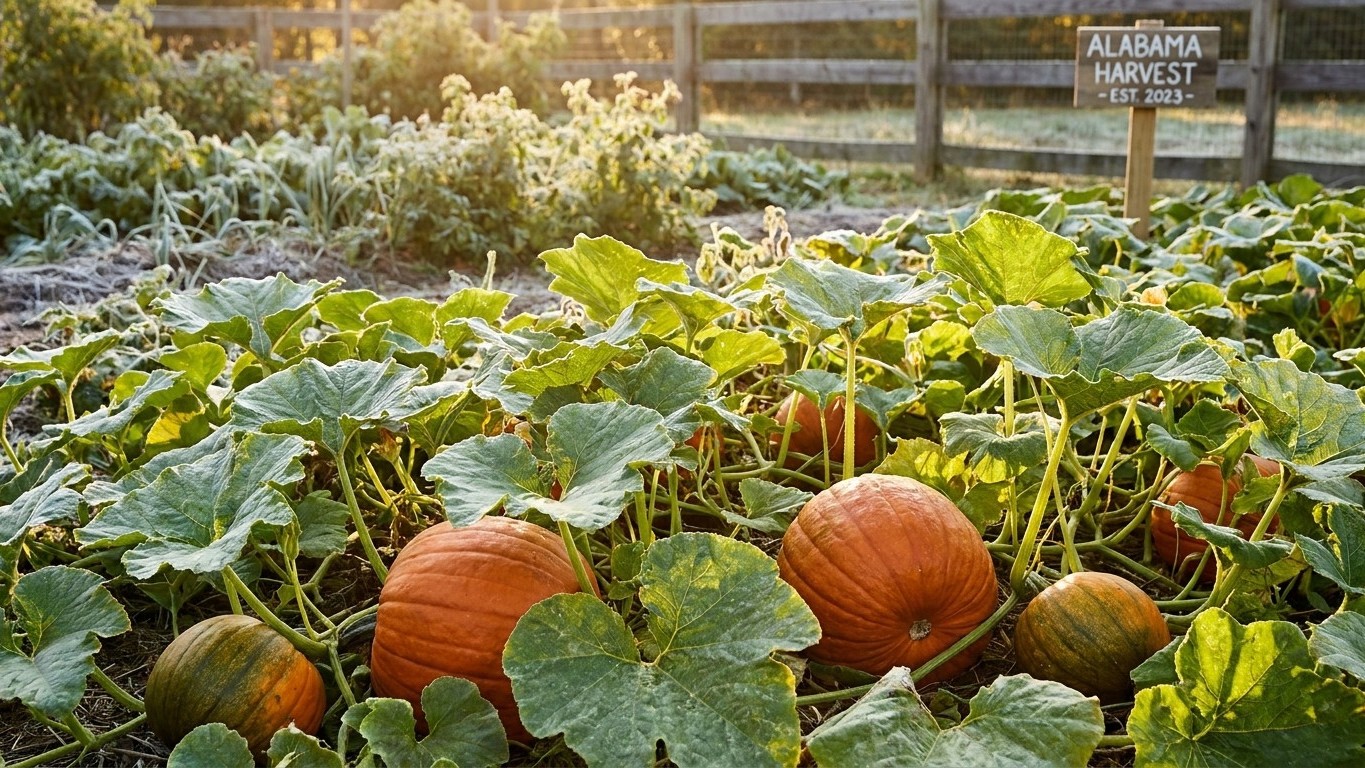

Yes, in most years, but the reason has little to do with an early cold snap. Louisiana’s first fall freeze doesn’t typically arrive until sometime between December 17 and January 8, and in roughly one year out of seven it doesn’t show up at all before the calendar turns. That leaves pumpkins sown for a fall harvest plenty of room to finish, as long as their flowers open early enough. The real math is working backward from that frost window to find the last safe date for a bloom to open.
The short answer
Louisiana’s first fall frost lands somewhere between December 17 and January 8, based on NOAA’s 1991-2020 climate normals for this station. That’s an unusually late window compared with most of the country, and it comes with a caveat: a 32-degree freeze shows up in only 86.8 percent of years at this location, which means roughly one year in seven passes with no freeze at all before the season turns over into January. The frost window straddles New Year’s Day, which says something about how this state’s growing season actually ends. It’s not an October cutoff. It’s closer to a moving target that lands anywhere from mid-December through the first week of January.
Utah State University Extension puts pumpkin fruit development at 45 to 55 days after the flower opens, not from the day seed goes into the ground. Count backward from the earliest edge of that frost window, December 17, and 55 days lands you around October 23. Use the shorter 45-day estimate from that same date, and you land near November 2. Slide the calculation to the far end of the frost window, January 8, and the same math gives you late November, somewhere between November 14 and November 24 depending on which end of the 45-to-55-day range you use.
That spread, roughly late October through late November, is the safe window for a flower to open and still finish coloring before the ground freezes. It’s wide because two separate figures are stacking uncertainty on top of each other: the frost date itself swings by three weeks on its own, and the maturation estimate carries a ten-day range before you even get to that.
What that means for anyone planning a fall pumpkin patch is fairly simple. If the vine is setting flowers by late October, the fruit has time to finish even under the more conservative estimate. If flowering slips into December, the pumpkin is racing a freeze that could land at any point over the following month, and there’s no guarantee it wins. None of this touches the harder limit on the front end of the season, which is heat, not cold. That’s the subject of the next section.
When to sow here
Working out a sow date means starting from the opposite end of the calendar: spring, not fall.
- Locate the last spring frost window for this station: January 18 to February 8. In north Louisiana this date carries real weight, since freezes are common and reliable there. In the south, treat it loosely, since the same freeze that defines the fall window shows up in only 86.8 percent of years and can simply skip a season entirely.
- Don’t sow on that date. Soil temperature lags air temperature by weeks, not days, so a patch of ground can sit below 65 degrees Fahrenheit long after the air has stopped freezing. Utah State University Extension lists 65 F soil as the threshold for sowing pumpkin seed, so check the ground itself with a thermometer rather than counting days from the frost date.
- Factor in row covers if the goal is an earlier start. They buy roughly two weeks, which in practice means soil that would otherwise reach 65 F only in mid-spring can be treated as ready two weeks sooner for seed placed under cover.
- Count forward from the actual sow date to the point the vine sets its first flowers, then add the 45-to-55-day maturation window from the previous section, and check that total against the December 17 to January 8 fall frost range. In most years, Louisiana’s growing season is long enough that the numbers clear with room to spare, unless flowering itself gets delayed by summer heat rather than by any cold snap.
What goes wrong here
Given how much runway the fall frost window provides, most failures here trace back to timing errors made earlier in the season, not to an unexpected freeze.
- A late flower that never colors. If sowing slips or heat delays flowering past the safe window described above, roughly late October to late November on the outside edge, the fruit set afterward simply runs out of the 45 to 55 days it needs before frost arrives. The fix is tracking the date flowers open, not the date seed went into the ground, and removing any fruit that set too late so the plant’s energy goes into earlier pumpkins that still have time to finish.
- A fruit caught by frost before it’s cured. A pumpkin can be fully colored on the outside and still not ready to come off the vine. Utah State University Extension recommends harvesting with the stem attached and moving fruit somewhere it will not freeze, rather than leaving it in the field hoping for a few extra days of hardening once frost is forecast.
- A vine that dies back before the skin hardens. Louisiana’s humidity and pest pressure from squash bugs and cucumber beetles in Louisiana can strip foliage well before frost, leaving fruit exposed without the leaf cover that helps a rind finish hardening. Manage the pest problem directly using the state-specific pages linked above rather than letting foliage loss sneak up late in the season.
- Flowers that abort in peak summer heat before they ever get pollinated push the whole clock later than planned, eating into the safe window from the first section without a single freeze involved. Sowing early enough, with row covers if needed, gives flowering a chance to land before the worst of the heat rather than after it.
Common questions
Can pumpkins survive a light Louisiana frost?
The data behind this page covers only one threshold: the probability of a 32-degree freeze, drawn from NOAA’s 1991-2020 climate normals. No separate figure for a lighter, non-freezing frost is published here, so treat the December 17 to January 8 window as the point where damage becomes likely, not as a hard line with a softer edge below it.
What happens if my flowers open after the safe cutoff?
A flower that opens past the safe window, roughly late October through late November depending on the year, doesn’t get the full 45 to 55 days Utah State University Extension lists for fruit development before the first freeze. The fruit typically stays green or only partially colored when the cold finally arrives.
Does south Louisiana really need to plan around frost at all?
Less than the fall date suggests. At this station, a 32-degree freeze occurs in only 86.8 percent of years, meaning roughly one year in seven has no freeze at all before the season turns over into January. Summer heat, not the fall frost date, is the tighter constraint for most of the state.
How long will a harvested pumpkin keep?
Utah State University Extension doesn’t publish a storage temperature or a specific keeping time for pumpkins. The guidance is limited to harvesting with the stem attached and storing fruit somewhere it will not freeze, which is worth following even without a number attached to it.