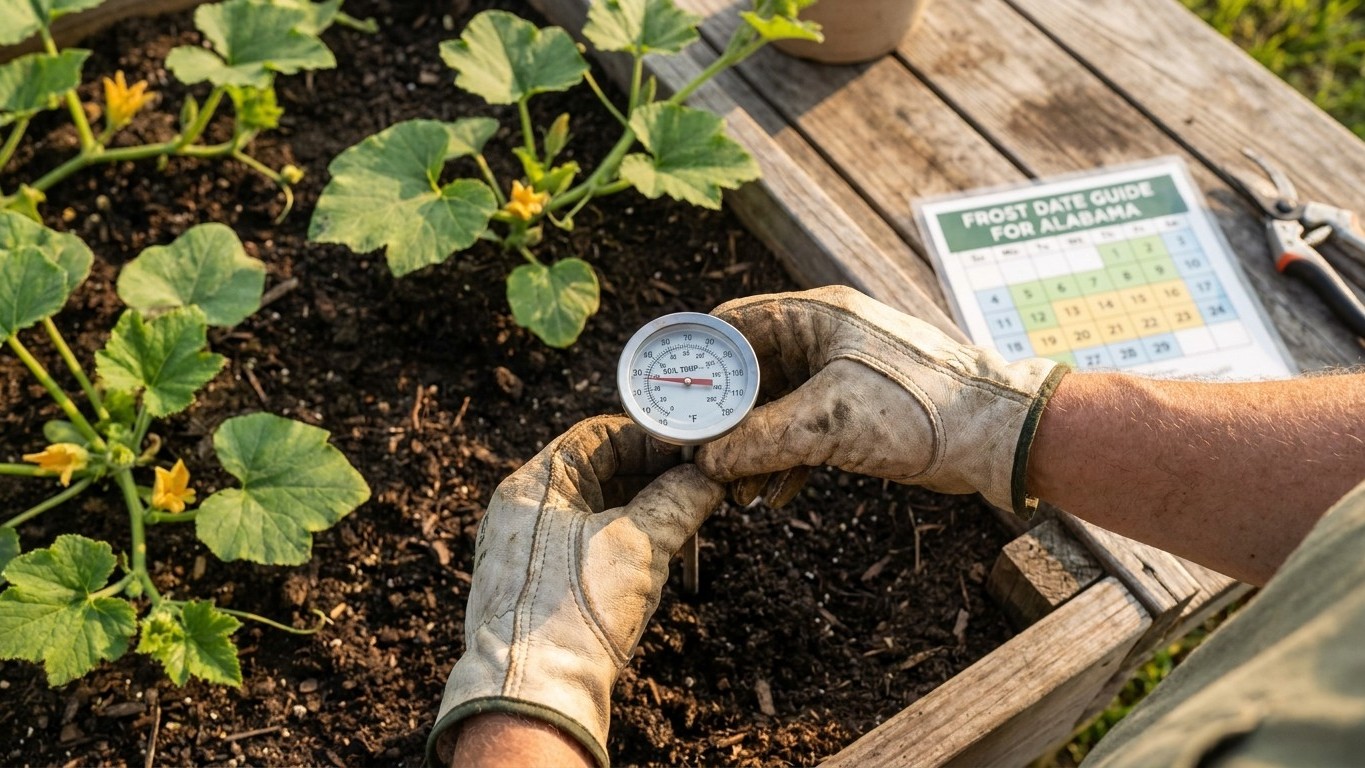

The short version: sow pumpkin seeds directly in the garden once soil tests 65°F in spring, or time a summer sowing so the last flowers open before Louisiana’s late, sometimes absent, freeze. That freeze can land anywhere from mid-December to early January, which means the calendar here bends around summer heat far more than around frost.
The short answer
NOAA’s 1991-2020 Climate Normals put Louisiana’s first fall freeze somewhere between December 17 and January 8, and that same dataset shows a 32°F freeze happens in only 86.8 percent of years at this station. Put another way, close to one year in seven brings no hard freeze before the calendar turns over. That single fact reshapes how a grower here should think about a fall pumpkin crop: the frost line isn’t a hard stop so much as a slow fade that may or may not show up on schedule.
Because a pumpkin needs 45 to 55 days after its flowers open to finish ripening, according to Utah State University Extension, the math has to run backward from that freeze window rather than forward from a sowing date. Subtract 45 to 55 days from December 17 and the last safe bloom lands near the end of October. Subtract that same range from January 8 and it stretches to mid-to-late November. That spread, roughly late October through late November, marks the outer edge for the last flower a fall vine can afford to open. Anything blooming later is racing a freeze that might arrive in three weeks or might not arrive until well into the new year.
North Louisiana tends to see a freeze with more certainty than the parishes closer to the Gulf, where some years pass without one at all. Growers in the northern part of the state should lean toward the earlier end of that flowering window, while gulf-side gardeners generally have more slack, though no separate date is published to draw that line precisely.
The real ceiling on pumpkins in this state is rarely frost. It’s summer heat that stalls pollination and rots vines long before any freeze warning goes up. That’s why the frost math above matters more for penciling in a fall crop than for worrying over an early bloom in June.
When to sow here
- Start with the air, not the soil. NOAA’s 1991-2020 Climate Normals place Louisiana’s last spring frost between January 18 and February 8, one of the earlier last-frost windows found anywhere in the country.
- Wait for the ground to catch up. Soil warms weeks slower than the air above it, since damp earth holds onto winter’s chill long after frost season has passed. Pumpkin seed needs soil at 65°F to germinate reliably, and that mark typically doesn’t arrive until well after the last-frost window has closed. Treat the frost date as background information, not a planting trigger.
- Test before trusting a date on a calendar. A soil thermometer pushed two to four inches down beats guessing, especially in a state where soil ranges from Delta clay in the north to sandy loam near the coast.
- Use row covers to buy roughly two weeks. Clear or spun-poly covers trap enough daytime warmth to push soil past 65°F ahead of schedule, letting a grower sow close to two weeks earlier than bare ground would allow.
- Watch the vine rather than the calendar for the next stretch. The days between sowing and first flower aren’t published in the Utah State University Extension figures, only the 45 to 55 days that follow flowering, so scout the plants for open blossoms rather than counting off a fixed number of days from the seed packet.
- Aim a second sowing at the fall window. With the freeze swinging from mid-December to early January, a summer sowing timed so flowers open by late October to late November gives vines fall’s milder, drier air to cure the rind without summer’s disease pressure working against it.
What goes wrong here
- A late flower that never colors. A vine blooming in early December, chasing warm fall weather, hasn’t logged the necessary 45 to 55 days by the time frost finally lands, even in a year when the freeze holds off until January. Back-date sowing so the last flowers open by late November at the latest, and pinch off any bloom that opens later so the plant’s energy stays with fruit already in progress.
- A fruit caught by frost. Because Louisiana’s freeze date swings by more than three weeks from one year to the next, a pumpkin tracking right on schedule can still get nipped earlier than the average would suggest. Harvest with the stem attached as soon as the rind resists a fingernail and a hard freeze is in the forecast, even if the color hasn’t fully deepened, since a severed vine stops feeding the fruit anyway once frost is close.
- A vine that dies back before the skin hardens. Louisiana’s long, humid summers put heavy pressure on pumpkin foliage from disease and from pests such as squash bugs and cucumber beetles, and a vine that collapses in August or September leaves fruit with a soft rind that won’t hold up in storage. Stagger a spring sowing and a summer sowing so a healthier second vine is coming along if the first one fails, and scout leaves early rather than waiting until damage is obvious.
Common questions
Does Louisiana ever skip a fall freeze entirely?
Yes. NOAA’s 1991-2020 Climate Normals show a 32°F freeze occurring in only 86.8 percent of years at this station, meaning close to one year in seven passes with no hard freeze at all before the new year.
Should south Louisiana growers follow the same dates as north Louisiana?
No separate date is published for that split, but south Louisiana freezes far less reliably than the northern part of the state. Growers near the Gulf generally get more slack on a late-blooming fall vine than growers up north do.
Can pumpkins be harvested before the rind fully colors?
If frost is imminent, cutting early with the stem attached is safer than leaving fruit exposed. Utah State University Extension doesn’t publish a storage temperature or keeping time, only advice to hold pumpkins somewhere they will not freeze, so treat any storage guidance beyond that as unverified.
What’s the earliest safe date to sow pumpkin seed outdoors in Louisiana?
There isn’t a single fixed date. Once soil tests at 65°F, which typically happens weeks after the last-frost window of January 18 to February 8 has closed, seed can go in the ground. Row covers can shift that timing up to roughly two weeks earlier.