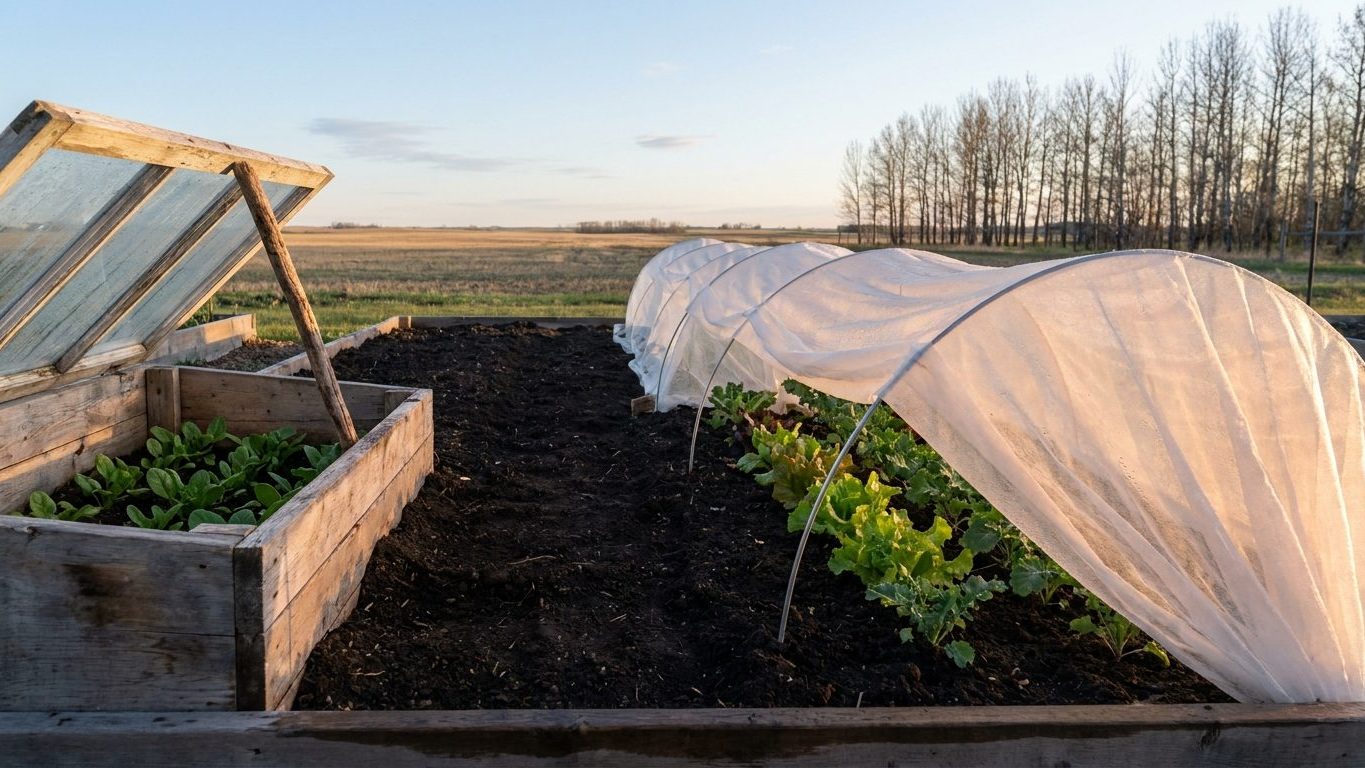

In Louisiana, the most useful season extenders are lightweight frost cloth and shade cloth, hung from the same set of hoops. Freezes here are short and uneven, so the extension that matters most is often protection from heat, not cold. Heavy plastic tunnels and sealed cold frames usually cook plants more than they protect them. The numbers below explain why.
The short answer for Louisiana
One set of hoops, two fabrics. Frost cloth goes on for the handful of freeze nights, and shade cloth goes on when spring heat arrives early or when fall seedlings need to get through a hot September. Everything else on the market is a specialty tool, not a starting point.
Why heat, not frost, sets the limit
The reference figures come from New Orleans, at 29.99 degrees north. According to NOAA’s 1991-2020 Climate Normals, the last spring frost falls between January 18 and February 8, and the first fall frost between December 17 and January 8. Those dates are probabilities of a 32°F freeze (the 30 to 70 percent band), not promises. Half the time the freeze lands outside them, and the fall window straddles the New Year, so a “fall” frost can arrive after Christmas.
Then there is the freeze itself. At this station a 32°F freeze occurs in only 86.8 percent of years, which means roughly one year in seven has no freeze at all. The mean daily minimum of the coldest month is 46.1°F. A typical January night is cool, not frozen, and the freezes that do come are cold snaps you can see on the forecast a few days ahead.
That is why the usual season-extension advice, built around squeezing a few extra weeks from a short frost-free season, fits poorly. The frost-free season is long. What runs out is the cool season, and a lettuce bed or broccoli planting loses to rising heat long before it loses to cold.
The toolkit, by usefulness
| Tool | Job in Louisiana | Watch for |
|---|---|---|
| Frost cloth on hoops | Covers tender crops on the few freeze nights, December through early February | Take it off on sunny days; it traps heat fast |
| Shade cloth on the same hoops | Stretches cool-season crops into spring heat and shelters fall transplants | Choose a light weave; dense shade slows growth |
| Mulch (pine straw, shredded leaves) | Insulates roots in winter, cools soil in summer | Keep it off stems in humid weather |
| Vented low tunnel | Short-term winter protection for seedlings | Needs daily opening or it overheats |
| Small cold frame | Starting seedlings in the coolest months | Overheats on mild, sunny days |
If you buy one thing, buy the hoops and one roll of each fabric. The whole kit costs less than a single heated-greenhouse fan, and it works in both directions of the calendar. The broader logic of lengthening the season sits in Extending the Growing Season in Louisiana.
What will not work here
Counting weeks from the last frost, northern style, fails first. A gardener who waits for February 8 and then plants tomatoes is following a rule built for places where frost is the ceiling. Here the crop is racing summer heat, and blossoms drop when nights stay warm. Planting earlier, with frost cloth standing by for the stray cold night, often serves better than planting by the date.
Sealed greenhouses and unvented cold frames come next. With a coldest-month minimum averaging 46.1°F, a closed box in winter sun can climb well past what seedlings tolerate by midday. A sunny January afternoon in south Louisiana is enough. Plants cooked under plastic look like frost damage and get misdiagnosed constantly. The fix is venting every morning, and if you cannot do that daily, skip the enclosure.
Heavy row cover left on for days fails for a related reason. Thick fabric made for hard freezes holds moisture and warmth against leaves, and in Louisiana’s humid air that invites fungal disease. The same goes for close spacing under any cover. Plants crowded for “maximum yield” under hoops stay wet longer, and mildew and rot follow. Leave room for air to move.
The last trap is trusting a single overnight forecast. A freeze that arrives after the January 18 to February 8 window is a minority case, but it still happens, and tender plants set out early can be lost without cover on hand. Pick your cover days from the forecast, and see When to Cover Your Garden in Louisiana for the timing.
What changes across Louisiana
This page’s numbers belong to New Orleans, not to the whole state. The USDA Plant Hardiness Zone Map (2023 edition, built on 1991-2020 normals) places Louisiana in zones 8a to 10a. That system rests on one variable, the average annual extreme minimum temperature, so the spread tells you how different the coldest nights are from one end of the state to the other. There is no single answer for Louisiana, and a recommendation written for the coast can mislead someone farther north.
North Louisiana freezes far more reliably than the New Orleans station does. For a gardener there, frost cloth stops being an occasional insurance purchase and becomes a routine winter tool. Winter cover stays in service longer and gets used more nights, and the “one year in seven with no freeze” figure does not apply. The frost windows quoted above will not hold, so expect them to run later in spring and earlier in fall. Shade cloth still has its job in the heat of summer, but the balance tips closer to a standard cold-season plan.
Latitude matters for a separate reason. The 29.99 degrees north belongs to New Orleans, and day length, not warmth, tells an onion to stop making leaves and start making a bulb. A reader near the northern edge of the state sits at a noticeably different latitude and should check their own, because onion and other day-length-sensitive crops respond to it.
As for your own zone, look it up on the USDA map rather than assuming it from the state average. Enter your ZIP code and read the result. Then treat it as a guide to winter cold only: it says nothing about summer heat, which is the limit that matters most here.
Where to check this for your own county
The LSU AgCenter is Louisiana’s land-grant extension service, and it is the right next stop. Louisiana is organized by parish rather than county, and the AgCenter has local contacts and publications tuned to each area. Look for two things: the local planting calendar for your parish, and the varieties trialed in your area. A trial in your own parish tells you which varieties survive your heat and humidity, which no general list can.
A parish or county recommendation beats a state one, and this page is the state one. It draws on a single reference station and on a hardiness range that covers three zones. It does not carry a Louisiana-specific planting calendar of its own, so use it to understand how the climate works, then take dates from the AgCenter.
Checking this against your own garden
Your own yard outranks every date on this page. A bed against a south-facing wall, a low spot where cold air pools, and a shaded corner under a pecan tree can differ by weeks. Three things to watch will tell you more than any average.
- Soil warmth by feel. Push a bare hand into the bed in the morning. Soil that feels cool compared with a neighbor’s bed or a spot beside a wall tells you it drains slowly or gets too little sun, and it is the one to cover first in winter.
- The first flush of male flowers. On squash and cucumbers, male flowers open before females. If males show up early in one bed and late in another, you have found your warm spot and your cool spot. If male flowers keep coming with no females behind them in the heat, the plants are stressed and need shade.
- The first true leaves. After the seed leaves, the first true leaves show a seedling is established. The days it takes them to appear in each bed show how quickly it warms, and scorched or bleached tips on those leaves mark where afternoon sun needs a shade cloth.
Write the dates down for a season or two. A notebook of when the first true leaves appeared and when the first male flowers opened gives you a calendar no state office can publish, because it belongs to your plot. Over a few years it also shows how often your yard saw a freeze, which is the number that decides whether frost cloth earns its place.
Common questions
Do I need frost cloth in south Louisiana?
Keep one roll on hand, because it is cheap and weighs almost nothing. At the New Orleans station a 32°F freeze occurs in only 86.8 percent of years, so in roughly one year in seven you will never use it. In the other years, one cold night can still take out a tender planting.
What are the frost dates for Louisiana?
For the New Orleans reference station, the last spring frost falls between January 18 and February 8, and the first fall frost between December 17 and January 8. These are NOAA 1991-2020 probabilities of a 32°F freeze, not guarantees. North Louisiana freezes more reliably and will differ.
Is a greenhouse worth it in Louisiana?
A passive, closed greenhouse usually overheats, because the coldest-month minimum averages 46.1°F and winter sun warms an enclosure quickly. If you build one, plan on daily venting and shade cloth. For most gardeners, hoops with removable fabric do more for less money.
Does the same advice apply in north Louisiana?
Only partly. Hardiness zones in the state run from 8a to 10a, and the north freezes much more reliably, so frost cloth and low tunnels earn more use there. Shade cloth still matters in summer. Check your parish with the LSU AgCenter for the details.