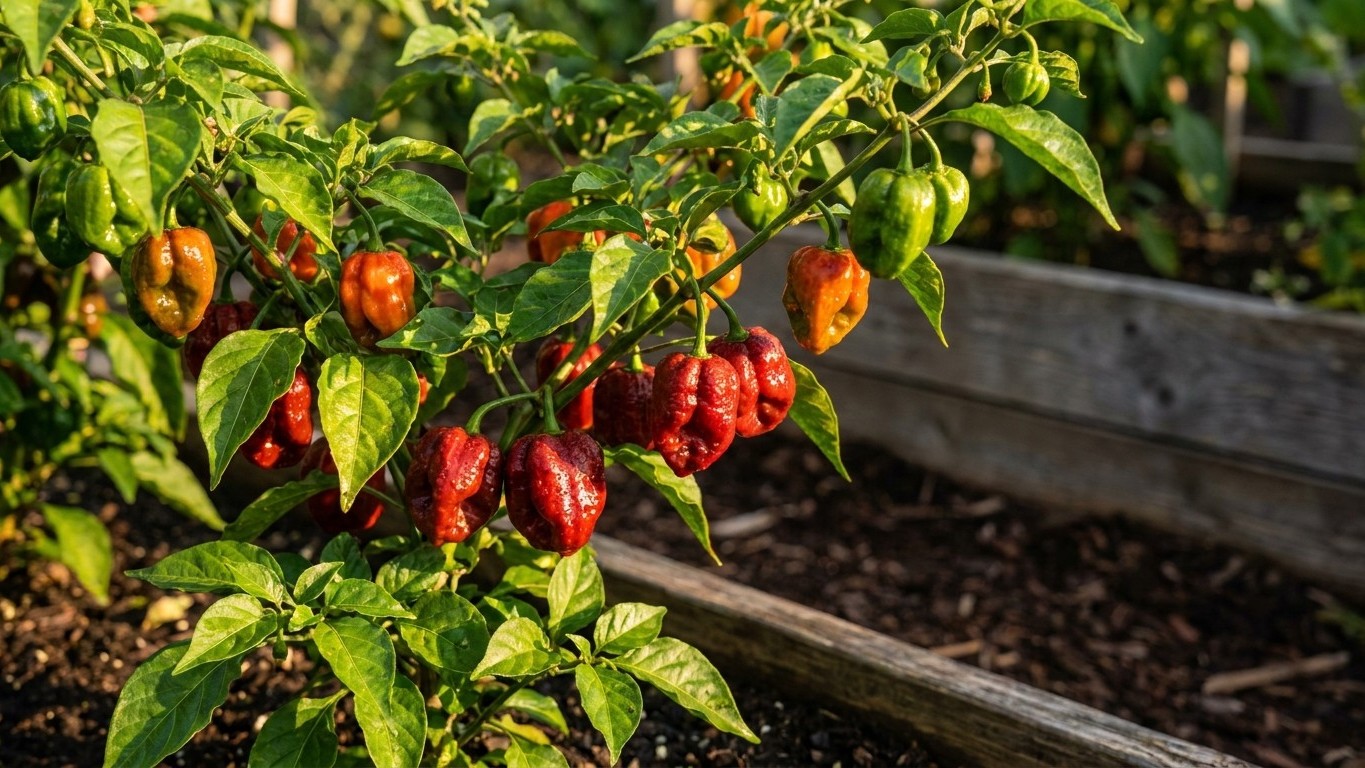

Pick peppers when the fruit has reached full size and feels firm, and get them in before a freeze ends the season. Then keep them out of the refrigerator. It runs colder than peppers can tolerate, and they pit and go soft there. A cool room, closer to 45 to 50 F, holds them far better. The details below cover the New Hampshire calendar, the arithmetic for starting seed, and the failures that cost gardeners fruit.
The short answer
Manchester, the reference station for this site, averages 10.9 days a year at 90 F or more. That is a light heat load, roughly one and a half weeks of hot days scattered across the whole year, and most of those fall in July. For pepper fruit set it means the hot end is a short, occasional problem here, not a season-long one. Pepper blossoms tend to drop when days climb above 90 F, so a few of those days in a row can cost you a flush of flowers. But the plant usually flowers again once the weather eases. Southern gardeners lose weeks to heat. Here you lose days.
The cool end is yours to watch
Fruit set fails at the other end too: nights below 55 F. This site does not carry summer night minima, so there is no number here to tell you how many cool nights your garden will see, and it would be a mistake to guess from latitude or from how cold the winters run. Watch your own. A cheap min/max thermometer set at plant height next to the peppers will tell you more than any regional average. If it reads under 55 F overnight while the plants are blooming, expect flowers to fall without setting fruit, and consider row cover for those nights. The full diagnosis is in Why Peppers Fail to Set Fruit in New Hampshire.
When the fruit is ready, and where to keep it
Clemson Cooperative Extension puts harvest at about 70 to 85 days after transplanting. That is a South Carolina publication, so treat the range as a starting point and not a promise for a cool New England summer. The fruit tells you more than the calendar does. A pepper is ready when it has reached the full size its variety is meant to be, the skin is glossy and the flesh feels firm. Green peppers can be cut at that stage. If you want red, yellow or orange fruit, leave it on the plant longer, with the understanding that every extra week is a week closer to the first fall frost. Cut the fruit with pruners and leave a short piece of stem, because pulling can snap whole branches.
Storage is where nearly everyone goes wrong. Clemson gives the optimal conditions as 45 to 50 F and 80 to 90 percent relative humidity, good for two to three weeks. That temperature is warmer than a home refrigerator. Below about 45 F peppers suffer chilling injury, which shows up as pitting, soft spots and a watery texture, and the damage often appears after the fruit comes back to room temperature. Two to three weeks is a ceiling under ideal conditions, not a guarantee. A cool basement, an unheated mudroom in early fall or a root cellar can fit the range, but check with a thermometer before trusting the spot. If you must use the fridge, do it only for a day or two for a cut or already-ripe pepper you plan to eat soon.
Frost sets the outer limit on all of this. At the reference airport station, the last spring freeze (32 F) falls between April 16 and April 27, based on NOAA NCEI 1991-2020 normals in the 30 to 70 percent probability band. That is a reference-city figure, not a statewide guarantee. Suburban and rural gardens typically see the last spring frost later and the first fall frost earlier, often by one to two weeks, and more at elevation. Ask your county extension office or a neighbor with a long-running garden for the numbers that apply to your lot. A first fall frost date is not published here.
When to start seed here
Peppers are slow, and the arithmetic runs backward from the day they go outside. Gardeners using Growing Peppers in New Hampshire as a planning guide can run these steps for any county.
- Find your last spring frost. The reference station shows April 16 to April 27. Add one to two weeks if you garden in a suburb or the country, and more if you are up in elevation. That gives you a later window, roughly April 23 to May 11 for a typical outlying garden, and the number you trust should come from your own records.
- Wait for the soil, not the calendar. Utah State University Extension says to transplant when the soil reaches 60 F, after frost. In a cold spring, that day can come well after the last freeze. Push a soil thermometer about 2 inches down in the morning and wait until it holds at 60 F.
- Subtract 8 to 10 weeks. The same extension source says transplants need 8 to 10 weeks indoors. Count back from your transplant day. Eight weeks is 56 days, and ten weeks is 70 days.
- Do the example. Say the soil in your bed holds at 60 F on May 20. Fifty-six days earlier is March 25, and seventy days earlier is March 11. Sowing between those dates gives you transplants ready on schedule. If your soil warms on May 30 instead, shift both dates ten days later.
- Project the harvest. Add Clemson’s 70 to 85 days after transplanting to your planting day. From a May 20 transplant, that lands between July 29 and August 13. Cool weather can push it later, and a long cool spell may push it past that range, so use the dates as an earliest expectation, not a deadline.
Starting too early backfires. Seedlings that outgrow their pots by mid-April get root-bound and leggy, and many will flower while still indoors, putting energy into fruit before the plant is built to carry it. If a warm spell tempts you to move plants out early, remember that a single frost can finish them, and a cold night under 55 F can stall flowering even without frost.
What goes wrong here
- Blossom drop in a hot spell or on a cool night. Flowers fall without setting fruit when days pass 90 F or nights dip below 55 F. With 10.9 hot days in a typical year, the heat problem is brief, and the fix is patience plus a little shade cloth during a heat wave. For cool nights, cover plants with row cover at dusk and take it off in the morning. Log your own nighttime lows, since this site doesn’t carry them. Pinching off the first flowers on a young transplant can also help the plant build size before it carries fruit.
- Sunscald where the sun is strong. Pale, papery patches appear on the shoulders of fruit exposed to direct sun, usually after leaves have been lost to disease, pests or rough pruning. Protect the foliage, since leaves are the fruit’s shade. If something is chewing the canopy, What Eats Pepper in New Hampshire, and When covers the usual suspects. A strip of shade cloth over exposed plants during a hot stretch also helps. Do not strip leaves to “let the fruit ripen.”
- Blossom-end rot. A sunken, leathery dark patch forms on the bottom of the fruit. It is tied to uneven watering more than to missing calcium in the soil, so the remedy is steady moisture: water deeply when the top inch dries, and mulch to hold it. Pick off the affected fruit so the plant can put energy into healthy ones. A soil test will tell you whether calcium is actually low before you add anything.
- Chilling injury after the harvest. This one happens in the kitchen. Peppers stored below about 45 F pit and soften, so keep them in the 45 to 50 F range with 80 to 90 percent humidity, and plan to use them within two to three weeks at most.
Common questions
Should I pick peppers green or wait for color?
Either works. Green fruit can be cut once it reaches full size and feels firm, and picking it encourages the plant to keep flowering. Waiting for red, yellow or orange gives sweeter fruit but ties up the plant longer. Because first fall frost comes earlier in many suburban and rural New Hampshire gardens than at the airport reference station, many gardeners pick a mix: color from the earliest fruit, green from the late ones.
Can I put peppers in the refrigerator at all?
Short stays are tolerable, but the fridge is colder than the 45 to 50 F that Clemson lists as optimal, and below about 45 F peppers develop chilling injury, with pitting and soft spots. For anything beyond a couple of days, use a cool room with some humidity, and check the temperature with a thermometer.
How long will picked peppers last?
Clemson gives two to three weeks at 45 to 50 F and 80 to 90 percent relative humidity. That is a maximum under optimal conditions, so a kitchen counter or a spot that is too dry will cut that time. Check the fruit every few days and use the softest first.
Do I need to worry about frost on the plants in fall?
Yes. A freeze at 32 F will damage the plants and any fruit still on them. This site does not publish a first fall frost date, and your garden will likely see it earlier than the airport reference station, so watch the forecast in early autumn and harvest everything of useful size before a freeze night.