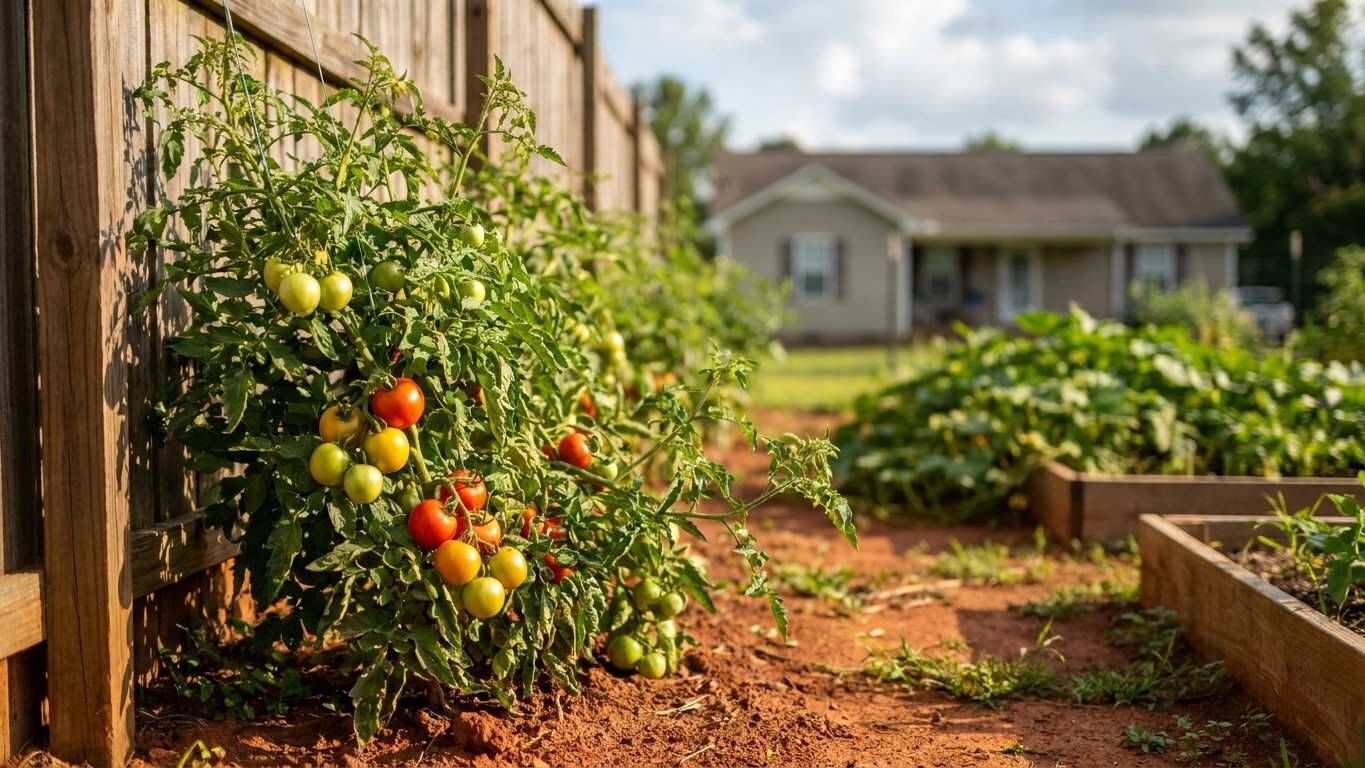

In Louisiana, the day to pick a tomato has less to do with a date on the calendar and more to do with what the fruit is doing at that moment. Growers watch for color break, the first blush of pink or yellow at the blossom end, and pull fruit before punishing summer heat or the season’s first freeze can stop ripening cold. Green tomatoes picked at the right stage will still turn red on a counter. Here’s how the timing actually works, and what to do once the fruit is off the vine.
When to Pick Tomatoes in Louisiana
Tomatoes don’t ripen on a schedule, they ripen on temperature. Lycopene, the pigment that turns a tomato red, stops forming efficiently once daytime heat climbs past roughly 85 degrees, and it stalls out almost completely in the high heat that settles over Louisiana for weeks at a stretch in mid and late summer. That’s the real reason so many tomatoes in this state sit green or barely blushed on the vine in July and August even though the plant looks healthy and loaded. The fruit isn’t stuck, it’s just too hot to finish the job outdoors.
That heat ceiling matters more here than the frost dates do, at least for most of the growing season. The USDA Plant Hardiness Zone system, which is built on a single measure (the average annual extreme minimum temperature), places Louisiana anywhere from zone 8a to zone 10a depending on where you are. New Orleans sits at the warm end of that range, while the northern part of the state, around Shreveport, runs closer to 8a. That spread means a grower near the coast is fighting heat almost year-round, while someone farther north deals with a shorter window of true summer dormancy in the fruit set.
Frost only becomes the deadline late in the year. The first fall freeze in south Louisiana lands somewhere between December 17 and January 8, based on NOAA’s 1991-2020 climate normals, and that’s the trigger for a final, non-negotiable harvest. Anything still hanging on the vine when that cold air moves in needs to come off first, mature green or not. What makes this state different from most tomato country is that the freeze isn’t guaranteed at all. A 32-degree freeze shows up in only about 86.8 percent of years at that measuring station, which means roughly one year in seven, south Louisiana never freezes. Growers who time their harvest around “the first freeze” some years find there wasn’t one, and the plants just kept limping along into January.
For a working rule of thumb: pick fruit at breaker stage through the worst of the summer heat rather than waiting for vine-ripe color, since the plant can’t finish that job in the heat anyway, and then plan your final full harvest sometime before that mid-December to early-January window closes, watching a local forecast rather than trusting the date alone. The LSU AgCenter extension service, which covers the whole state, is the resource to check for a frost warning specific to your parish as that window approaches.
What to do with the green ones
Not every green tomato is worth pulling off the vine. The plant needs to have finished its growth on that fruit first, and there’s a real difference between a tomato that’s mature and just hasn’t colored up, and one that’s still immature and won’t ripen properly no matter what you do with it.
Telling mature green from immature
- Mature green: full size for the variety, skin has gone from dark green to a paler, almost whitish-green, and it’s glossy rather than dull
- Immature: still dark green all over, skin looks matte or slightly fuzzy, and the fruit feels sticky rather than smooth when you handle it
- Breaker stage: already showing a faint blush of pink, yellow, or tan at the blossom end, which means it’s closest to finishing and will ripen fastest once pulled
Immature fruit rarely ripens well off the vine. It may turn red eventually but the flavor and texture stay flat, so those are the ones better suited to frying or pickling green rather than waiting on them to color up. Mature green and breaker-stage fruit are the ones worth saving.
Ahead of a predicted cold snap, especially one landing inside that mid-December to early-January window, it’s worth doing a full sweep of the plant rather than picking selectively. Clip fruit with a short piece of stem still attached if you can, since that slows moisture loss and buys a little extra shelf life. Some growers pull the entire plant by the roots and hang it upside down in a garage or shed, letting the remaining green fruit finish more slowly using the sugars still stored in the vine. That method works, but it takes more space and it’s slower than picking individual fruit for the counter.
Because that freeze isn’t a sure thing some years, it’s tempting to leave fruit out longer, gambling that the season stretches on. That gamble sometimes pays off. It also sometimes means losing a full harvest overnight to a freeze nobody expected, since the probability is a percentage across many years, not a promise for this one.
Ripening indoors, and how long they keep
Once fruit is off the vine, temperature control does the rest of the work that Louisiana’s summer heat couldn’t. Tomatoes ripen best somewhere in the mid-60s to mid-70s, well below the summer highs outdoors, which is exactly why a kitchen counter out of direct sun works better than a hot windowsill. Direct sun actually works against the fruit indoors too, heating one side faster than the other and causing soft, uneven ripening instead of an even color change.
Ripening stages at a glance
| Stage | Appearance | Ripens indoors |
|---|---|---|
| Immature green | Dark green, matte, sticky skin | Slow, often poor quality |
| Mature green | Pale green, glossy, full size | Slower, needs the longest wait |
| Breaker | Faint blush at blossom end | Fastest of the unripe stages |
| Turning to pink/red | Half to mostly colored | Just a few more days |
Spreading fruit in a single layer, rather than piling it in a bowl, cuts down on bruising and lets you spot any that are starting to spoil before they touch the others. A loosely closed paper bag speeds things along because it traps the ethylene gas the fruit itself gives off, and tucking a ripe banana or apple into that bag adds even more ethylene, pushing green tomatoes toward color faster.
Refrigeration is the one move that backfires. Below about 55 degrees, the ripening process slows dramatically and the flavor and texture that make a fresh tomato worth eating start to break down, turning the flesh mealy. That’s fine for fruit that’s already fully ripe and needs to hold for a few extra days before it’s used, but it’s the wrong place for anything still green or just turning. Keep unripe fruit at room temperature, and only move it to the refrigerator once it’s fully colored and you need to buy a little time before eating it.
What goes wrong here
Humidity is the quiet problem in Louisiana that growers in drier climates don’t deal with the same way. A batch of green tomatoes crowded into a closed bag or box in a humid house can develop mold before they ever finish ripening, especially if even one fruit in the group already has a soft spot or a hidden bruise. Checking the batch every couple of days and pulling out anything that’s gone soft or discolored keeps one bad tomato from taking down the rest.
Rain late in the season causes its own damage. A dry stretch followed by a heavy fall rain can swell fruit faster than the skin can stretch, splitting tomatoes right on the vine, sometimes the same fruit that would have been ready to pick within days anyway. Harvesting slightly early ahead of a heavy rain forecast, even at breaker stage, avoids losing that fruit to cracking.
Extreme heat causes a different failure that shows up earlier in the season: blossom drop. When daytime highs run very hot for an extended stretch, the plant sheds flowers before they ever set fruit, which is a separate issue from ripening but explains why some plants seem to stall out with nothing to pick at all during the worst of summer. That’s a pollination and heat-stress problem rather than a harvest-timing one.
The last mistake is trusting the freeze window too literally. Because roughly one year in seven sees no 32-degree freeze at all in south Louisiana, some growers relax and leave fruit out past early January expecting the season to run long again, only to lose the whole batch to a freeze that arrives right on schedule. The window given by NOAA’s data is a range built from decades of years, not a guarantee for any single one.
Common questions
Can I still pick tomatoes in Louisiana in late December?
It depends entirely on whether the first freeze has arrived yet that year. Since the first fall frost lands anywhere between December 17 and January 8 based on NOAA’s climate normals, and roughly one year in seven sees no freeze at all, some years allow picking well past Christmas while others don’t.
Do tomatoes ripen faster in a paper bag or a bowl?
A loosely closed paper bag ripens fruit faster than an open bowl because it traps the ethylene gas the tomato produces naturally. Adding a ripe banana or apple to that bag adds more ethylene and speeds things up further.
Why won’t my tomatoes ripen in July and August?
Lycopene production, the process that turns a tomato red, slows sharply above roughly 85 degrees and largely stops in extended heat. Louisiana summers routinely exceed that mark, which is why fruit often sits green or barely blushed on the vine until temperatures ease.
Should I refrigerate green tomatoes to make them last longer?
No. Below about 55 degrees, ripening slows dramatically and the texture turns mealy. Keep unripe fruit at room temperature and only refrigerate tomatoes once they’ve fully ripened and you need to hold them a few extra days.