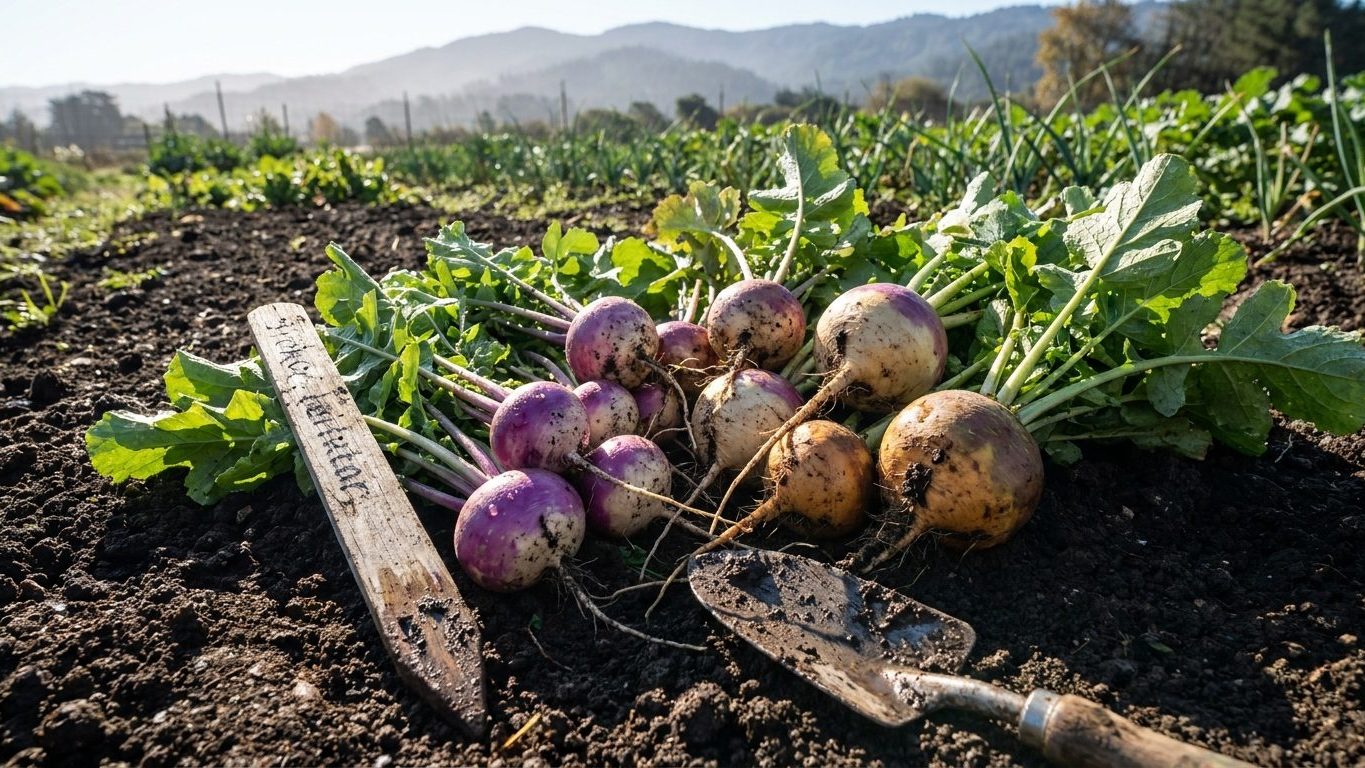

Fast turnip varieties, roots and greens both, work almost anywhere in Louisiana because they beat the heat before it arrives. Rutabaga is the harder call: it wants a long, steady cool stretch that south Louisiana rarely delivers, so it belongs mainly in the northern parishes or as a calculated risk elsewhere.
The short answer for Louisiana
Louisiana’s growing calendar isn’t shaped by how cold it gets. It’s shaped by how short the cool window is before summer heat shuts everything down. The reference station’s coldest month averages a daily minimum of just 46.1°F, and a hard freeze shows up in only 86.8 percent of years, meaning roughly one winter in seven never freezes at all. That’s a mild, forgiving cold season, but it’s also a narrow one, squeezed between two long stretches of heat.
That single fact decides which turnips make sense here. Quick turnip varieties, whether you’re growing them for the root or cutting them for greens, typically finish in 45 to 55 days, which fits neatly inside Louisiana’s cool window no matter where in the state you garden. Plant them in fall, let them bulk through the mild winter, and harvest before the spring heat spike that follows the January to February frost window. Because they’re forgiving of both timing and small planting mistakes, fast turnips are the safe, statewide recommendation.
Rutabaga is a different animal. It needs 90 to 100 days or more of sustained cool weather to size up properly, and the roots turn woody and bitter if heat interrupts that bulking period. In north Louisiana, where winters run a bit longer and more reliably cool, that window exists. In south Louisiana, where the coldest month barely dips below 46°F on average and freezes aren’t guaranteed most years, summer heat often arrives while rutabaga is still mid-season, and the crop never gets the full cool stretch it’s built for.
So the decision by type looks like this: lean on fast turnips as the reliable, plant-anywhere choice, and treat rutabaga as a north Louisiana specialty or a fall-planted experiment further south, timed so the bulk of its growing season lands in the coolest months rather than stretching into spring. If you only have room or patience for one bet this season, the fast turnip is the one that pays off consistently across the whole state.
What will not work here

Slow rutabaga varieties planted anywhere south of the Interstate 10 corridor are the classic Louisiana failure. They need a long, unbroken cool season, and south Louisiana simply doesn’t reliably provide one. The math is unforgiving: even the fall frost window here straddles the New Year, running from December 17 to January 8, and with freezes occurring in under 87 percent of years, plenty of seasons never deliver a real cold snap to signal the plant it’s time to finish bulking. A rutabaga still building its root when temperatures swing back up produces a small, fibrous, often bitter crop, not the mellow, dense root gardeners expect.
Weekly watering is another quiet failure point. Louisiana’s summer heat and humidity dry out exposed soil fast, and turnip and rutabaga roots that get stressed by irregular moisture tend to crack, turn woody, or bolt early, sending energy into a flower stalk instead of the root. A schedule that works fine in a drier, cooler climate leaves Louisiana roots gasping between waterings, especially in the sandy soils common across the southern parishes.
Close spacing is the third trap, and it’s a humidity problem specifically. Louisiana’s combination of heat and moisture is a near-perfect environment for fungal disease, and turnip and rutabaga foliage planted too tightly together stays damp and shaded at the base long after a rain or watering. That’s an invitation for the leaf spots and root rots that spread fast in humid Gulf Coast gardens. Give plants real air movement between rows, because in a climate this humid, spacing is doing disease-prevention work as much as it’s managing root size.
Put together, these three mistakes (slow rutabaga south of the coastal plain, thin watering schedules, and crowded rows) explain most of the disappointing turnip and rutabaga harvests reported across the state. Louisiana’s mild winters make people relax about timing and spacing that a harsher climate would force them to respect. The state’s heat and humidity punish that relaxation just as reliably as a hard freeze would punish carelessness somewhere colder.
What changes across Louisiana
Louisiana isn’t one garden, and its hardiness range makes that obvious. The state spans USDA zones 8a to 10a, a spread wide enough that a variety choice reasonable in Shreveport can be marginal in Houma. That’s the difference between a state with one reliable winter and a state where the coldest parishes and the warmest parishes are effectively gardening on different calendars.
North Louisiana, sitting toward the cooler end of that range, gets the longer, steadier cool season that rutabaga actually needs. Gardeners there have more room to plant slower varieties and let them take their full 90-plus days without the season running out from under them. South Louisiana, down near zone 10a along the coast, barely dips into true winter at all some years, and the practical effect is a cool season that’s shorter, milder, and less predictable, better suited to turnips that finish fast and don’t linger into the heat.
The shift isn’t only about temperature, either. The farther south you go, the more the fall frost window compresses and slides toward the December-January stretch already noted, while the coldest-month minimum barely brushes the mid-40s. That combination rewards gardeners who stagger plantings and hedge with multiple fast turnip sowings rather than committing garden space to a single long-season rutabaga crop and hoping the weather cooperates.
There’s no single zone number that describes Louisiana honestly, and no state-level answer that fits both ends of it equally well. A reader in the piney hills near the Arkansas line and a reader on the coastal marsh are gardening in meaningfully different climates, even though they share a state line. The right move isn’t to guess which end of that 8a-to-10a range applies to a particular yard, it’s to check the USDA Plant Hardiness Zone Map directly and confirm the local zone before betting a season on a slow-maturing variety.
Where to check this for your own county
Everything above describes Louisiana as a whole, and that’s exactly the limitation of a state-level page like this one. Louisiana runs from the Arkansas border to the Gulf, and a county-level recommendation from a local extension office will always beat a statewide generalization, because it accounts for that county’s actual soil, microclimate, and track record with specific varieties.
The LSU AgCenter is the place to get that detail. It’s the state’s land-grant extension service, and its parish-level offices maintain planting calendars and variety trial results that go well beyond what any general article can responsibly claim. When you visit, look for two specific things: the local planting calendar for your parish, which will translate the frost windows discussed here into actual sowing dates for cool-season crops, and any variety trial results for Turnips and Rutabaga conducted in or near your parish, which will tell you which specific cultivars have actually performed well in soil and weather like yours.
This matters because a variety recommendation isn’t really a fixed fact, it’s a probability based on how a cultivar performed under certain conditions, and the conditions in Ouachita Parish and the conditions in Terrebonne Parish aren’t the same conditions. The LSU AgCenter office serving your parish has usually already run that comparison locally, sometimes over multiple seasons, and their recommendation will reflect real outcomes on real Louisiana soil rather than a statewide average built from climate normals.
Treat this page as the starting framework, useful for understanding why Louisiana behaves the way it does, but not the final word on which packet to buy. The final word comes from the office that’s watched Turnips and Rutabaga grow in your specific county, season after season.
Checking this against your own garden
Every date and zone number on this page is a probability, not a guarantee, and your own garden will tell you more than any of them once you know what to look for. Three signals matter most, and none require anything beyond your hands and eyes.
Start with soil warmth by feel. Push a bare hand a few inches into the bed in early fall, before you plant. Soil that still feels warm through the afternoon means the ground hasn’t caught up to the season yet, and seedlings planted into it will grow fast and soft, more vulnerable to the diseases that thrive in Louisiana’s humidity. Soil that feels cool and slightly damp, holding steadier temperature morning to evening, is closer to the range Turnips and Rutabaga actually prefer for steady root development.
Next, watch for the first true leaves, the second set that appears after the small rounded seed leaves. That’s the point where the plant shifts from surviving on stored seed energy to actually photosynthesizing and building root mass, and how fast it gets there tells you whether your particular bed, with its particular drainage and organic matter, is giving the crop what it needs. A slow, weak push to true leaves in your soil is worth noting for next season, because it often points to a fertility or moisture issue no calendar date will fix.
Last, keep an eye out for the first flush of flower buds pushing up from the center of the plant, especially on turnips grown for greens. That’s bolting, and it’s the plant’s response to stress, usually a heat spike or a dry stretch. If you see it earlier than expected in your yard, that’s your microclimate telling you its real cool season runs shorter than the parish average, and it’s worth adjusting your planting date a couple weeks earlier next year rather than trusting the calendar alone.