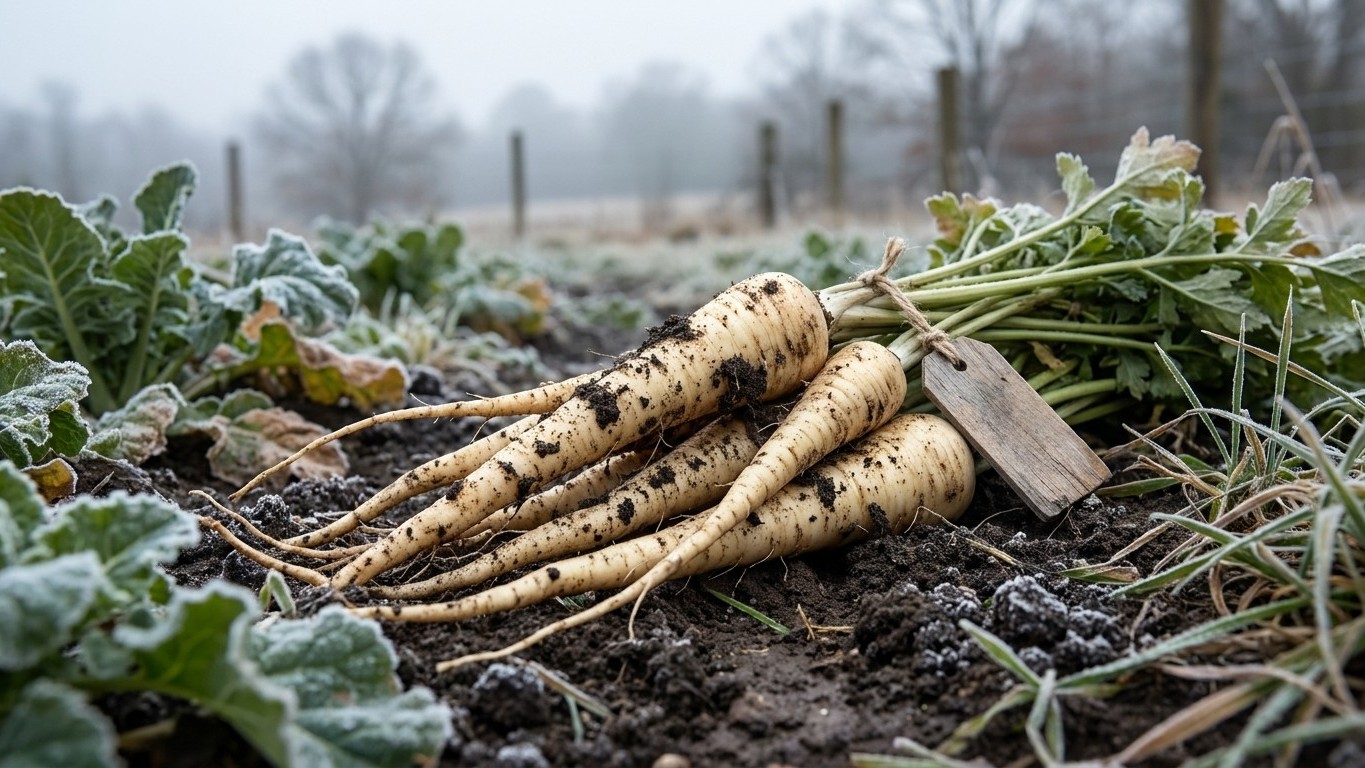

Yes, parsnips grown in Maine will sweeten, and the coastal reference station makes the case: a mean minimum of 15.6°F in the coldest month means the crop sits through real, sustained cold, not a token chill. That’s the ingredient sweetening actually needs. The season length works too, though the arithmetic is tighter than it looks at first glance.
The short answer
The question that decides everything here isn’t “how cold does it get on the worst night of the year.” It’s “does this place deliver several frosty weeks in a row.” Maine does. The NOAA NCEI Climate Normals for 1991-2020, using Portland as the reference station, put the mean daily minimum of the coldest month at 15.6°F. That’s not a record low or a one-night dip. It’s the average low across an entire month, which means the cold isn’t a fluke, it’s a pattern. Nights that stay well below freezing for weeks are exactly what parsnips need to convert their stored starch into sugar, according to Utah State University Extension.
This matters because a parsnip left in the ground through cool, frosty weather tastes noticeably different from one pulled the same week it matures. Without that frost exposure, you get a perfectly edible root that never develops the sweetness parsnips are known for. Some gardeners in warmer climates grow parsnips successfully and still end up disappointed at the table, because their region never delivers the sustained cold. Maine doesn’t have that problem, at least not at the coastal reference point.
One clarification worth being precise about: frost exposure and hardiness zone are not the same measurement, and they don’t answer the same question. A hardiness zone tells you the average annual extreme minimum temperature, useful for deciding whether a perennial plant survives winter where it’s planted. It says nothing about how many frosty weeks a biennial root vegetable sits through before harvest. Parsnips are grown as an annual crop and pulled (or left in the ground) well before the deep winter extremes a hardiness zone is built to describe. The 15.6°F figure is the number that actually answers the sweetening question, because it reflects the sustained cold of an entire month, not a single worst-case night.
Coastal Portland also happens to be the mild end of Maine’s climate. Inland and northern parts of the state run colder in winter and see frost arrive earlier in fall, which means the sweetening mechanism, if anything, has even more opportunity to work in those areas. The tradeoff, covered next, is that those same colder inland regions compress the growing season on the front end.
Does the season fit?
Parsnips need 100 to 120 days from seeding, according to Utah State University Extension, and they’re sown directly in place rather than transplanted. The standard timing is 2 to 3 weeks before the last spring frost. Here’s how that plays out against Maine’s frost window at the Portland reference station.
- Start with the frost dates. NOAA NCEI’s 1991-2020 Climate Normals put the last spring frost between April 22 and May 1, and the first fall frost between October 9 and October 21 for the Portland area.
- Back up the sowing date. Sowing 2 to 3 weeks ahead of the last frost puts seed in the ground roughly between April 1 and April 17, depending on how the season is running.
- Add germination time. Parsnip seed is slow to sprout, typically 14 to 21 days. That’s not part of the 100 to 120 day maturity clock, it’s time the seed spends in the soil before anything visible happens. Skip this step in your planning and you’ll be tempted to dig up bare soil and re-sow, thinking the seed failed.
- Run the maturity clock. From an early-April sowing, 100 to 120 days lands maturity somewhere between mid-July and early September.
- Check it against first frost. With first frost arriving October 9 to 21, there’s a comfortable window, often six to twelve weeks, between when the roots mature and when the ground actually freezes hard. That gap is exactly where the frosty weeks needed for sweetening happen, whether the roots are left in place or the whole bed sits through a run of cold nights before harvest.
At the coastal reference point, this fits comfortably rather than tightly. There’s enough slack in the calendar to absorb a slow spring or an early cold snap without losing the crop. Inland and northern Maine, where spring arrives later and fall frost comes sooner, will compress this timeline. Gardeners in those areas should sow at the earlier edge of the window and expect less cushion before the ground turns hard.
What goes wrong here
- Forked roots from heavy or stony ground. Maine’s soil runs stony and clay-heavy in a lot of yards, and parsnips are unforgiving about it. A taproot that hits a rock or a compacted layer splits into two or three legs instead of growing straight down. Utah State University Extension recommends deep, sandy soil, and where the native ground is heavy, double digging the bed before sowing so the root has loose soil to push through.
- Forked roots from overwatering. This is a separate cause from soil texture, and it’s worth keeping the two apart. Too much water, especially uneven watering that swings between soaked and dry, encourages the root to branch rather than run straight. Consistent, moderate moisture works better than heavy watering followed by a dry stretch.
- A season that runs out before maturity. This is the real risk in inland and northern Maine, where the frost-free window is shorter than at the coastal reference station. Sowing late, waiting too long into a cool, slow spring, pushes the 100 to 120 day clock past a safe margin before first frost. Sowing at the early edge of the window, and not waiting for perfect weather, protects that margin.
- Skipping the frost exposure the crop needs. Pulling parsnips the moment they reach size, before the ground has gone through several frosty weeks, produces a root that’s fully grown but not sweet. Given Maine’s cold coldest-month minimum, this isn’t a climate problem here so much as a timing one: harvest too early and you skip the part of the season doing the actual work.
Common questions
How long can parsnips stay in the ground after they mature in Maine?
The published guidance doesn’t give a specific number of weeks for storage in the ground. What’s established is that the sweetening comes from exposure to several weeks of cool, frosty conditions, and Maine’s coldest-month minimum of 15.6°F confirms that exposure is available well past the point of maturity, right up until the ground freezes solid enough to make digging difficult.
Does inland Maine sweeten parsnips faster than the coast?
Not faster, necessarily, but the frost arrives sooner. Inland and northern Maine see earlier fall frost dates than the coastal Portland reference station, which means the frosty-week clock for sweetening can start earlier in the season. The tradeoff is a shorter overall growing window, so timing the sowing date matters more.
Can I sow parsnips later if I missed the early spring window?
Later sowing eats into the margin between maturity and first frost. At the coastal reference station, the frost-free season is roomy enough to absorb a somewhat delayed sowing, but pushing much past the 2 to 3 weeks before last frost recommendation raises the risk that the 100 to 120 day maturity clock runs into the October frost window without enough buffer.
Is Maine’s soil naturally good for parsnips, or does it need work?
Utah State University Extension’s guidance points to deep sandy soil as ideal, with heavy soil requiring double digging first. Maine ground varies a lot by yard, stony and clay-heavy in plenty of places, so the state’s soil in general is a starting point for assessment, not a guarantee either way. Testing and working the specific bed matters more than any statewide assumption.