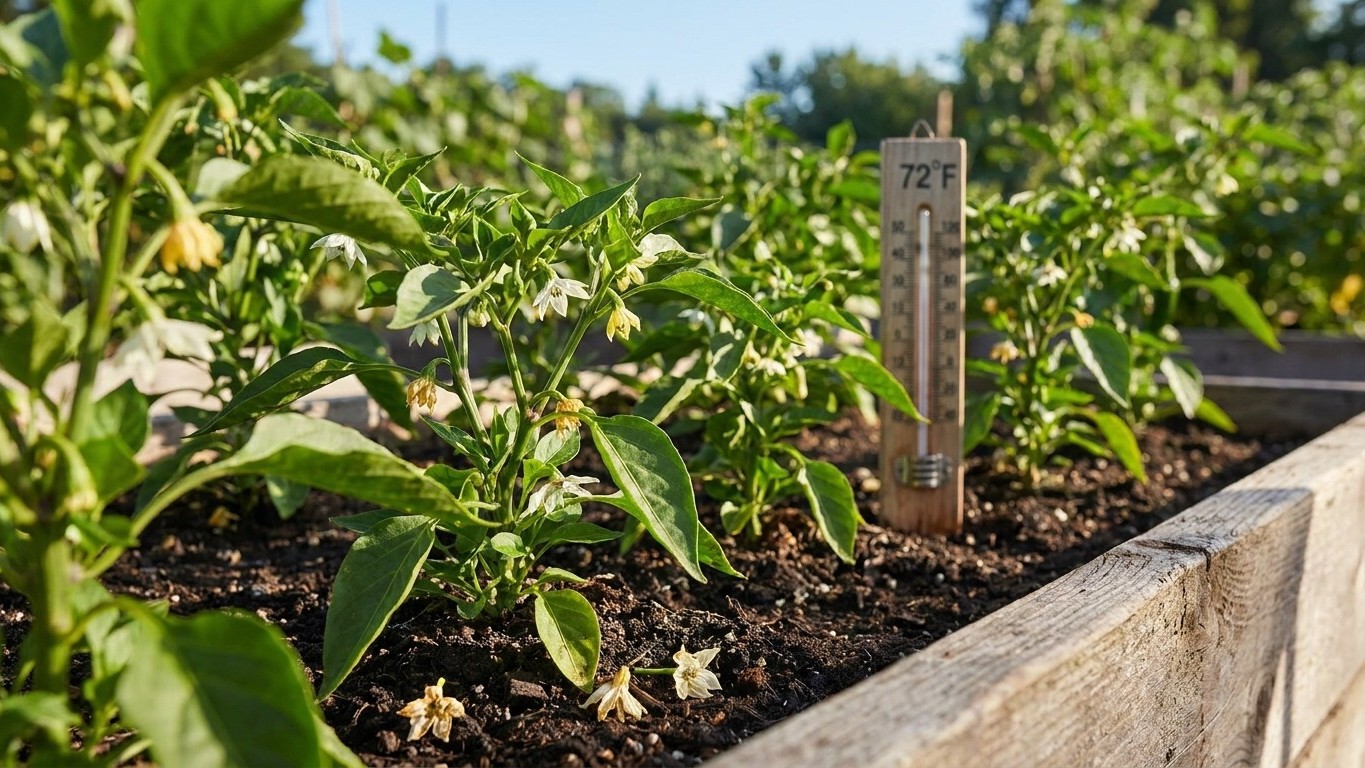

In most of Maine, pepper seed should go into trays roughly 8 to 10 weeks before your local transplant date, which falls between April 22 and May 1 along the coast and later inland. That works out to early-to-mid February for southern counties and later into March for northern Maine. The exact week depends on when your soil warms to 60°F and how many days a year your area spends above 90°F, since Maine’s fruit-set window is narrow at both ends.
The short answer
The heat side rarely bites here
Portland’s 1991-2020 climate normal puts the average at 3.8 days a year at or above 90°F. That’s the reference station for coastal Maine, and it tells you something specific: pepper flowers abort when daytime highs climb past 90°F for a stretch, but in this state that threshold gets crossed only a handful of afternoons most summers. A grower in southern Maine will likely never watch a whole week of blossom drop from heat the way a Kansas or Texas gardener might. Inland valleys can run a degree or two warmer on the hottest afternoons, but the overall pattern holds: heat-driven fruit-set failure is the exception in Maine, not the rule.
The cold side is the one to watch
The other threshold matters more here. Pepper fruit set also fails when nighttime temperatures drop below 55°F, according to Utah State University Extension’s guidance on peppers. Maine summer nights can slip under that mark, especially in June before the air mass fully settles and again in late August as fall approaches. This site doesn’t carry summer night-minimum data for Maine, so there’s no county-level number to hand you here. That means the job falls to you: track your own overnight lows with a simple outdoor thermometer or a local weather app during the weeks right after transplant and again as September nears, rather than assuming your latitude or your region’s coldest winter month tells you anything about a July night.
When to start seed here
The calendar for pepper seed in Maine isn’t guesswork. It’s a short chain of subtraction, and you can run it yourself for your exact county using two anchor points: your last spring frost date and the 8-to-10-week indoor head start peppers need before they’re ready to go outside.
Do the count for your county
- Start with your transplant date. For coastal Portland and nearby areas, the NOAA climate normal frost window runs April 22 to May 1. Inland and northern Maine push this substantially later into May, sometimes into early June in the far north.
- Add the soil-temperature check. Frost date alone isn’t enough. Utah State University Extension notes peppers should transplant only after the soil itself reaches 60°F, which in Maine’s cool spring soils often lags a week or two behind the air-temperature frost date. A soil thermometer pushed 4 inches deep on a few mornings in a row gives you a real answer instead of a guess.
- Count back 8 to 10 weeks from that transplant date. If your soil is likely to hit 60°F around the first week of June (common for inland Maine), count back 8 to 10 weeks and you land on early-to-mid April for sowing seed indoors. Coastal growers working toward a late-April or early-May transplant date land closer to late February or early March.
- Build in a buffer, not a shortcut. Because Maine’s spring soil warms slowly, erring toward the 10-week end of the window (rather than 8) gives transplants more time to size up before they meet cool ground, without forcing you to hold overgrown seedlings indoors for weeks past their prime.
This arithmetic travels. Swap in your own county’s frost data and your own soil thermometer reading, and the same four steps produce your personal start date, whether you’re gardening on Mount Desert Island or up near Presque Isle.
What goes wrong here
- Blossom drop during a rare hot spell. On the handful of days Maine does cross 90°F, pepper flowers can drop without setting fruit. There’s little to do in the moment except keep plants watered deeply so heat stress doesn’t compound with drought stress; the plant will resume setting fruit once temperatures ease, usually within days.
- Blossom drop from a cool night. This is the more common Maine failure. A night that dips below 55°F, especially right after transplant in late May or during a cool stretch in early September, can stall fruit set even though the days feel warm. Since this site doesn’t track nightly lows, the fix is to watch your own thermometer and, if a cold night is forecast, cover young plants with row cover or a sheet to hold in a few extra degrees.
- Sunscald on exposed fruit. Maine’s summer sun is plenty strong even without extreme heat, and peppers that lose leaf cover from disease, pruning, or wind damage can develop pale, papery patches on fruit facing direct sun. Leaving foliage intact and avoiding heavy pruning mid-season keeps fruit shaded naturally.
- Blossom-end rot on the first fruit. A dark, sunken patch at the fruit’s blossom end usually points to inconsistent watering rather than a soil deficiency, and it’s common on the first flush of fruit while root systems are still establishing. Even, regular watering, rather than a feast-or-drought cycle, is the fix most growers need.
Common questions
Can I direct-sow pepper seed outdoors in Maine?
Not reliably. Peppers need 8 to 10 weeks of indoor growth before they’re ready for outdoor conditions, and Maine’s frost-free season, especially inland, isn’t long enough to direct-sow and still get a full harvest before fall’s first frost.
Is Maine too cool overall for growing peppers?
No, but timing matters more here than in a warmer state. With only 3.8 average days a year above 90°F, heat stress is rarely the problem. The bigger variable is making sure nights stay above 55°F during the fruit-set window, which is something each grower needs to track locally rather than assume.
What if my frost-free season is shorter than the coastal dates listed?
Inland and northern Maine counties run later in spring and earlier in fall than the Portland reference station. Push your transplant date later to match your own area’s frost pattern, and count back 8 to 10 weeks from that adjusted date rather than the coastal one.
Do I need a greenhouse or cold frame to grow peppers in Maine?
It isn’t required, but a cold frame or greenhouse can buy an extra week or two on both ends of the season by moderating those cool nights that stall fruit set, particularly useful in the far north where the frost-free window runs shortest.