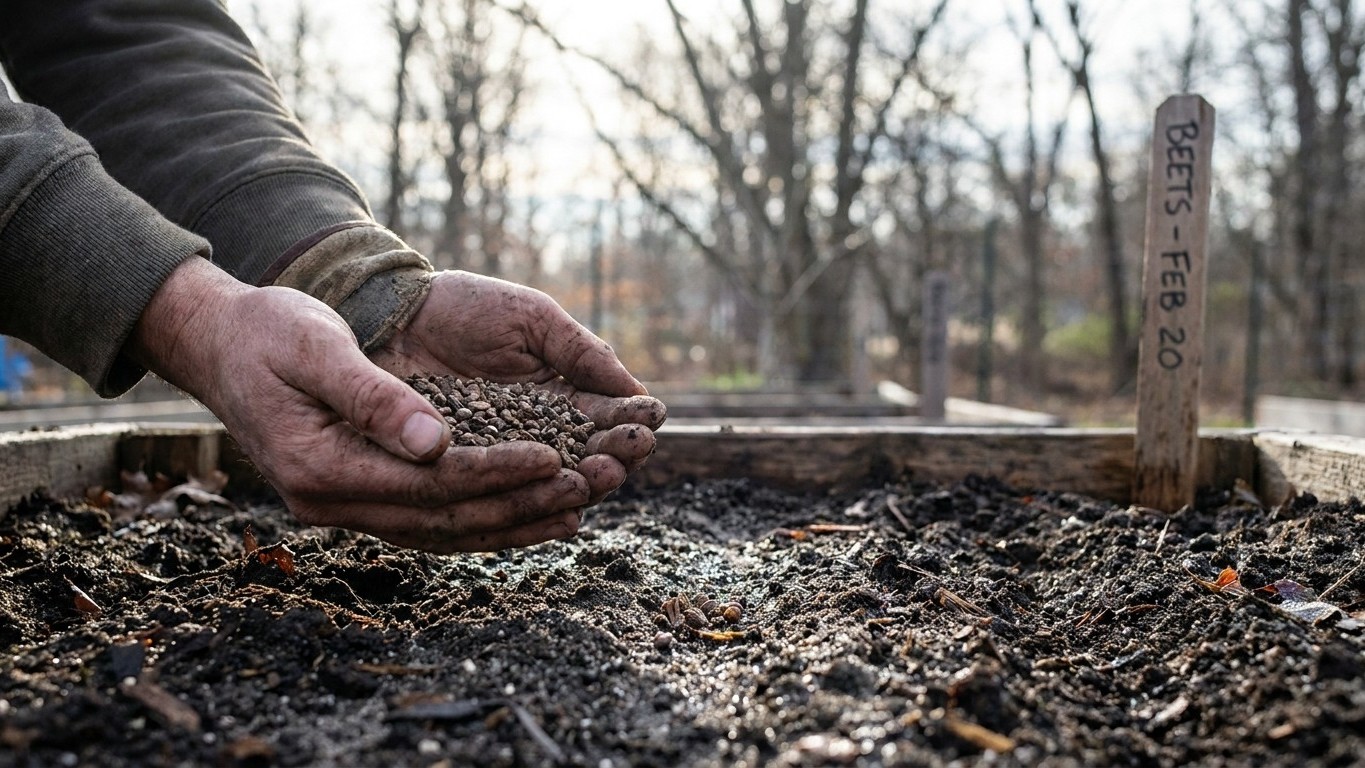

Sow beet seed directly into Manitoba garden soil in early-to-mid May, roughly two to three weeks ahead of the region’s average last frost date of May 23, as soon as the ground has dried enough to rake into a fine bed. That timing lands the first six weeks of root growth in the cooler, more unpredictable stretch of prairie spring, ahead of the heat that can toughen the root later on. Exactly where in that window you land depends on your own soil and how far you sit from Winnipeg.
The short answer
Manitoba’s farmland is dominated by Chernozem, the deep, dark grassland soil the prairies are known for, covering 41 percent of the province’s mapped agricultural surface. The measured median for that surface horizon runs alkaline, with a pH near 7.6, and the texture sits at 45 percent sand, 24 percent clay and 31 percent silt, a loam to silty loam. Organic matter averages about 5.5 percent, and the drainage class is imperfect, meaning water moves through slowly and unevenly rather than draining freely.
Beets want the opposite of sluggish drainage. Utah State University Extension describes the ideal beet bed as deep, sandy and well-drained, rich in organic matter but not overloaded with it, capped at about 1 inch of composted material per 100 square feet. Manitoba’s typical loam holds more clay and moves water more slowly than that description calls for, which matters most right after sowing, when a crusted or waterlogged seedbed can keep beet seed from breaking ground evenly. It also means gardeners here often get more benefit from raised beds or loosened rows than gardeners working true sandy ground would.
What’s missing from the picture
No figure for the number of days Winnipeg spends above 90 F each year is published here, so this page can’t tie that specific heat threshold to root woodiness the way some other regional guides do. What the sourced material does say is that heat above 85 F combined with water stress is what turns a beet root woody and coarse, a separate problem from the early bolting that comes from thirst in the first six weeks. Treat both risks as live possibilities on the prairies rather than relying on a single local number that isn’t on record.
None of this is a verdict on your particular yard. Manitoba’s agricultural zone spans hundreds of individual soil series, and the Chernozem median described above is a provincial average, not a reading of your backyard. A soil test remains the only way to know your actual pH, texture and organic matter, and it’s worth doing before you decide how much compost to work in or whether raised rows make sense for your plot.
The six weeks that decide it here
Sowing two to three weeks ahead of the May 23 mean last frost date puts most Manitoba beet plantings into the ground somewhere between late April and mid-May, which means the critical first six weeks of root development run from roughly early May into late June. That’s the stretch where Utah State University Extension says water stress does its damage, triggering premature flowering, or bolting, rather than a normal root.
Reading the mean date correctly
The May 23 figure comes from the Winnipeg Richardson International Airport station and represents a 30-year mean, not a guarantee. By definition, frost arrives later than that mean in roughly half of all years, so a gardener who sows strictly by the calendar date is taking a real risk of late frost on tender seedlings, while one who waits too long pushes the six-week window deeper into the season’s warmth. There’s no published second threshold here for a harder freeze; the mean date is the only figure on record, and it should be treated as the midpoint of a range rather than a safe line to plant against.
Because Manitoba’s dominant soil is imperfectly drained, spring moisture tends to linger in the top few inches rather than disappearing quickly, which can work in a gardener’s favor during that early six-week window if it means less need for irrigation right after germination. But that same slow drainage can crust over during a dry spell, sealing moisture away from shallow beet roots even while the subsoil stays damp, so the soil looking wet on the surface isn’t proof the seedbed underneath is getting what it needs. Checking moisture an inch or two down, not just the surface, is the more reliable habit here.
What goes wrong here
- Slow, uneven germination in crusted loam. The province’s 24 percent clay content can bake into a hard crust after a spring rain followed by sun, trapping beet seedlings before they break through. Rake the bed to a fine, loose surface right before sowing and keep the top inch consistently damp rather than letting it dry and re-wet.
- Bolting from early water stress. If the first six weeks after sowing turn dry, especially in a year when the crusted surface hides real moisture loss underneath, beets respond by flowering early instead of building a proper root. Water on a set schedule through that window rather than waiting for visible wilting.
- Woody roots from summer heat. Once beets are established, heat above 85 F paired with water stress toughens the root, per Utah State University Extension. This is a distinct failure from bolting and shows up later in the season, so easing off water in June is the wrong response; consistent moisture matters through the whole cycle, not just the first six weeks.
- Sluggish rooting in heavy, imperfectly drained ground. Beets prefer sandy soil, and Manitoba’s typical loam is denser than that. Working in compost, capped at 1 inch per 100 square feet as the source recommends, and loosening the bed a spade’s depth before sowing gives roots an easier path down instead of forcing them to fight through compacted clay.
- Over-amending with organic matter. It’s tempting to add more compost than the guide calls for on heavier ground, but exceeding that 1-inch limit isn’t the fix for clay content; it can throw off the balance the crop actually needs. Stick to the recommended amount and address drainage separately, through bed shaping or raised rows.
Common questions
How long do beets take to mature after sowing in Manitoba?
Utah State University Extension puts beets at roughly 60 to 80 days from seeding to harvest, and that clock starts at the moment seed goes into the ground, since beets are sown directly rather than transplanted. Counting from a May sowing date puts most Manitoba beets ready sometime between early July and early August, though a cool or dry stretch in the first six weeks can push that later.
Is it safe to sow beets before the average last frost date?
Sowing two to three weeks ahead of the May 23 mean is the general guidance, and beet seed itself tolerates cool soil reasonably well. The risk isn’t the seed so much as the mean date being a midpoint rather than a promise, since frost lands later than average in about half of all years on record for the Winnipeg station.
Should I pick a particular beet variety for Manitoba’s soil?
Utah State University Extension’s guide lists five different beet varieties for home gardeners without attaching a specific season, color or best use to any single one of them. Given that, the more useful lever for Manitoba gardeners is bed preparation and watering discipline rather than variety selection alone.
Does Manitoba’s alkaline soil hurt beet germination?
The province’s median surface pH runs about 7.6, on the alkaline side, but no figure in the sourced material ties that specific pH level to beet germination rates one way or another. What the source does specify is the physical bed, deep, sandy, well-drained, with organic matter capped at 1 inch per 100 square feet, so that’s the more concrete target to prepare for regardless of where your own soil test lands on the pH scale.