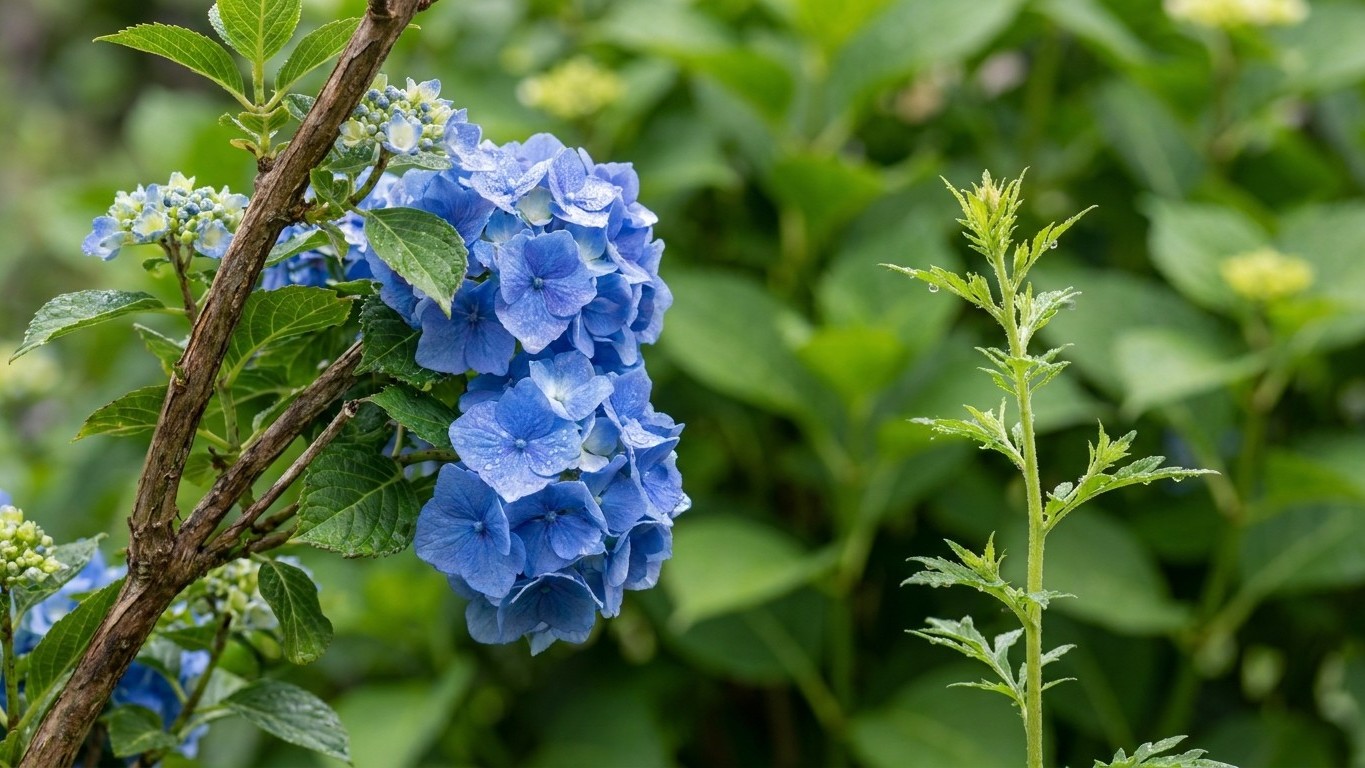

Panicle hydrangeas and smooth hydrangeas come through a Manitoba winter reliably. Bigleaf and oakleaf types often survive as roots but lose their flower buds, so they leaf out and rarely bloom. The difference comes down to when each kind forms its buds. Choose from the first two groups and a hard prairie winter is a minor setback rather than a loss.
What this comes down to in Manitoba

At the Winnipeg Richardson International Airport station, the average last spring frost is May 23 and the average first fall frost is September 22, and the city sits in Canadian hardiness zone 3b. Hydrangeas that bloom on the current year’s growth fit inside that window, and those that depend on buds formed the previous summer do not.
Both frost dates are midpoints from Environment and Climate Change Canada. In about half of years the last spring frost falls after May 23, and in about half the first fall frost arrives before September 22. Zone 3b belongs to the Canadian system, which uses seven climate variables, and it does not convert to a USDA zone. Plant tags often quote USDA numbers, so treat them as a rough guide only.
| Group | Blooms on | What a Manitoba winter does |
|---|---|---|
| Smooth (Hydrangea arborescens) | New growth | Stems often die back, the plant regrows from the base and still flowers |
| Panicle (Hydrangea paniculata) | New growth | Wood usually survives, and flowers form on spring growth |
| Bigleaf (Hydrangea macrophylla) | Mostly old wood | Buds on last year’s stems are usually killed, so blooms are rare or late |
| Oakleaf (Hydrangea quercifolia) | Old wood | Marginal, with buds often lost and the plant struggling |
Here are six named cultivars, ordered from the most dependable to the most marginal for a zone 3b garden.
Annabelle
This smooth hydrangea carries large white, rounded flower heads on new stems. It can freeze to the ground and still bloom that summer, which is why it is the old standby on the prairies. The stems are slender and tend to flop after heavy rain.
Incrediball
Incrediball is a smooth hydrangea bred for sturdier stems and larger white heads than Annabelle. It has the same regrow-from-the-base habit, so a hard winter costs it height but not flowers. It suits gardeners who like Annabelle but are tired of staking.
Limelight
A panicle hydrangea with a tall, upright habit and lime-green flowers that age to pink. The wood usually survives winter, and blooms form on spring growth. It is a dependable backbone shrub for a sunny, sheltered bed.
Quick Fire
Quick Fire is among the earliest panicles to open its flowers, which are white and then deepen to pink and red-pink. That early start matters where fall frost can cut a season short. It is a sensible choice for cooler districts.
Bobo
A compact panicle, with white flowers that blush pink. Its low form tucks under snow cover, which insulates it better than any burlap wrap. It also suits small yards and large containers sunk into a bed.
Endless Summer
This bigleaf hydrangea is sold as a rebloomer, and it is the marginal one. Buds on old wood are usually killed in a zone 3b winter, so any bloom depends on new growth that opens late in the season. Treat it as an experiment, with Protecting Hydrangeas Through a Manitoba Winter as your guide.
Working it out for your own garden
A cultivar list ages quickly as new introductions arrive. The method below works for any hydrangea you meet at a garden centre, and it holds up through a move or a cold year.
How do you judge a hydrangea before buying it?
Start with the bloom wood. If the tag or the grower’s description says it flowers on new wood, it is a candidate. If it says old wood, or promises blue flowers from a bigleaf type, expect trouble. Then read the hardiness rating and note which system it uses. A Canadian zone number can be compared with Winnipeg’s zone 3b, but a USDA number cannot be compared at all.
The third check is whether the plant can finish its work inside your frost window. Flowers that open in midsummer have weeks to spare before fall. Flowers that only open at summer’s end are racing the first frost.
Will a late-blooming hydrangea finish before the first fall frost?
Take Quick Fire. It leafs out after the late-May frost risk has passed, builds new stems through June, and opens flowers early compared with other panicles. By the time the average first fall frost arrives on September 22, it has been blooming for weeks. Even in a year when frost comes early, the display is mostly done.
Now take Endless Summer in the same garden. Its old-wood buds have probably died over winter, so it flowers only on stems grown since spring. Those buds form late and open near the end of summer. If the first frost lands before the average date, the flowers are caught half open. If it lands after, you get a short display.
The same logic shows where the line falls. A shrub that blooms on new wood early in the season finishes well inside the window. One that needs old-wood buds to survive winter, or needs the whole season to flower, sits on the edge and loses in cold years.
A shrub that looks dead in April may not be. Scratch a stem with a thumbnail: green underneath means the stem is alive. Wait until growth shows in late spring before judging, and read When to Prune Hydrangeas in Manitoba before cutting anything.
What changes across the state
The Winnipeg numbers describe the Red River Valley, a flat, open plain. The province covers far more than that. Moving north from Winnipeg, summers shorten and winters deepen, and the northern districts run weeks behind the reference city in both spring and fall. Hydrangeas become a harder proposition the farther north you go, and only the toughest new-wood types are worth trying.
Do elevation and lakes change which hydrangeas survive?
Upland districts such as the Parkland and the escarpment country sit higher than the valley floor. Cold air pools and winds sweep across open ground there, so frost comes earlier in fall and lingers later in spring. A garden near the larger lakes may get a slightly longer fall as the water holds summer heat, though lakeshore winds can be harsh in winter.
Does snow cover and shelter matter as much as the zone?
Often more. A bed on the south or east side of a house, with a fence or hedge breaking the wind, can hold snow all winter. That blanket protects stems and the base buds that smooth hydrangeas regrow from. The same shrub on an exposed corner may lose everything above the snow line. Within one property, two spots can behave like different zones, and a city garden, warmed by pavement and buildings, usually does better than a farm site a short drive out.
The mistakes this state punishes

The costliest error is buying a bigleaf hydrangea because it is the one on the tag or in the photo. Those blue and pink mopheads are bred for milder places. In zone 3b they may leaf out handsomely and never flower, and the disappointment repeats every summer. Smooth and panicle types give the look of a big hydrangea without the gamble.
Pruning in the wrong season is the second. Cutting back in fall removes stems that trap snow and shelter buds. Cutting early in spring can remove wood that is only late to wake up. Wait for visible growth, then cut to live wood.
Third, removing winter protection too early. A warm spell in April tempts people to pull mulch or wraps, then a frost follows. Because the May 23 mean is only a midpoint, frost after that date is normal in about half of years. Uncover gradually, and keep material nearby to throw back over tender growth if a cold night is forecast.
A fourth mistake is feeding with high-nitrogen fertilizer in late summer. It pushes soft new growth that does not harden before the first fall frost. Feed in spring and early summer, and let the shrub slow down on its own as days shorten.
Last, planting in an exposed, windy site because that is where the empty space is. Wind desiccates stems and strips off the snow. A sheltered spot with some sun does more for survival than any cultivar choice.
Checking this against your county
A reference-city number is a starting point for your own yard, not an instruction. Your local conditions, from soil to wind exposure, can shift the picture. Manitoba Agriculture can put you in touch with regional staff who know the ground in your district, and they can tell you which shrubs have held up near you. For the basics of siting, soil and care, see the guide to growing hydrangeas in Manitoba.
Common questions
Can I grow a bigleaf hydrangea in Manitoba?
You can keep one alive, with effort. Plant it in a sheltered spot, mulch heavily and protect the stems over winter. Expect few or late blooms in most years. Smooth and panicle types are the better bet if flowers are the goal.
Why did my hydrangea leaf out but never bloom?
The most common cause is an old-wood bloomer whose buds froze over winter. Other causes are heavy pruning at the wrong time or too much nitrogen. Check the type first, and if it flowers on old wood, expect the problem to return.
Do panicle hydrangeas need winter protection?
Established panicles generally do not, though a layer of mulch over the roots helps in the first winter or two. Snow cover is the best protection. Young plants benefit most from a sheltered position.
Is Canadian zone 3b the same as USDA zone 3b?
No. The Canadian system uses seven climate variables and the USDA system uses one, and Natural Resources Canada says there are no simple conversions between them. Use Canadian zone numbers when comparing to Winnipeg’s 3b, and treat USDA numbers on plant tags as rough guidance.