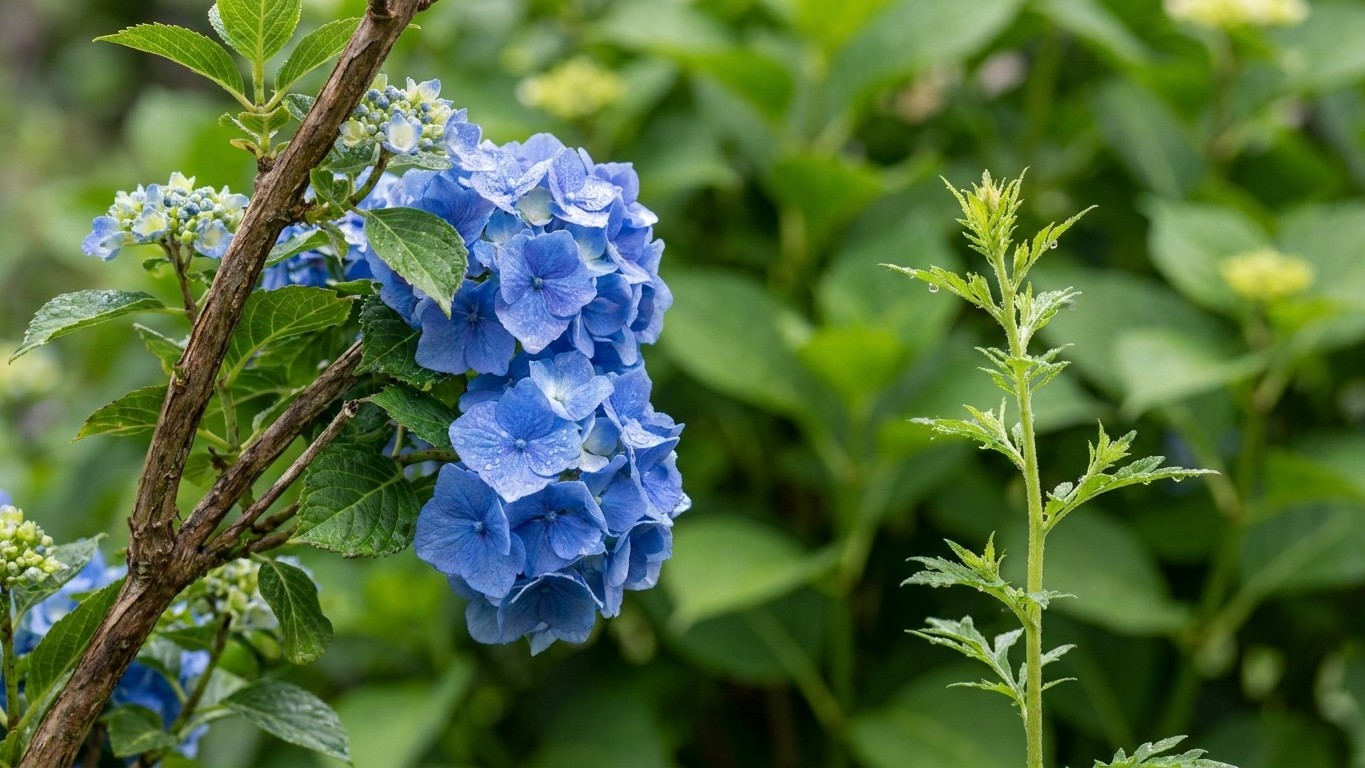

Most hydrangeas in Manitoba come through winter with little help, and a few need a lot. Panicle and smooth types flower on new wood, so a hard winter that kills stem tips costs them almost nothing. Bigleaf and oakleaf types carry next summer’s buds on old stems, and those stems are what protection is for. The routine has three parts: stop feeding in time, mulch and wrap once the ground starts to freeze, and uncover slowly in spring while frost is still possible.
What this comes down to in Manitoba

At the Winnipeg reference station (Richardson International Airport), Environment and Climate Change Canada gives an average last spring frost of May 23 and an average first fall frost of September 22, and each date is a midpoint. In one year out of two, frost arrives later than May 23 in spring or earlier than September 22 in fall. Hydrangeas that bloom on old wood need a mulched, wrapped crown from freeze-up until well past the May date, while those that bloom on new wood need little more than a layer of mulch.
The reference station has about 122 frost-free days between those two dates. That is a short runway for a woody shrub. Stems have to finish growing and harden before the cold arrives, and wood that is still soft and green in October is the first to die back. Late nitrogen and late pruning both push exactly that kind of soft growth, which is why winter care in Manitoba begins in midsummer.
Cold alone is rarely the whole story. A stem buried under snow sits in a fairly steady, mild pocket. A stem above the snow line takes the full swing of prairie wind and sun. In late winter, sun and wind pull moisture out of bare stems while the roots are still locked in frozen soil and cannot replace it. Stems dry out, buds shrivel, and the plant looks dead in May even though the crown is fine.
For the reference city, Natural Resources Canada lists Canadian plant hardiness zone 3b. That is a Canadian zone, built from seven climate variables, and it does not translate into a USDA zone. Treat it as a rough ceiling on what a shrub can take, and treat snow cover and shelter as the things you can change. Which Hydrangeas Survive a Manitoba Winter sorts the species by hardiness, and the general growing basics sit in the guide to growing hydrangeas in Manitoba.
Working it out for your own garden
A calendar date for mulching works one year and fails the next. The method below follows the plant and the weather, so it still works after a move or in a strange year.
When do you mulch and wrap hydrangeas in Manitoba?
Start from the average first fall frost of September 22 and treat it as the first signal only. Leaves blacken, but the shrub is not yet dormant. Wait until the leaves have dropped, several hard frosts have passed, and the soil surface turns stiff when you press a trowel into it. In southern Manitoba that usually lands after the soil has cooled, depending on the year.
Before that, water the root zone deeply once or twice if the fall has been dry. Then mound shredded leaves, straw, or bark mulch over the crown, deep enough to cover it well for a young or tender shrub. For bigleaf types, build a cylinder of hardware cloth or chicken wire around the stems, fill it loosely with dry leaves or straw, and wrap the outside with burlap. Leave the top covered but breathable, because trapped moisture rots buds faster than cold kills them.
How do you decide how much protection a hydrangea needs?
Ask two questions: on which wood does it bloom, and how much of it stands above the average snow line? Take a bigleaf hydrangea that stands three feet tall in an open lawn. Left bare, every stem above the snow dies, the buds die with it, and the plant regrows from the base with healthy leaves and no flowers. Give it a filled cage that reaches the tips and most of those buds survive to open.
A panicle or smooth hydrangea in the same spot is a different case. It flowers on stems it grows that same season, so winter dieback is trimmed off in spring and the plant blooms anyway. The second tier of tougher cases includes reblooming bigleaf types, which flower on old and new wood both. If their old buds die, the new-wood flowers open late, and with the average first frost on September 22 they can be caught by fall cold. Protection still pays for them, since it buys an earlier and fuller bloom.
When do you take winter protection off?
Work backward from the average last spring frost of May 23. Begin loosening covers about two weeks earlier, which means the first half of May. Take off the top covering first, open the sides of the cage on a mild cloudy day, and rake mulch back from the crown. Leave the cage frame standing and keep the burlap nearby through the end of May, because in half of all years frost still arrives after May 23.
Once buds swell, test stems for life. Scratch a little bark with a thumbnail: green means alive, brown and dry means cut back to the first live pair of buds. Dead stems snap cleanly, living ones bend.
What changes across the state
A province this large is not one climate, and the Winnipeg numbers above describe one flat, open spot in the Red River Valley. Gardeners in the northern districts, in the higher country such as the Riding Mountain uplands and the Pembina escarpment, and in much of the Interlake run weeks behind that frost window. Their fall freeze arrives earlier, their spring thaw drags on, and the protection stays on longer. Count on removing covers later in the season than the Winnipeg schedule suggests.
Large lakes such as Lake Winnipeg and Lake Manitoba take the edge off temperature swings close to their shores, but they do little for gardens a few miles inland. Wind matters as much as thermometer readings. On open prairie with no shelterbelt, a hydrangea in the middle of a lawn can lose a lot more wood than the same shrub tucked in the lee of a house or a hedge, even in the same town.
Snow cover is the other variable, and it differs year to year and place to place. Sheltered yards that catch drifts have a natural blanket, while wind-scoured fields shed their snow. Inside a city, buildings and pavement hold a little extra warmth, so a south or east wall can behave like a zone milder than the surrounding country. Pay attention to where snow settles on your own property, and plant your most tender hydrangeas there.
The mistakes this state punishes

Feeding late is the most common error. A late shot of nitrogen pushes soft growth that cannot harden before freeze-up. Stop fertilizing by midsummer and let the plant slow down by itself. Pruning belongs in the same category: a fall haircut on a bigleaf removes next summer’s flowers outright. Leave the stems standing, and trim panicle types in early spring.
Mulching too early is the second trap. Warm October days under a thick blanket of leaves invite voles and mice, which nest in the cover and chew bark through the winter. Wait for the ground to chill, and wrap a collar of hardware cloth around young stems at the base if rodents are a problem in your yard. Plastic wrap is a related mistake. It traps humidity, heats up in March sun, and cooks buds that were safe the day before.
Spring brings the reverse error. A warm spell in April tempts people to strip the cage, and then a late freeze, which happens in half of years after the May 23 average, hits buds that have just started to swell. Uncover in stages and keep burlap within reach. Planting also matters: a hydrangea set in the ground late in fall, in a windy spot, has no time to root before the freeze, so heave and drying are likely.
Soil amendments do not belong in a winter plan either. Color work belongs to the growing season, and Why Hydrangeas Are Pink in Manitoba, and How to Turn Them Blue covers it.
Checking this against your county
A frost window from one airport station is a starting point. Your own yard may freeze earlier or thaw later, and a rural municipality half a province away will differ from Winnipeg. Call or visit your local Manitoba Agriculture office and ask when the ground typically freezes and when frost has been seen late in spring in your area. Combine that with what you see on your own plants: when the leaves drop, how deep snow lies against the shrub, and which stems come through alive. Past winters are the best record you have. The guide to growing hydrangeas in Manitoba carries the rest of the planting and care details.
Common questions
Do all hydrangeas need winter protection in Manitoba?
No. Panicle and smooth hydrangeas bloom on new wood and handle the winter with only a mulch layer, especially once established. Bigleaf and oakleaf types, which bloom on old wood, benefit most from a cage, a mulched crown, and a burlap wrap.
Is plastic wrap safe for hydrangeas?
Plastic traps moisture and overheats on sunny days, so buds rot or cook. Burlap, straw, and dry leaves let the plant breathe and are the safer choices.
Why did my hydrangea leaf out but never bloom?
The likely cause is dead flower buds. A bigleaf or oakleaf hydrangea that was unprotected loses the buds on stems above the snow line, but the crown survives and regrows leaves from the base. Next winter, protect the full height of the stems, or move to a type that flowers on new wood.
Should I cut hydrangeas back in fall?
Leave them standing. Stems catch snow and shelter buds, and a fall cut removes next year’s flowers on old-wood types. Panicle hydrangeas can be pruned in early spring, and the dead stems on any type show clearly once the buds start to swell.