
Skin so tender a fingernail dents it without breaking through, before the seeds inside have hardened: that’s the moment to cut. In Manitoba, the fruit that hits that stage lands somewhere in a window bounded by two averages, not a single calendar square, and the plant itself is a better clock than any date on a seed packet.
When summer squash are ready in Manitoba
The plant tells you before the calendar does. A zucchini, pattypan or yellow crookneck is ready when it’s still glossy and firm, roughly the length of a hand, and gives easily under a thumbnail. Let it sit two more days on the vine and the skin starts to dull, the seeds start to set, and the flesh turns from custard to cotton wool. That signal matters more here than anywhere south of the border, because the season that lets it develop is short and bracketed on both ends by frost.
Environment and Climate Change Canada puts the average last spring frost at Winnipeg Richardson International Airport at May 23, and the average first fall frost at September 22, both drawn from the 1981-2010 climate normals. Those are means, not guarantees. In roughly half the years on record, the real frost fell later than May 23 in spring, or earlier than September 22 in fall. Treat both dates as the middle of a window that moves, not a line you can plant or harvest right up against, and check the actual forecast before you trust either one.
Worked out from those two averages, direct-seeded or transplanted Summer Squash in most of southern Manitoba gets something like 90 to 120 frost-free days to work with, putting the main harvest push from early July through mid-September. That’s plenty for a crop that Clemson Cooperative Extension notes is typically ready about 55 days after planting, with room to spare for a second flush if the first planting gets ahead of you.
Manitoba’s summer heat doesn’t hold this crop back the way the number might suggest at first glance. Winnipeg averages only 4.54 days a year at or above 32°C, and 13.3 days above 30°C, at the Richardson airport station. Those are counts of extreme days, not a measure of the whole season, and warm-season vegetables like squash don’t need scorching heat, just a long enough frost-free run and reasonably warm summer averages, both of which the region supplies. The zone rating for Winnipeg under Canada’s plant hardiness system, which weighs seven climate variables rather than the single minimum-temperature figure the US system uses, comes in at 3b, a reminder that the tight window on either end of summer, not the daytime heat, is the real constraint here.
Keeping them, and for how long
Here’s the part that surprises a lot of new gardeners: summer squash was never built to store. Clemson Cooperative Extension’s guidance is blunt about it, recommending fresh summer squash be kept “in a plastic bag in the refrigerator for up to 1 week.” That’s the whole answer. Not a month, not a cellar full of crates through winter, one week, and that’s a maximum under good conditions, not a promise you’re owed if the fruit went in bruised, warm, or already past its prime on the vine.
Winter squash, the acorn and butternut types that share a garden bed with zucchini all summer, keep for months in a cool, dry spot. Summer squash is a different animal entirely, thin-skinned and high in water, and it behaves that way in storage: it softens, weeps, and starts growing soft spots within days once conditions aren’t ideal. If the goal is stretching a glut past that one-week mark, refrigeration was never going to get you there.
The actual solution is processing, not storage. Summer squash freezes well once it’s blanched, cut into rounds or cubes and dropped into boiling water for a couple of minutes before an ice bath and packing, and it also takes well to pickling, grating and freezing for winter baking, or drying into chips. None of that changes the harvest math from the section above: Clemson’s other point, that the plant stops setting new fruit once an existing one is left to mature and go to seed, means picking frequently and picking small isn’t just about quality. It’s the difference between a modest daily basket and a single mid-September pile of oversized, seedy squash nobody in the house wants to eat.
So the one-week fridge window is really a planning deadline. Anything picked on Monday needs to be eaten, given away, or in the freezer by the following Monday, and a productive plant in a Manitoba garden in late July can easily outpace what one household eats fresh in that time.
Where in the house that actually is
A standard kitchen fridge runs colder than summer squash actually prefers, typically in the mid-30s to low 40s Fahrenheit, and that chill speeds up the pitting and soft spots that show up on squash held too cold for too long. The crisper drawer, set to a slightly less aggressive cooling zone and with the humidity turned up, is the closest thing most Manitoba kitchens have to the right conditions, and the plastic bag Clemson recommends does double duty there, holding in moisture the fridge’s dry air would otherwise pull out of the skin.
A heated living space is the wrong end of the spectrum entirely. Room temperature, even in a cool Manitoba house in September, is warm enough to have surface mold showing on cut squash within a day or two, and whole fruit softening noticeably inside three or four. An unheated porch or a detached garage sounds like a reasonable middle ground, but Manitoba’s shoulder-season temperatures swing hard between a mild afternoon and a hard overnight frost once the calendar tips past that September 22 average, and squash left out there can freeze solid on exactly the kind of night that seems unremarkable at supper time.
The fix is simple and worth doing before the first big harvest, not after: put an actual thermometer in the crisper drawer for a day and check what it reads, rather than assuming the dial setting matches reality. If it’s holding in the high 30s to low 40s Fahrenheit with decent humidity, that drawer, in the plastic bag, for the one week, is the correct answer. There isn’t a cellar or an unheated room in a Manitoba house that beats it for this particular crop.
What goes wrong here
The most common failure is timing the fall harvest against a frost date that isn’t a promise. Vines left out on the strength of the September 22 average, with no eye on the actual short-range forecast, get caught more years than gardeners expect, since frost arrives earlier than that mean in roughly half the seasons on record. The fix is watching the forecast in the two weeks around that date rather than the calendar square itself, and having a plan to strip the vines and process everything at once if a hard frost is called.
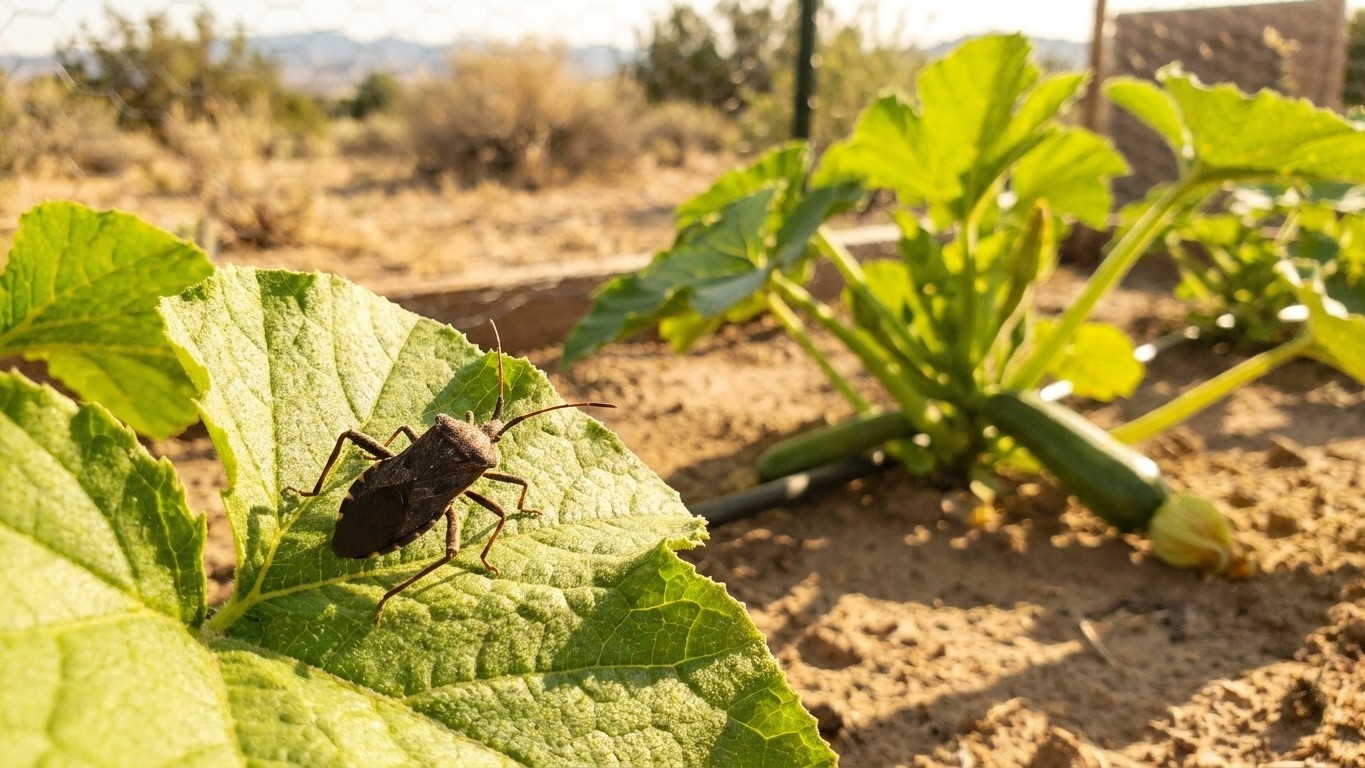
Pest pressure is the second one, and it’s specific enough to name. The squash bug, the squash vine borer, and the striped cucumber beetle are all documented in this region by NDSU Extension and University of Minnesota Extension, and any one of them can take down a healthy-looking plant fast, the vine borer in particular by tunneling into the stem where the damage isn’t visible until the whole vine wilts overnight. Floating row covers during flowering, and checking the base of stems for the sawdust-like frass borers leave behind, catch problems early enough to save the plant.
The third failure isn’t weather or pests at all, it’s just success outrunning appetite. A single healthy plant, picked on the two- or three-day rhythm this crop rewards, produces more than most households eat fresh, and letting a few fruits go oversized “to save for later” only speeds up the glut, since a mature fruit signals the plant to slow down new production. Picking small and picking often, then freezing or pickling the surplus the same week it’s cut, is what actually prevents the end-of-summer pile nobody wants. Manitoba Agriculture’s extension service, at gov.mb.ca/agriculture, is the local resource worth bookmarking for planting dates and pest updates specific to the province.