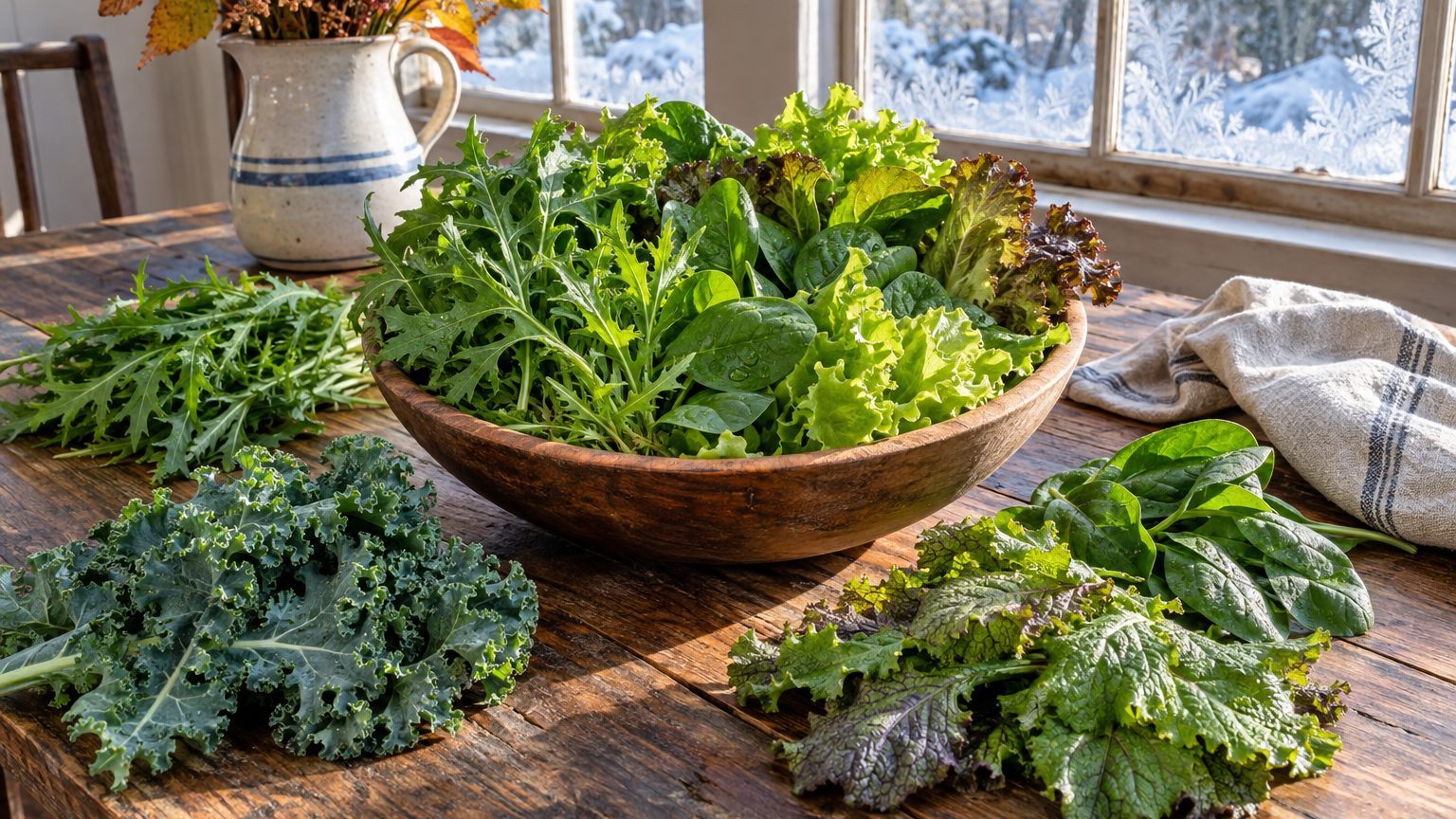

Spinach, mâche, claytonia, kale and the hardy Asian greens will carry a Maryland winter with little help. Heading lettuces and endive want a cold frame or row cover once the nights drop. The sorting rule comes from one number: the mean daily minimum of the coldest month at the Baltimore reference station is 25.4°F. That is cold enough to stall growth, and seldom cold enough to kill a tough green.
The short answer for Maryland
Choose by type first and by variety name second. Within a type, most seed catalogs list several cultivars that perform alike, but between types the gap is wide. A spinach plant and a butterhead lettuce planted side by side in the same bed face the same January, and only one of them is built for it.
The calendar frames the choice. Using NOAA’s 1991-2020 Climate Normals, the first fall frost in Maryland falls between October 26 and November 5, and the last spring frost between April 3 and April 16. These are not guaranteed dates. They mark the band where the chance of a 32°F freeze sits between 30 and 70 percent, so on any given date inside the band a freeze is closer to a coin flip than a certainty. Today is October 5, which leaves roughly three to four weeks before that fall band opens. Plants that are well up by then can ride out the winter. Seeds that sprout in December mostly sit and wait. For exact sowing windows, see When to Sow Winter Salads in Maryland.
Here is how the main types sort out for a state with this much cold but not extreme cold:
| Type | Cold tolerance | Role in a Maryland garden |
|---|---|---|
| Spinach | Hardy; nearly dormant in deep cold, then resumes | The main outdoor winter crop |
| Mâche (corn salad) | Very hardy, but slow growing | Outdoors, sown early so it is established |
| Claytonia (miner’s lettuce) | Very hardy | Outdoors; a dependable green for the coldest weeks |
| Kale and hardy Asian mustards | Hardy; sweeter after frost | Outdoors, with a cover on the worst nights |
| Arugula | Moderate; fast to grow | Fall and early spring; bolts as spring warms |
| Loose-leaf and butterhead lettuce | Tender | Cold frame or row cover |
| Endive, escarole, radicchio | Moderate; radicchio is slow | Fall harvest, protected as winter sets in |
The ratings are comparative, not measured thresholds. This page does not have trial data for individual cultivars, so treat the table as a sorting tool. The broader picture is in Winter Salads for Maryland Gardens.
What will not work here
Slow crops started late are the first casualty. Mâche and radicchio need weeks to fill out, and Maryland’s first fall frost arrives between October 26 and November 5. After that, growth in the coldest stretch slows to a crawl. Whatever size a plant has reached by early November is roughly the size you will be harvesting from all winter. Seed sown in mid-November will not catch up, and a late sowing of a slow crop is mostly wasted effort.
Unprotected tender lettuce is the second. The 25.4°F figure is an average of nightly lows in the coldest month, which means plenty of nights run colder than that. Hardy greens shrug it off. Butterhead and many loose-leaf lettuces turn translucent and mushy after a hard freeze, especially if the leaves are wet. A sheet of row cover or a cold frame fixes this cheaply, and skipping it is the usual reason a lettuce bed looks great in November and dead in January.
Close spacing is the third. Maryland’s humid climate means a dense mat of leaves can stay damp for days in a mild, drizzly stretch, which invites mildew and slugs. Crowded spinach rows thinned late tend to rot at the base. Spacing that looks wasteful at seedling stage is what keeps air moving through the bed in March.
Sowing too early works against you as well. Early October soil is still warm, and lettuce seed sown into warm soil often germinates poorly or sulks. Spinach does the same. Hardy types sown a little later, when the soil has cooled, come up more evenly. The temptation to rush the season is strong when the weather still feels like September.
Finally, spring comes fast. With the last frost band running April 3 to April 16, the weather swings from cold to warm quickly, and arugula and spinach bolt (send up flower stalks) soon after. Plan to eat the best of them before then rather than hoping they will hold.
What changes across Maryland
Maryland is not one garden. The USDA Plant Hardiness Zone Map (2023 edition, built on 1991-2020 normals) places the state across zones 5b to 8a, a spread of more than two full zones. So there is no single answer for the whole state. The dates and the 25.4°F figure on this page belong to the Baltimore reference station, and other parts of Maryland differ.
The mountains differ most. Western Maryland, meaning Garrett and Allegany counties, is mountainous and runs weeks later than the Baltimore-based frost dates above. A reader there should not copy the April 3 to April 16 spring band. Lean harder on the toughest types (spinach, mâche, claytonia, kale), expect to use covers more often, and treat any date from this page as a rough starting point to adjust against local experience. Altitude also matters inside a single county: a valley floor and a ridgeline a few miles away can behave like different regions.
The Eastern Shore goes the other way. It runs milder, so tender lettuces and endive may last longer into the season with less protection, and fall plantings have extra weeks to size up. Milder does not mean safe, though. A single hard freeze after a warm spell can still flatten an unprotected bed.
One caution about zones: the hardiness zone rests on a single variable, the average annual extreme minimum temperature. It tells you whether a perennial survives, not when to sow salad greens. For your own zone, check the USDA map itself rather than relying on this page to tell you.
Where to check this for your own county
Your state extension service is the next stop. University of Maryland Extension is the land-grant university’s public arm, and it can tell you what holds in your county rather than across the whole state.
Look for two things there. The first is a local planting calendar for fall and winter vegetables, ideally one that gives sowing dates by region instead of one date for everyone. The second is the list of varieties trialled in your area, since a cultivar that has been grown and harvested in a Maryland county tells you more than a catalog description does. If the site lists a local office or a Master Gardener helpline, a quick question about your own frost dates can save a season of guessing.
A county recommendation beats a state one. This page is the state one: it covers Maryland broadly, draws on Baltimore-based figures, and cannot account for the hollow where frost settles early or the south-facing slope that stays warm. When the extension’s county advice and this page disagree, go with the county. This page does not have county-level trial results, and I won’t pretend otherwise.
Checking this against your own garden
Your own observations outrank every date above. Three are worth watching, and none needs equipment beyond your hands and eyes.
- Soil warmth by feel. Push your fingers a few inches into the bed in the morning. If the soil still feels warm, as it often does in early October, hold off on lettuce and spinach seed. If it feels cool and slightly damp, germination will be more reliable. Beds that cool earlier than the neighbor’s tell you your site is colder.
- First true leaves. The first pair of leaves after the seed leaves marks a seedling that has established itself. Count how many weeks that takes in your beds. If seedlings reach that stage before the cold sets in, they are likely to overwinter. If they have not by early November, cover them or accept slow going.
- Flower stalks in spring. When spinach or arugula starts sending up a central stalk, the plant has decided spring has arrived. Note the date. A bed that bolts early is warmer or sunnier than you thought, and next year you can sow it with that in mind.
Jot the dates in a notebook for a season or two. That record becomes a more accurate planting calendar for your yard than any published normal.
Common questions
Can I still sow winter salads in early October in Maryland?
Yes, with limits. The first fall frost falls between October 26 and November 5, so you have a few weeks. Fast, hardy greens such as spinach and arugula have time to establish. Slow ones such as mâche and radicchio are a gamble this late.
Which winter salad is the hardiest?
Mâche and claytonia are the hardiest of the common choices, with spinach and kale close behind. Mâche grows slowly, so it needs an early start to be worth the wait.
Do I need a cold frame in Maryland?
For hardy greens, often not. For lettuce, endive and other tender types, a cold frame or row cover is worth having, because the mean nightly low in the coldest month at the Baltimore station is 25.4°F and many nights run colder.
Does my hardiness zone tell me when to plant?
No. The USDA zone is built on the average annual extreme minimum temperature and says nothing about frost dates or season length. Two gardens in the same zone can have frost dates weeks apart, so use your county’s planting calendar for timing.