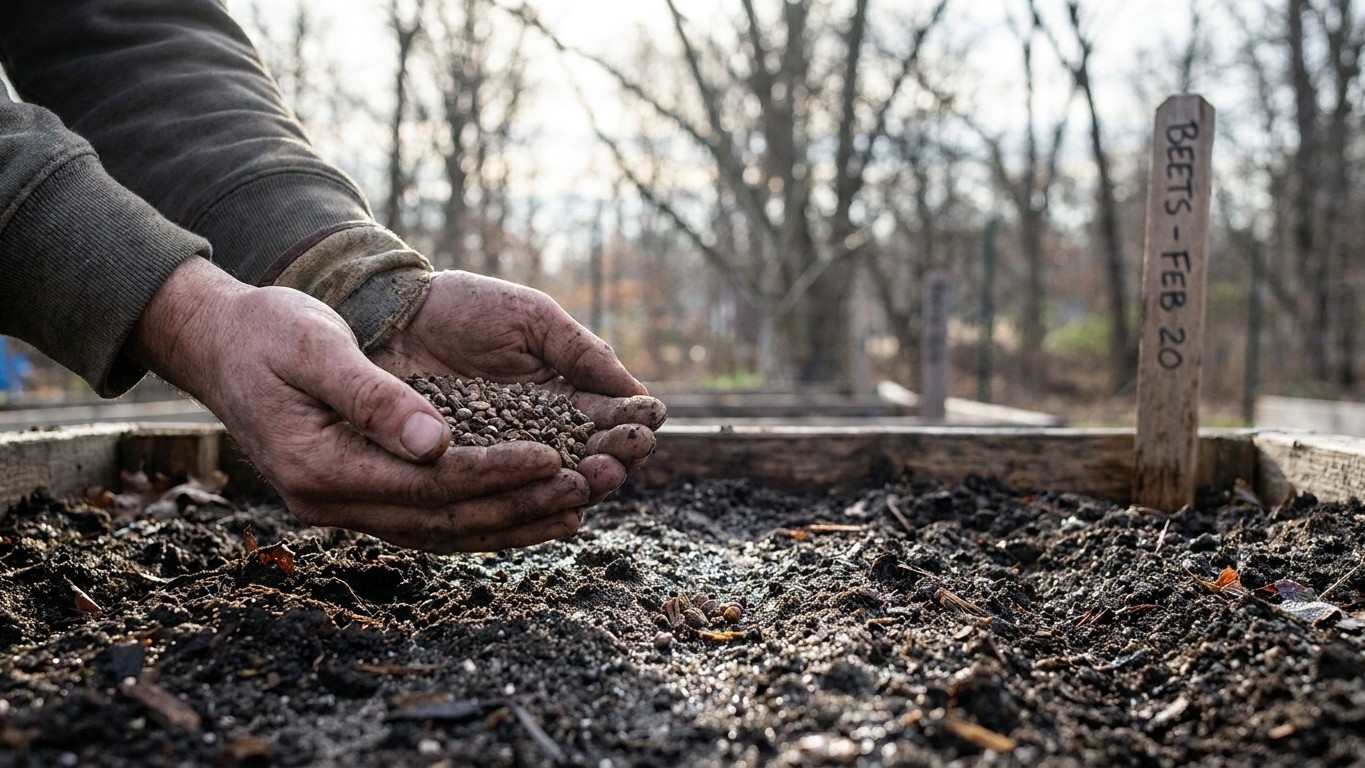

The short window is mid to late March. Massachusetts gardeners sow beet seed 2 to 3 weeks before the last spring frost, and that frost date runs from April 1 to April 8 for the state’s coastal reference station. Inland valleys, hill towns, and the Berkshires push the safe sowing date later, sometimes by weeks. Get the timing right and beet roots grow tender and full; get it wrong in either direction and the crop bolts early or turns woody by midsummer.
The short answer
Start with the ground itself. Massachusetts named the Paxton series its official state soil in 1990, and the USDA NRCS data on its surface horizon gives a useful sketch of what a beet root meets in a lot of the state’s gardens: 61 percent sand, 7 percent clay, and 32 percent silt, classified as well drained, with surface organic matter running around 5.5 percent and a slightly acid pH near 5.5. That’s an Inceptisol, the term soil scientists use for ground still young enough that it hasn’t built the strongly layered profile older soils develop over centuries.
For a beet, that texture is mostly good news. Utah State University Extension’s guidance on the crop calls for deep, sandy, well-drained soil rich in organic matter, and a Paxton-type surface drains the way a beet root needs it to. No standing water sitting around the taproot, no crusted surface blocking a seedling’s first push upward. The catch is that well drained also means fast draining. Sand doesn’t hold moisture the way clay does, so the water a young beet plant needs through establishment can disappear from a sandy surface far sooner than from a heavier soil elsewhere in the country.
The pH is a separate matter, and one every gardener has to check personally rather than assume. A reading near 5.5 sits on the acid side of neutral. The organic-matter figure of about 5.5 percent, for what it’s worth, describes an ordinary mineral surface, not a peat or muck layer; those show up in the data as figures well above 20 percent, so a normal cultivated bed won’t look anything like that even where the texture matches Paxton closely.
On heat, the picture is less complete than the soil picture. Utah State’s guidance is specific that root quality suffers once temperatures climb past 85°F while the plant is also short on water, producing the tough, fibrous texture nobody wants at harvest. What isn’t published in the data behind this article is a count of how many days a year Massachusetts, or any single city in it, actually clears that mark. Treat the heat risk as real and well documented in mechanism, just not quantified here for this state. Sow early enough that the root finishes maturing before the hottest stretch of summer, and keep water steady once temperatures start climbing.
One caution belongs at the top of any planning: a state this size spans hundreds of distinct soil series, and Paxton describes a representative surface, not any one backyard. Gardens near rivers, on old farmland, or on land a builder has filled and graded can differ completely from what’s described above.
The six weeks that decide it here
Sowing 2 to 3 weeks before the last frost date, April 1 to April 8 for the state’s coastal reference station, puts most Massachusetts beet seed in the ground somewhere in the second half of March. That timing means the first six weeks after germination, the stretch that extension research flags as the period when water stress does the most lasting damage, lands squarely inside a Massachusetts spring.
That spring doesn’t hold one pattern from year to year. Some years bring a raw, wet March that keeps soil saturated well into April. Other years bring stretches of dry, windy weather that pull moisture out of a garden bed fast, especially one with a sandy, well-drained surface like the state soil described above. Both patterns show up regularly in New England springs, and neither is rare enough for a gardener to plan around ignoring one or the other.
That inconsistency is exactly why the six-week window matters more than the calendar date itself. Utah State University Extension’s research on beets ties early water stress directly to premature flowering, meaning a beet seedling that dries out even briefly during establishment can bolt weeks later, regardless of how mild or cool the rest of the season turns out to be. A sandy, fast-draining bed makes that dry-out happen sooner than it would on heavier clay, so a gardener working soil that resembles the Paxton series is working with a thinner margin than someone gardening on richer, slower-draining ground.
The practical read is straightforward. The calendar tells a Massachusetts gardener roughly when to sow. The six weeks right after that date are where the crop is actually won or lost. A cold, wet start rarely wrecks a beet crop by itself; beets tolerate cool soil fine. A short dry spell during establishment, even a mild one lasting just a few days, can set the whole planting up to bolt before it ever forms a proper root. Watching the bed itself through those six weeks, not just the forecast, is the habit that matters most here.
What goes wrong here
- Bolting from a dry stretch in the first six weeks. The state soil’s sandy, well-drained surface (61 percent sand, 32 percent silt) sheds moisture quickly, and Utah State University Extension’s research ties early water stress directly to premature flowering. Remedy: check soil moisture by hand every few days through establishment rather than waiting for visible wilting, and water before the top inch fully dries out.
- Woody, fibrous roots from a late sowing. A beet planted too far into spring matures during the hottest stretch of summer, and Utah State’s guidance is specific that heat above 85°F combined with water stress is what turns a root tough. Remedy: sow early within the 2-to-3-week pre-frost window so the root’s growth finishes ahead of peak heat, and keep watering steady if warm weather arrives early.
- Stunted germination from acidic soil. A surface pH near 5.5, the value recorded for the state soil, sits on the acid side of neutral. Remedy: test the actual garden bed rather than assuming it matches the state figure, and lime according to that test result before sowing rather than guessing.
- Forked or hairy roots from over-amending. Utah State University Extension caps organic matter at 1 inch of composted material per 100 square feet; more than that can push root growth off track. Remedy: measure the compost layer with a tape measure instead of eyeballing it, and skip an extra feeding once that amount is worked in.
- Sowing off the wrong frost date for the area. The April 1 to April 8 window comes from a coastal reference station, the mildest spot in the state. Inland valleys and the Berkshires frost later in spring and earlier in fall. Remedy: push the sowing date back for inland and higher-elevation gardens rather than applying the coastal date statewide.
Common questions
What month should beets be sown in Massachusetts?
Most gardens across the state sow beet seed in the second half of March, 2 to 3 weeks ahead of the April 1 to April 8 last-frost window recorded for the state’s coastal reference station. Inland and higher-elevation gardens should plan on a later date since that station represents the mildest spot in Massachusetts, not the statewide average.
How long do beets take to mature after sowing in Massachusetts?
Beets are sown directly in place rather than started as transplants, and most varieties reach harvest roughly 60 to 80 days from the day seed goes into the ground. That range shifts with the weather each of those weeks, particularly water availability during the first six weeks and heat during the final stretch before harvest.
Can beets be sown again in Massachusetts for a fall crop?
A second sowing later in summer for a fall harvest is common practice with beets, since the crop tolerates cool weather at both ends of the season. This article doesn’t carry a published fall-frost date for Massachusetts to count backward from, but the same water-stress and heat rules covered above still apply to whichever sowing a gardener chooses to time.
Does the state soil describe every garden in Massachusetts?
No. The Paxton series is the soil Massachusetts law named as representative of the state in 1990, and the figures behind it describe the surface horizon of that series as mapped, not a measurement of any particular backyard. A state spans hundreds of distinct soil series, and river bottoms, old farmland, and any lot a builder has graded or filled can differ completely from the numbers described here. Use them as a starting point, then confirm the real figures with a soil test of the actual bed.