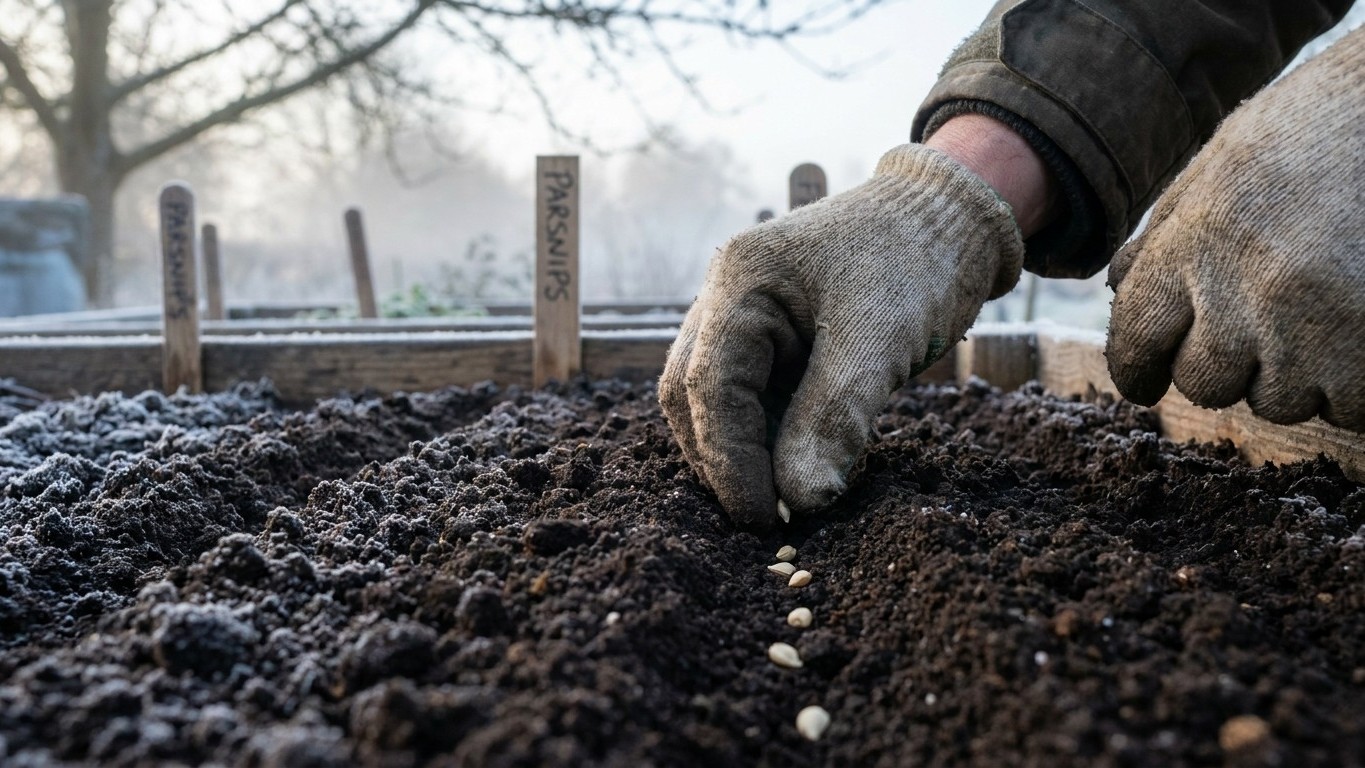

Sow parsnip seed directly into the garden bed two to three weeks before the last spring frost. For the Boston area, that frost window runs April 1 to April 8, which points to a sowing window around mid-to-late March. Gardeners inland or in the Berkshires should push that later, since frost lingers there well past the coastal date.
The short answer
The date on the calendar matters less than what the ground does after you sow. Massachusetts winters bring a mean daily minimum of 23.1°F in the coldest month, measured at the Boston reference station. That’s not a record low, and it’s not the same as a hardiness zone rating. It’s the average low temperature the region sits at, night after night, for weeks at a stretch. For parsnips, that number answers the one question that actually decides whether this crop is worth planting here: will the roots get the sustained frost exposure they need to turn sweet?
Parsnips are unusual among root vegetables in that cold isn’t a threat to manage around. It’s the ingredient that makes the harvest worth eating. Utah State University Extension notes that parsnips taste best after several weeks of cool, frosty weather, because that exposure converts the starch stored in the root into sugar. A parsnip pulled in September, before any real cold has set in, will be edible but flat. A parsnip left in the ground through weeks of freezing nights develops the sweetness the crop is known for.
A coldest-month mean minimum in the low 20s tells you Massachusetts delivers that exposure reliably. This isn’t a state where winter arrives as a single cold snap and then backs off. It’s a state where the ground stays cold for an extended stretch, which is exactly the mechanism that sweetens the root. Inland areas and the Berkshires, which run colder than the Boston reference point used here, likely deliver that frost exposure even more decisively.
That’s a different question from whether the plant can survive the winter, which is what a hardiness zone rating actually measures. A zone tells you the average annual extreme minimum temperature, useful for perennials that need to live through winter dormant in the ground. Parsnips grown as an annual root crop don’t need to survive winter as a living plant. They need the surrounding soil temperature to sit cold enough, for long enough, to trigger that starch-to-sugar conversion before harvest. Confusing the two is an easy mistake, and it leads gardeners in genuinely mild-winter regions to assume a favorable zone number guarantees sweet parsnips. It doesn’t. Massachusetts doesn’t have that problem. The cold here is real, it arrives on schedule, and it sits low enough to do the job the crop needs.
Does the season fit?
Parsnips need 100 to 120 days from the day the seed goes into the ground, not from transplant, since the crop is always sown in place. Add to that a germination period of 14 to 21 days before the first seedlings even break the surface, and you can see why patience matters more with this crop than with most others in the garden. Here’s how the arithmetic plays out against the Massachusetts frost calendar.
- Start counting from the last spring frost window. Boston-area normals put that window at April 1 to April 8. Sowing two to three weeks ahead of that lands the seed in the ground roughly between mid-March and early April, depending on how far inland or how far from the coast a garden sits.
- Add the germination lag. Parsnip seed is slow and can take 14 to 21 days to emerge, especially in soil that’s still cold from winter. A March sowing may not show visible rows until mid-to-late April, and that’s normal, not a sign of a failed sowing.
- Add the 100 to 120 day maturity window. Counting forward from a mid-to-late March seeding, roots reach harvestable size sometime between late June and late July. That’s the earliest the crop is technically ready, though most gardeners don’t pull parsnips on that schedule.
- Compare that to the first fall frost. Massachusetts sees its first fall frost between November 3 and November 14 at the Boston reference station, later near the coast and earlier inland. That leaves months of slack between when the root reaches size and when the ground actually freezes hard.
- Read the buffer as the real advantage here. A 100 to 120 day crop that matures by midsummer, in a state that doesn’t see its first freeze until November, has room to sit in the ground through weeks of frosty nights before it needs to come out. That buffer is what makes Massachusetts a comfortable fit for this crop, not a tight one.
Inland gardens and the Berkshires should shift every one of these dates a little later in spring and a little earlier in fall, since the coastal reference station runs milder than most of the state. The overall math still holds: there’s enough season here, with room to spare for the frost exposure the crop depends on.
What goes wrong here
- Forked roots from heavy or stony ground. Much of New England’s native soil runs heavy or full of rock fragments, and a parsnip taproot pushing down into an obstruction splits into forks instead of growing straight. Double dig the bed to at least 12 to 15 inches and remove stones before sowing, or work in enough organic matter to loosen a clay-heavy plot.
- Forked roots from overwatering. This is a separate cause from soil texture, and it’s easy to mistake one for the other. Excess moisture encourages the taproot to branch rather than drive straight down. Water consistently but don’t oversaturate, especially once the roots are past the seedling stage and sizing up.
- A season that runs out because sowing got delayed. Wet, cold spring soil in Massachusetts can push a sowing date later than planned, and combined with the 14 to 21 day germination lag, a late start eats into the buffer that normally makes this crop comfortable here. Sow as close to the two-to-three-week-before-last-frost window as soil conditions allow, and don’t wait for a perfectly dry bed if it means missing the window by weeks.
- Harvesting before the frost has done its work. Pulling parsnips right when they reach size, in July or August, skips the frost exposure that makes them sweet. The fix isn’t a different sowing date, it’s patience at the other end: leave the roots in the ground through the fall frosts rather than harvesting the moment they’re technically ready.
Common questions
Can I start parsnip seeds indoors in Massachusetts?
No. Parsnips are sown directly in the garden bed. The taproot doesn’t tolerate the disturbance of transplanting, which is why Utah State University Extension describes the crop as sown in place rather than started ahead indoors.
How long does parsnip germination take here?
Expect 14 to 21 days before seedlings appear. Cold spring soil, common in Massachusetts through much of March, can push germination toward the longer end of that range, so bare-looking soil three weeks in isn’t necessarily a failed sowing.
Do parsnips need mulch to survive a Massachusetts winter in the ground?
The sweetening comes from exposure to the frosty weeks themselves, not from any particular winter protection. What matters most is leaving the roots in place through several cold spells before pulling them, rather than harvesting the moment they reach size.
Is a favorable hardiness zone enough to guarantee sweet parsnips?
No, and this is the mistake worth avoiding. A hardiness zone measures whether a perennial plant survives winter dormant in the ground. Parsnip sweetness comes from a different mechanism entirely, the conversion of starch to sugar triggered by sustained frost exposure. A mild-winter zone can grow a perfectly fine parsnip that never gets cold enough, long enough, to turn sweet. Massachusetts, with a coldest-month mean minimum of 23.1°F, delivers the frost exposure the crop actually needs.