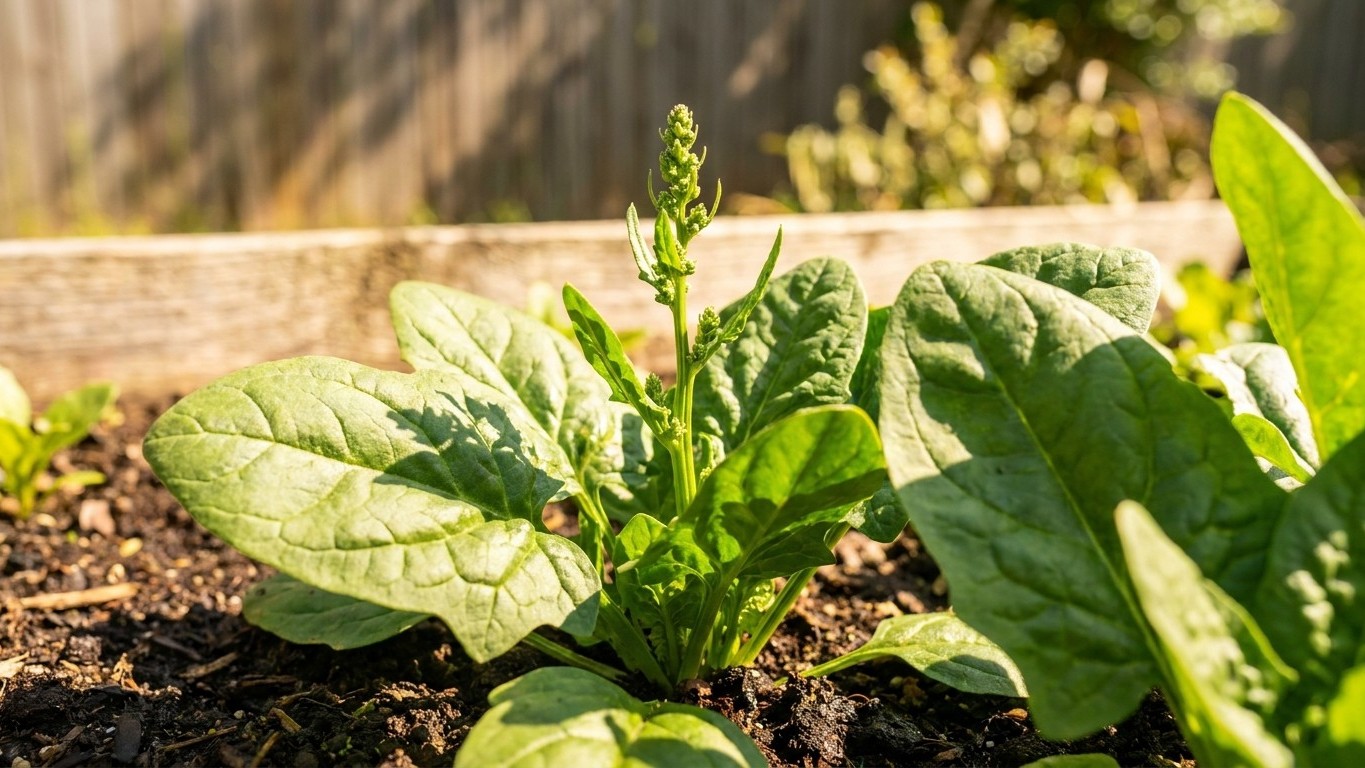

Yes, spinach bolts early almost every year in Massachusetts, and daylight is the bigger culprit, not heat. The Boston area logs 15 hours and 6 minutes of daylight on the longest day of the year, well past the point where spinach shifts into flowering. Layer on an average of 10.2 days a year that reach 90 F, and the state hands gardeners a short spring window and an even tighter fall one for growing spinach before it runs to seed.
The short answer
Massachusetts summers deliver 15 hours and 6 minutes of daylight on the longest day of the year, measured at the reference city near Boston. That figure matters more than any thermometer reading, because spinach responds to day length as much as to heat: long days push the plant into flowering, a process gardeners call bolting, no matter how mild the air feels. A cool, foggy stretch along the coast in June will not hold spinach back if the days have already stretched past the point where the plant switches into seed production.
Compare that to the plant’s temperature preferences. Spinach grows best where temperatures stay under 75 F, and that same ceiling is where the leaves start turning bitter. Massachusetts averages 10.2 days a year at 90 F or higher, drawn from NOAA NCEI climate normals for the Boston reference station. That is not an extreme heat load next to warmer states, but stacked onto the long summer days, it is enough to push spinach out of its comfort zone well before midsummer in most years.
So which is the real limit here, day length or heat? Both work against the crop, but day length is the steadier trigger. Heat varies from year to year: some summers stay mild into June, others turn hot early. Day length does not vary. It climbs on the same schedule every year, heading toward that 15-hour, 6-minute peak regardless of what the thermometer reads. Even in an unusually cool summer, Massachusetts gardeners cannot bank on extra weeks of spinach, because the day length keeps ticking upward on its own timetable. The heat then piles on top, usually finishing off whatever plants were still hanging on.
The practical outcome is a spring crop that has to be sown and pulled before late-spring days stretch too long, and a fall crop timed around cooling soil and the first frost. Coastal mildness near Boston and the sharper temperature swings inland do not change the day length math: gardeners on Cape Cod and up in the Berkshires see roughly the same summer daylight. What differs by location is frost timing and exactly when soil warms or cools, not the daylight hours pushing spinach toward flower.
How long the spring window really is
- Start from the last spring frost. At the Boston reference station, that date falls between April 1 and April 8. Inland suburbs and the Berkshires typically frost later in spring, so gardeners there should shift everything that follows a bit later on the calendar.
- Count back two to three weeks for sowing. That puts seed in the ground somewhere from mid to late March, since spinach seed handles cool, damp soil at that point in the season better than most vegetables.
- Track day length as it climbs. From mid-March onward, daylight lengthens steadily toward the June peak of 15 hours and 6 minutes. Bolting risk rises well before that peak arrives, not just on the solstice itself.
- Track the heat ceiling separately. Once temperatures push past 75 F, growth quality drops and the leaves turn bitter. The state’s 10.2 average days at 90 F or higher tend to cluster in midsummer, but the lower 75 F threshold arrives earlier, well before the hottest days show up.
- Combine both walls. The two pressures, lengthening days and rising heat, close in on the crop from different directions but land in roughly the same stretch of late spring. That leaves a usable growing window of about eight to ten weeks from a mid-March sowing.
- Choose a variety with realistic expectations. Names like Bloomsdale, Melody, Teton, and Olympia show up often in spinach discussions, but no days-to-maturity or bolt-tolerance figures for any of them are published in the source used for this guide, so treat variety choice as a secondary decision behind timing.
- Plan the harvest, not just the sowing. Because the closing window is driven by day length as much as heat, a late sowing has little room to catch up. Getting seed into the ground close to that mid-March mark matters more in Massachusetts than it would in a state with a longer, cooler spring.
The autumn crop, and when the soil lets you sow
Fall Spinach in Massachusetts runs into two separate obstacles, and they show up on opposite ends of the calendar. One blocks sowing too early, the other cuts the season short at the far end.
Soil still too warm for germination
Spinach seed germinates poorly once soil temperatures climb above 80 F, according to Utah State University Extension. Massachusetts soil in late summer, especially in the top inch or two where seed sits, tends to stay warm well past the point when air temperatures start feeling like fall. With an average of 10.2 days a year reaching 90 F clustered mostly in July and August, the ground has real heat stored up by late summer. Exact soil temperature data isn’t part of what’s tracked here, but the practical result mirrors what many Massachusetts gardeners already notice: sowing spinach in early August, right after the hottest stretch, usually leads to poor germination, and waiting until nights lengthen and soil begins shedding heat produces a far more reliable stand.
The frost that ends the season
At the Boston reference station, the first fall frost lands between November 3 and November 14, based on NOAA NCEI 1991-2020 climate normals. Inland gardens and the Berkshires typically see frost earlier than that coastal window, so gardeners further from Boston should plan on an earlier finish. Utah State University Extension’s guidance for fall sowing is to plant 50 to 75 days before the date you want to harvest. Counting back from that frost window puts the practical sowing date somewhere between late August and mid-September for most of the state. That timing lines up neatly with the soil-cooling problem above: by late August the worst of the summer heat has usually broken, and by mid-September the ground has cooled enough for germination to improve, right as the countdown to frost starts closing in on the far end.
Common questions
Can a shadier spot in the garden stop spinach from bolting in Massachusetts?
Shade can lower soil and air temperature slightly, which helps with the 75 F growth ceiling, but it does nothing about day length. Since long days drive flowering on their own, a shaded bed will still bolt once the daylight hours climb high enough; it just may take slightly longer than a bed in full sun.
Do coastal spots near Boston get a longer spinach season than inland Massachusetts?
Coastal areas near the Boston reference station see a later last spring frost and a later first fall frost than inland suburbs and the Berkshires, which stretches the calendar window on both ends. Day length, though, is essentially the same across the state, so the bolting trigger arrives on a similar schedule everywhere.
Does extra watering delay bolting?
Consistent watering helps spinach stay in better condition heading into stressful heat, since drought stress compounds the effects of temperatures above 75 F. It does not change day length, which remains the steadier driver of bolting in Massachusetts regardless of soil moisture.
Which spinach varieties work best for Massachusetts timing?
Bloomsdale, Melody, Teton, and Olympia are commonly grown varieties, but no published days-to-maturity or bolt-tolerance figures for them appear in the sources behind this guide. Choosing a variety matters less in Massachusetts than hitting the mid-March spring sowing date and the late-August-to-mid-September fall window, since both are set mainly by day length and frost timing rather than by the variety itself.