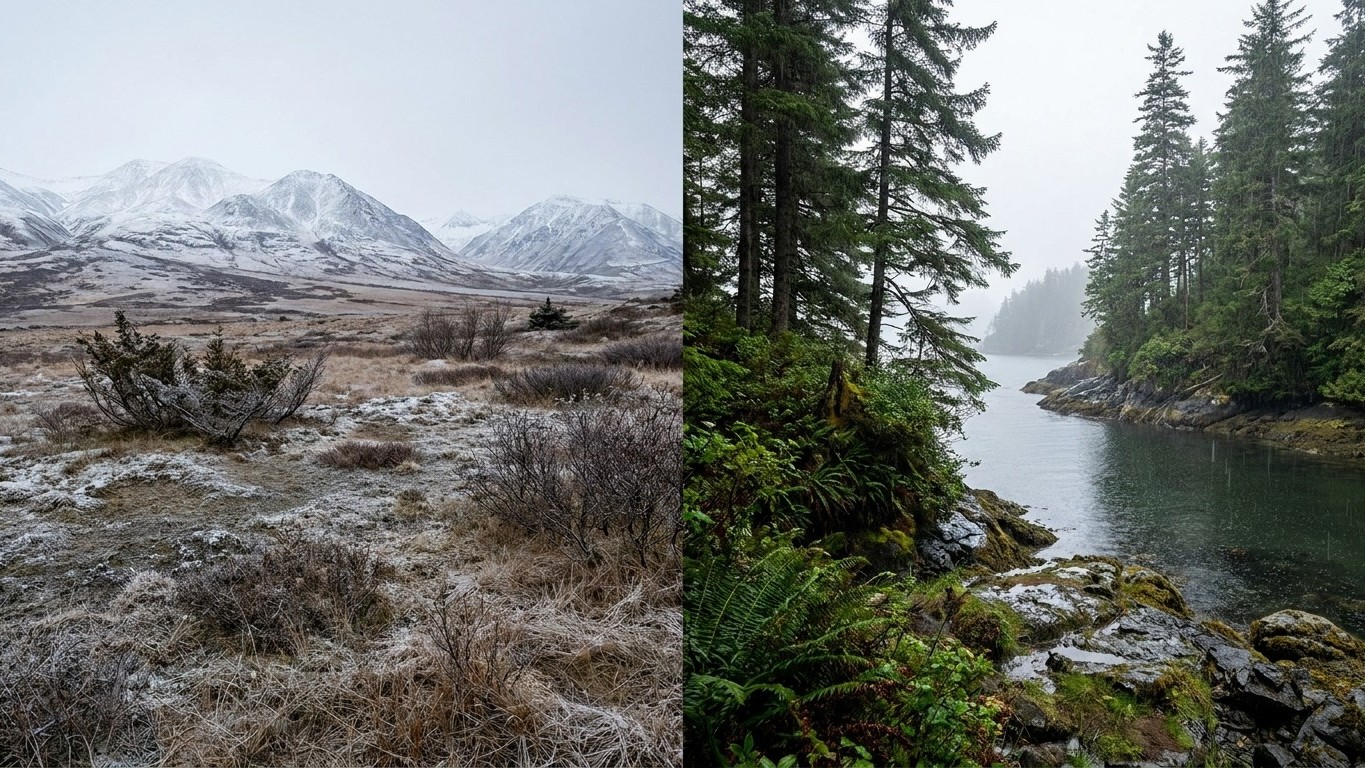

Massachusetts runs from USDA zone 5a in the Berkshires to 7b along the coast, and against the 65 Trees, Shrubs and Perennials this site tracks, every single one is hardy somewhere in the state, none fails across the whole range. Six, though, only work in part of it. The real work here is matching a plant to your own end of Massachusetts, not to the state as a whole.
What will not survive a winter in Massachusetts

Massachusetts’ hardiness range, 5a to 7b, comes from the USDA Plant Hardiness Zone Map, built on a single measurement: the average annual extreme minimum temperature over the 1991-2020 baseline. Zone 5a runs roughly -20F to -15F; zone 7b sits closer to 5F to 10F. That’s a spread of 25 to 30 degrees inside one state’s borders, wider than the gap between many pairs of neighboring states, and it’s the reason a plant list for Massachusetts can’t be a single yes-or-no answer.
Crossed against that full 5a-7b range, the 65 documented trees, shrubs, fruit species and perennials on this site split into three groups. Fifty-nine are hardy across the entire state, from the coldest inland valleys to the mild coast. Six are hardy in only part of it. Zero fail everywhere. That last number is the one this section exists to report: nothing on this site’s list is unable to survive somewhere in Massachusetts.
That’s a genuinely different result from what you’d get in a state that spans, say, zone 4 to zone 9, there, a plant rated for warm zones only would be flatly wrong for the whole territory. Massachusetts’ range, while wide by state standards, doesn’t stretch far enough in either direction to strand any of these 65 species completely. A gardener in Pittsfield and a gardener in Nantucket are working from the same list; they’re just not working from the same six exceptions, which the next section covers.
One distinction matters here regardless of zone. “Hardy” describes survival, not comfort. The cold end of a plant’s rated range is a freeze limit, the lowest average extreme minimum it can take. But the warm end of that same range is usually a heat limit, not a cold one, meaning a plant rated as hardy through Massachusetts’ zone 7b can still sulk through a hot, humid Massachusetts summer even though it never comes close to dying of cold. A hardiness rating tells you a plant won’t freeze out. It says nothing about whether it will thrive.
Worth restating plainly, since it’s easy to expect a state page to hand over a graveyard list of doomed species: there isn’t one here. Every plant this site documents for the Massachusetts climate zone can, in principle, get through a winter somewhere within the state’s borders. The question that actually decides a Massachusetts garden isn’t “will this survive in Massachusetts”, it’s “will this survive in my part of Massachusetts,” and that’s a three-way split, not a two-way one.
The plants that work in part of the state and not the rest
Six plants on this site’s list are hardy in only part of Massachusetts’ 5a-7b range, and they fall into two clear groups depending on which end of the state gives them trouble.
Plants that fail at the cold end
Four of the six are rated out at the coldest zones the state carries, meaning a Berkshires or inland-valley garden sitting in zone 5a or 5b is the wrong spot for them, while the milder zones toward the coast are fine.
| Plant | Its own hardiness range | Fails in these Massachusetts zones |
|---|---|---|
| Ficus carica (fig) | documented range excludes 5a-6b of this state’s span | 5a, 5b, 6a, 6b |
| Hydrangea macrophylla (bigleaf hydrangea) | excludes the coldest end | 5a, 5b |
| Lagerstroemia indica (crape myrtle) | excludes the coldest end | 5a, 5b |
| Magnolia grandiflora (southern magnolia) | excludes the coldest end | 5a, 5b |
Plants that fail at the warm end
Two of the six run the opposite direction, hardy through the cold interior but not rated for the mildest zone the state’s coastal areas reach.
| Plant | Its own hardiness range | Fails in these Massachusetts zones |
|---|---|---|
| Syringa vulgaris (common lilac) | excludes the warmest end | 7b |
| Weigela florida | excludes the warmest end | 7a, 7b |
Flattening either table into a single verdict would be wrong for half the state’s readers. Someone gardening in zone 5b near the Berkshires and someone gardening in zone 7b on Cape Cod are reading two different answers off the same list, and a single yes-or-no would mislead one of them outright.
Finding out which zone applies to a given address takes checking a county-level map rather than guessing from the state’s overall 5a-7b span. This site’s insulation page for Massachusetts carries that county-level zone picture, and it’s the fastest way to place a specific town before shopping from either table above.
The soil and the summer they will be planted into
Massachusetts’ official state soil is the Paxton series, an Inceptisol, which in plain terms means a young soil that hasn’t developed strong internal layering yet. Its surface horizon runs about 61 percent sand, 7 percent clay and 32 percent silt, with organic matter around 5.5 percent and a surface pH near 5.5, slightly acid. It’s classified well drained.
For a newly planted tree or shrub, drainage is the detail that matters most, more than the cold ever is. Winter wet, not winter cold, kills more young woody plants and perennials than a hard freeze does, because saturated soil around dormant roots suffocates them long before the thermometer becomes the problem. A sandy-leaning, well-drained surface like Paxton’s is on the forgiving side of that equation for most of the 59 species hardy across the whole state. That said, Paxton represents the state soil, not the reader’s own back garden: hundreds of other soil series exist across Massachusetts, and river bottoms, hill country, and anywhere a builder has scraped or filled ground will behave nothing like the mapped Paxton profile. A soil test on the actual planting site is the only way to know the real numbers there.
Summer rainfall across the state’s reference station averages about 10.4 inches over June, July and August combined, out of 43.6 inches for the full year. August is the driest of the three summer months at 3.23 inches, with June the wettest at 3.89 and July close behind at 3.27. Those are inches of precipitation, not a humidity reading and not a watering schedule on their own.
The number only means something once it’s crossed against the ground it’s falling on. The same 3.23 inches of August rain soaks into a sandy, well-drained surface like Paxton within a day or two, while that identical rainfall sits for a week on a heavy clay soil elsewhere in the state. A single summer thunderstorm delivering an inch in twenty minutes mostly runs off a compacted surface rather than soaking in, regardless of the monthly total. A rain gauge on the actual planting site, tracked against how quickly that ground drains, tells a gardener more than the regional average ever will.
When to plant, here
Massachusetts’ last spring frost falls between April 1 and April 8, and the first fall frost arrives between November 3 and November 14, both measured at the reference weather station. Those dates frame two separate planting windows, and the reasoning behind each matters more than the calendar date itself: a newly planted tree or shrub needs time to grow roots into surrounding soil before it’s asked to either leaf out fully or face a hard freeze.
| Window | What it suits | Main risk |
|---|---|---|
| Spring (after April 1-8) | Most Trees, Shrubs and Perennials; a full growing season ahead to establish roots before next winter | A late frost right after the average date can still catch new growth off guard |
| Autumn (before November 3-14) | Many trees and shrubs, since cooler air and still-warm soil favor root growth over leaf growth | Roots need real weeks to establish before hard freeze; a late planting leaves too little of that time |
In the coldest end of the state’s range, autumn planting carries the tighter margin. A shrub or tree going into zone 5a ground in October has noticeably less time to root in before a fall frost that can arrive as early as November 3 at the reference station, and inland or higher-elevation spots typically see their own first freeze earlier still. Along the milder coastal zones, that same autumn window stretches longer.
These frost dates are averages drawn from a waterfront, urban reference station, the mildest spot the state’s own network monitors, not a promise for any individual yard. Inland suburbs and the Berkshires frost noticeably earlier in fall and later in spring than the dates above suggest, sometimes by a couple of weeks. And whichever window is used, a first-season planting needs regular water regardless of what a given species’ drought tolerance rating says: those ratings describe an established plant with a developed root system, not one still settling in.
Where to read about each one
Of the 59 species hardy across the whole state, eighteen are trees: Acer rubrum, Acer saccharum, Amelanchier canadensis, Betula nigra, Carpinus caroliniana, Cercis canadensis, Cornus florida, Ginkgo biloba, Juniperus virginiana, Liquidambar styraciflua, Nyssa sylvatica, Picea abies, Pinus strobus, Platanus occidentalis, Quercus alba, Quercus rubra, Thuja occidentalis and Tilia americana.
Twelve are shrubs: Aronia arbutifolia, Buxus sempervirens, Clethra alnifolia, Fothergilla gardenii, Hydrangea paniculata, Ilex glabra, Ilex verticillata, Itea virginica, Kalmia latifolia, Physocarpus opulifolius, Spiraea japonica and Viburnum dentatum.
And fourteen are perennials: Achillea millefolium, Amsonia hubrichtii, Asclepias tuberosa, Baptisia australis, Anacis verticillata, Echinacea purpurea, Heuchera americana, Iris sibirica, Lavandula angustifolia, Monarda didyma, Phlox paniculata, Rudbeckia fulgida, Salvia nemorosa and Hylotelephium spectabile.
That list, along with the hardiness ranges behind it, comes from the North Carolina Extension Gardener Plant Toolbox, a university extension plant database, crossed here against Massachusetts’ own 5a-7b range. These are hardiness ranges specifically, describing which zones a plant can survive winter in. They shouldn’t be confused with the adaptation ranges held elsewhere on this site for apple varieties, which come from a separate fruit-variety table and answer a different question entirely: not whether a tree survives, but where a given variety performs well enough to be worth growing.