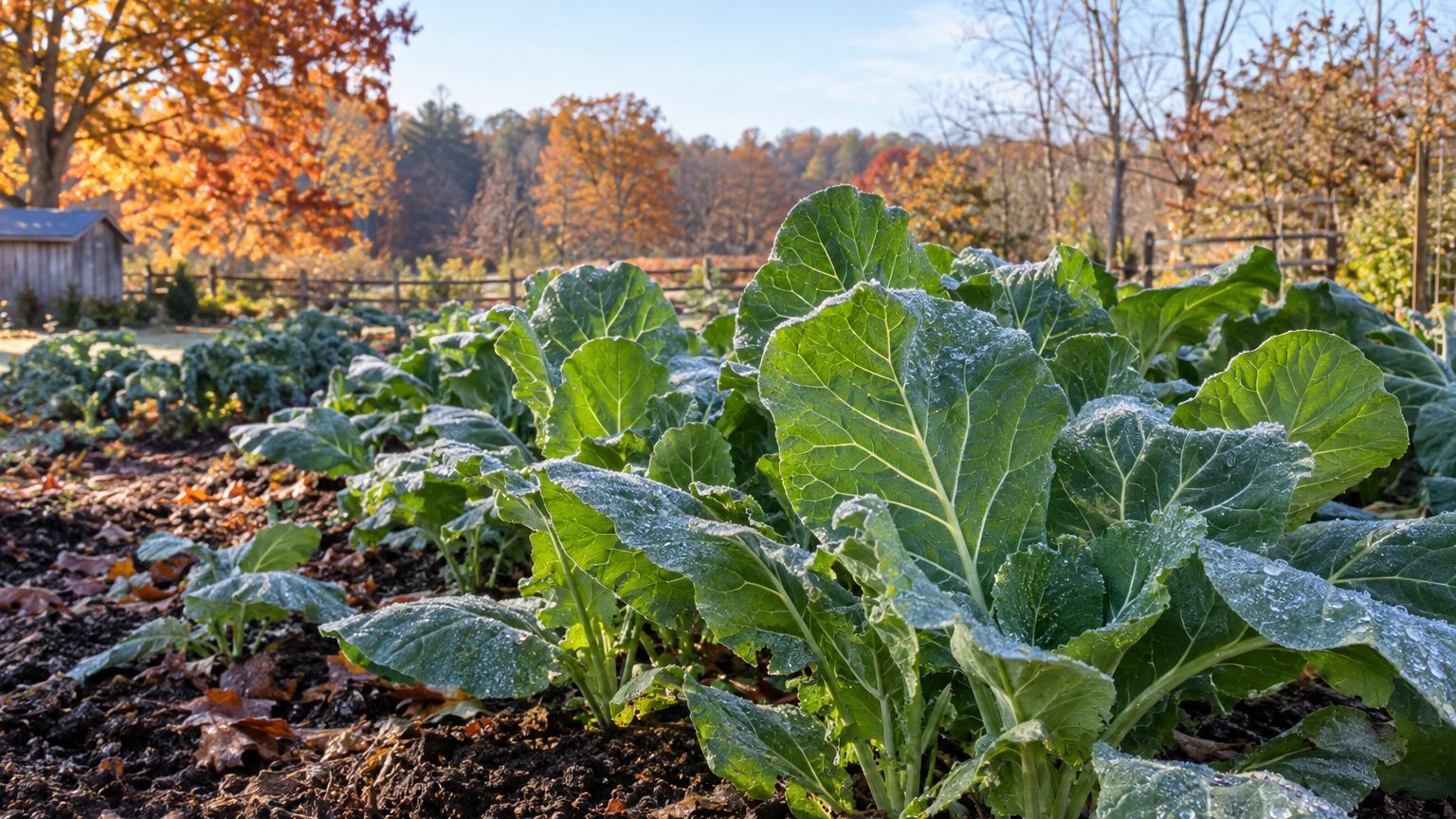

Set collard transplants in the garden around the last spring frost, which falls near April 30 in the Detroit area and in early to mid May across most of the Lower Peninsula. For a fall crop, sow seed in early to midsummer so the plants are well grown when the first frost arrives, between October 6 and October 21 in zone 6a. Those two anchors set everything else.
The short answer for Michigan
A frost date is a probability, not a deadline. The last spring frost is the point in the calendar after which a freezing night has become unlikely, judged from past years. A freeze can still show up after it, and in a cold spring it often does. The first fall frost works the same way in reverse, marking the average arrival of the first freezing night. Both dates describe a chance of frost, not a promise.
Collards give you room to work with that uncertainty. They tolerate light frost and taste sweeter after cold nights, so you do not have to wait for the last frost to pass before planting out. Setting sturdy transplants a little ahead of the spring date is a reasonable gamble, as long as you can throw a sheet or row cover over them on a freezing night. Seed indoors a few weeks before that, in a bright window or under lights, so the plants are stocky when they go out.
The fall crop is the more forgiving one. Seed sown in early to midsummer grows through the warm months and matures as nights cool. Count backward from the first frost window using the days to maturity on the seed packet. For direct-sown seed, those days count from sowing. For transplants, they count from planting out.
| Milestone | Timing |
|---|---|
| Last spring frost, Detroit area | Around April 30 |
| Last spring frost, most of the Lower Peninsula | Early to mid May |
| First fall frost (zone 6a) | October 6 to October 21 |
The spring window opens just before or at the last frost. The fall window closes by counting back from October. For the full growing picture, see Growing Collards in Michigan.
What will not work here

Sowing seed outdoors in April is the most common misstep. Soil in a Michigan spring stays cold and wet long after the air feels mild, and seed sits in it or rots. Start indoors or buy transplants instead.
A late fall sowing fails for the opposite reason. Collards need a long stretch of growth to make a big, productive plant. If seed goes in late summer, the season runs out before the plants size up. With the first frost arriving as early as October 6, a planting made in August may give you only small leaves by the time the cold comes. Sow early to midsummer, and use the packet’s days to maturity to check your math.
Overwintering is the third trap. In the Detroit reference record, the average low in the coldest month is 19.2°F. That is a mean daily minimum, the typical night in deep winter, not a record cold snap, so many nights run colder. A collard plant left in an open bed is unlikely to come through that reliably, and plants in the colder parts of the state will fare worse. Treat collards as a crop you sow and finish within one season. A thick mulch or a low tunnel can stretch the harvest into early winter, but it is not a plan for next spring.
Slow, long-season varieties also struggle against a short fall. When the window between sowing and the first frost is tight, a variety that needs the full season will be caught unfinished. Look for earlier-maturing types, which The Best Collards and Greens for Michigan covers in detail.
Humid summers cause a quieter problem. Where air stays moist, crowded plants hold wetness on their leaves, and that invites leaf disease. Give each plant enough room that air moves between them, and water at the base of the plant in the morning rather than overhead in the evening. Spacing that looks generous in May often looks about right by August.
What changes across Michigan
Michigan does not have one growing climate. The USDA Plant Hardiness Zone Map (2023 edition, built on 1991-2020 normals) places the state anywhere from zone 4a to zone 6b. That range is wide enough that a gardener in the southeast and one in the far north are working with different seasons. The USDA system rests on one variable, the average annual extreme minimum temperature, so it tells you about winter cold and says little directly about how long summer lasts.
The dates above are for the southern end of that range. The fall frost window of October 6 to October 21 applies to zone 6a, and the spring dates are given for the Detroit area and for most of the Lower Peninsula. They are a starting point, not a statewide rule. There is no single answer for Michigan, only a spread.
If you garden in the northern Lower Peninsula or the Upper Peninsula, shift both ends of the calendar toward a shorter season. Spring planting moves later, and the fall deadline comes earlier. That pushes you toward early-maturing varieties, transplants started indoors, and protection with row cover at both ends of the season. In the colder zones, a fall crop sown at the same time as in the south has less time to grow before cold arrives, so sow it earlier. Frost pockets in low ground can make a garden colder than its zone suggests.
The best way to find where you fall is the USDA Plant Hardiness Zone Map itself. Enter your ZIP code and read the zone it returns, rather than assuming from a neighbor or a nearby city. Then use the zone to decide how far to shift the dates here, with later spring planting and earlier fall sowing as you move north.
Where to check this for your own county
The state-level dates are a good frame, but your county’s extension office can tell you more. Michigan’s land-grant university runs MSU Extension, which has educators and offices around the state. Those staff know local conditions, and they publish material tied to the places they serve.
When you get there, look for two things. First, a local planting calendar. It will give frost dates and sowing windows for your area, and those dates are likely to differ from the state average if you live near a big lake or well north. Second, any variety trials run in your county or a nearby one. A trial shows which collards and other greens actually performed under local conditions, which is better evidence than a seed catalog description.
A county recommendation beats a state one. This article gives you the state version: the broad frame, the reference dates and the logic of how to use them. A county calendar accounts for the local microclimate, and where the two disagree, trust the county. If your extension office offers a gardening helpline or soil testing, use those as well. A soil test also tells you what the beds need before the plants go in.
Checking this against your own garden
Your own observations outrank every date here, because your yard has its own weather. Three things are worth watching.
- Soil warmth by feel. Push a hand a few inches into a bed in spring. If the soil feels cold and clings in a wet clump, wait. If it crumbles and feels neutral or cool rather than chilly, it is ready. Beds that warm early, such as sunny, south-facing or raised ones, tell you where to plant first.
- The first true leaves on your seedlings. The first pair that appears is the seed leaves. The next leaves look like the real thing, with the typical wide, smooth shape. Once seedlings have a few true leaves and sturdy stems, they are ready to harden off and move out. Slow growth means they need more light or warmth, not more water.
- Where frost shows up first. On a cold morning in October, look at where white frost sits on the grass and where it does not. Low spots and open ground chill first, while spots near a wall or under a tree often stay clear longer. That pattern shows you where fall plants will be caught early and where they will last.
Write what you see in a notebook for a season or two. Over time, your record will be more precise than any state calendar.
Some gardeners also time this by the Moon: when to plant collard greens by the moon, as almanac tradition rather than fact.
Common questions
Can I direct-sow collards in spring in Michigan?
You can, but transplants usually do better. Spring soil stays cold and wet, and seed sown into it can rot or sprout slowly. Starting seed indoors a few weeks ahead, or buying transplants, gets the plants out near the last frost date: around April 30 in the Detroit area and early to mid May across most of the Lower Peninsula.
When is the latest I can plant collards for fall?
It depends on the variety and on where you garden. The first fall frost in zone 6a arrives between October 6 and October 21. Count backward from that window using the days to maturity on the packet, and sow earlier in the colder parts of the state. Early to midsummer is the general range for seed.
Will collards survive a Michigan winter?
Not reliably. The average low in the coldest month at the Detroit reference station is 19.2°F, a mean daily minimum, so many nights run colder. Mulch and covers can extend the harvest into early winter, but plan on a new crop each year.
Does frost hurt collards?
Light frost generally does not, and cold nights often make the leaves taste sweeter. A hard freeze is another matter, especially for young transplants set out early. Keep a sheet or row cover handy for those nights, and check your county extension office for local frost dates.