
Only four pests on Michigan’s documented list actually target potato: cutworms, flea beetles, seedcorn maggot, and slugs. The rest of the state’s tracked insect list belongs to squash, cucumber, and pumpkin, or to ash trees. Timing follows the frost-free window rather than a calendar month, since planting dates shift across the state.
Which pests attack potato in Michigan
The MSU Extension bulletin E3276, Diseases and insects in Michigan cucurbits, documents ten species for this territory: Asiatic garden beetle, cutworms, emerald ash borer (Agrilus planipennis), flea beetles, seedcorn maggot (Delia platura), slugs, spotted cucumber beetle, squash bug (Anasa tristis), squash vine borer (Melittia cucurbitae), and striped cucumber beetle. That bulletin is built around cucurbit crops, so the list leans hard toward squash, cucumber, and pumpkin pests rather than potato ones. It matters for what you can trust here.
Four of those species have a real relationship with potato. Cutworms chew through young stems at soil level and will take down a transplant or newly emerged shoot overnight. Flea beetles ride potato foliage hard, leaving the leaf riddled with tiny round holes. Seedcorn maggot larvae tunnel into seed pieces that are already softening in cold, wet soil, hollowing them out before a sprout ever forms. Slugs rasp foliage at night and, in wet years, chew into tubers sitting close to the surface.
The other six do not belong on a potato page, and each has a clear reason. Emerald ash borer is a wood-boring beetle whose larvae develop under the bark of ash trees; it has no relationship to any vegetable crop, and finding it in a yard tells you nothing about a garden bed. Spotted cucumber beetle, striped cucumber beetle, squash bug, and squash vine borer are cucurbit specialists: they feed on and lay eggs in squash, cucumber, melon, and pumpkin tissue specifically, and none of them are drawn to potato foliage or tubers. Asiatic garden beetle is a turf and ornamental pest, its larvae chew grass roots and adults skeletonize the leaves of many garden plants, but it isn’t documented here as a potato feeder.
That leaves a short, honest list. It’s shorter than a lot of general pest charts suggest, and that’s the point: naming pests that aren’t actually tracked for this crop in this state does a reader no favors.
When each one shows up, and what it does first
Michigan’s frost-free date is not one number. It falls around April 30 in the Detroit area, but runs early to mid May across most of the Lower Peninsula, according to MSU Extension’s frost-free date data. Since seed potatoes typically go in the ground close to that local frost-free window, pest timing tracks from that date rather than from a fixed month.
Seedcorn maggot is the earliest problem, and it shows up before you ever see a plant. The larvae are already in the soil working on the seed piece within the first couple of weeks after planting, particularly if the ground stayed cold and wet and the cut seed piece started to soften before sprouting. The first sign isn’t a chewed leaf, it’s a gap in the row where a plant never came up at all.
Cutworms follow close behind, active in the two to three weeks after emergence when stems are still thin enough to sever. The tell is a healthy-looking plant lying flat on the soil, cut clean near the base, with no sign of the culprit because cutworms feed at night and hide in the soil by day.
Flea beetles arrive as foliage fills out and stay through the growing season, with damage most visible on new leaves as they expand. Small round holes scattered across a leaf, sometimes described as a shot-hole pattern, are the first thing a grower notices, usually well before any beetle is spotted.
Slugs become a problem whenever the season turns wet, which in Michigan can mean early in a rainy spring or again in a damp August. They leave ragged holes in leaves and, on tubers close to the surface, shallow gouges, along with the slime trail that gives them away even when the slug itself has retreated for the day.
Telling the damage apart from everything else
A hole in a leaf or a plant that won’t come up has more than one possible cause, and guessing wrong wastes a season. The detail that decides it is usually where the damage sits and whether anything is left behind, not just what the damage looks like.
| What you see | Likely insect cause | What else it could be | What separates them |
|---|---|---|---|
| Gap in the row, seed piece never sprouted | Seedcorn maggot | Seed piece rot, planting too deep, cold soil | Dig up the piece; maggot damage shows tunnels and a hollowed, slimy interior rather than a firm, unmarked rot |
| Plant cut off at the soil line | Cutworm | Mechanical damage from a hoe or animal browsing | Cutworm cuts are clean and low, right at soil level; browsing tends to leave a ragged, higher cut or torn leaves nearby |
| Small round holes across leaves | Flea beetle | Hail damage, early blight lesions | Flea beetle holes are numerous, round, and don’t have a dark ring; disease lesions have defined brown or tan borders |
| Ragged leaf edges, slime trail, shallow tuber gouges | Slugs | Nutrient deficiency causing yellowing, drought stress causing leaf curl | Slugs leave a visible slime trail and feed mostly at night; deficiency and drought symptoms show as color or shape change without any feeding marks |
Yellowing between leaf veins, overall wilting on a hot afternoon that recovers by evening, or leaves that curl without any holes, all point away from insects and toward water, nutrients, or disease. None of those show tunneling, holes, or a slime trail. When the damage doesn’t clearly match one of the patterns above, a local county Extension office can look at a sample and rule out disease before anyone reaches for a treatment aimed at the wrong problem.
What actually works here, and what is a waste of time
Michigan’s growing season is short enough that timing does more work than any product applied after the fact. Planting certified seed potato is the single decision that prevents the most damage, since uncertified seed can carry virus and is more likely to already be softening when it goes into the ground, which is exactly what draws seedcorn maggot in. That one choice, made before planting day, matters more than anything sprayed later.
For cutworms, a simple collar around each stem, pushed a couple inches into the soil at transplanting, physically blocks the cut. It costs almost nothing and works because it’s in place before the pest ever finds the plant. For flea beetles, a floating row cover put down right after emergence and left on until plants are established keeps the first generation off the leaves entirely; putting it on after damage already shows up does much less. For slugs, keeping mulch and debris off the soil surface near the row removes the daytime hiding spots that let a slug population build up in a wet stretch.
What doesn’t work is treating on a fixed schedule regardless of what’s actually present. Spraying for flea beetles when the damage in front of you is actually early blight wastes the material and the trip, and it does nothing for the plant. Broad, repeated treatments without identifying the pest first also tend to knock out the ground beetles and other predators that would otherwise be keeping cutworm and slug numbers down on their own. This site does not recommend specific products or active ingredients; what’s labeled and legal to use on potato changes, and a county Extension office is the source that keeps up with it.
Where to check this for your own county
The species documented in E3276 come from statewide monitoring, not from a survey of every county’s gardens. A pest tracked for the state does not mean it’s present in a specific yard, and the reverse is also true: something could be feeding on a garden that isn’t on this list at all, simply because the bulletin it’s drawn from was built around cucurbits, not potato.
The place to check local conditions is MSU Extension, through the county office nearest the garden in question. County staff can confirm what’s actually active in a given part of the state during a given week, look at a sample or a photo, and point to what’s currently labeled for potato in Michigan, which changes more often than most gardeners expect.
Before the next planting date rolls around, it’s worth calling that office once, even without a problem in hand, just to ask what they’re seeing locally this season. That single call tends to save more guessing than any general list ever will.
Common questions
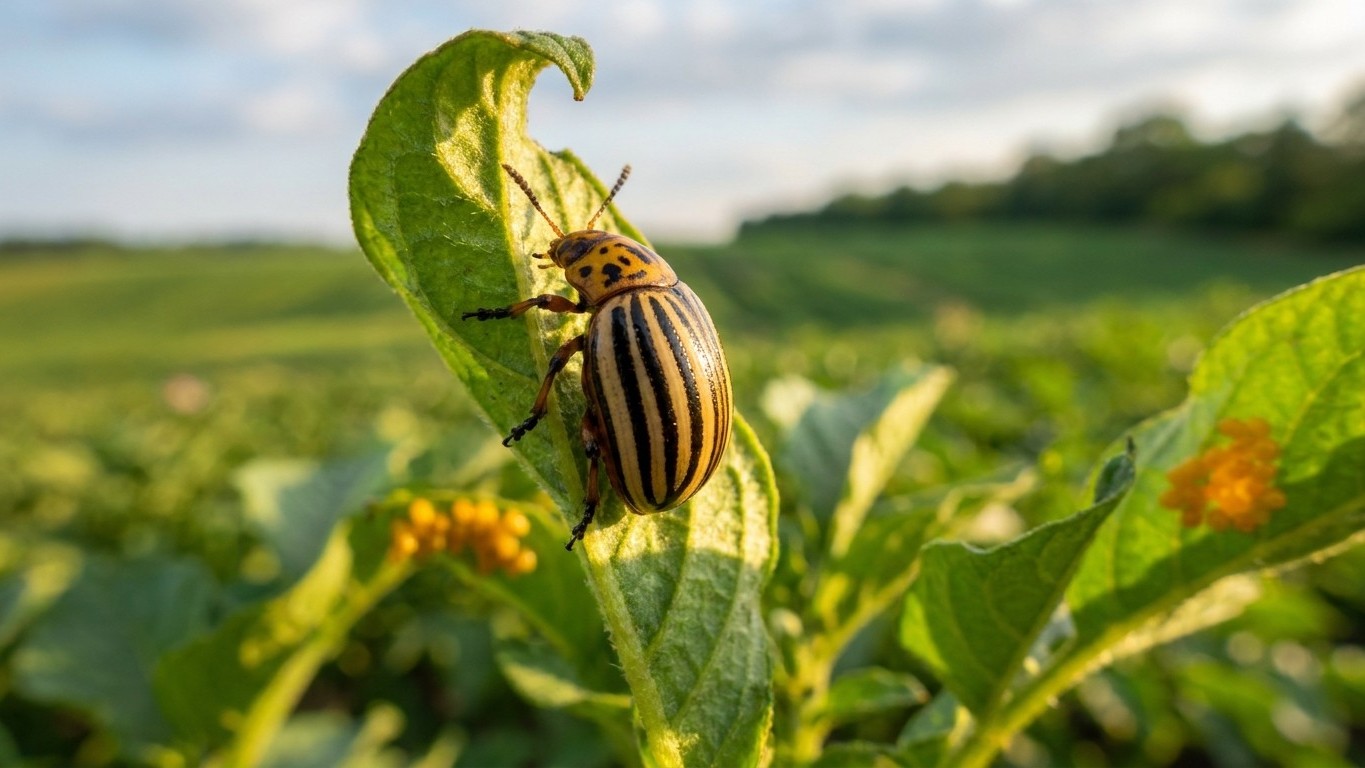
Do Colorado potato beetles show up in Michigan? This bulletin, built around cucurbit crops, does not document them, so nothing here can be said about their presence. A county Extension office can confirm what’s active locally.
Can seedcorn maggot damage already-planted seed potato pieces later in the season? The documented risk window is tied to the seed piece before and shortly after planting, while it’s still soft and germinating; once a plant is established and growing, that particular risk passes.
Are slugs worse in wet years across the whole state? Moisture drives slug activity generally, but how wet a given spring or summer runs varies by region within Michigan, so a local Extension office is the better source than a statewide guess.
Should uncertified seed potato be planted if it’s cheaper? Uncertified seed carries a real risk of virus and is more prone to rot issues that draw seedcorn maggot, so certified seed is the safer starting point regardless of price.