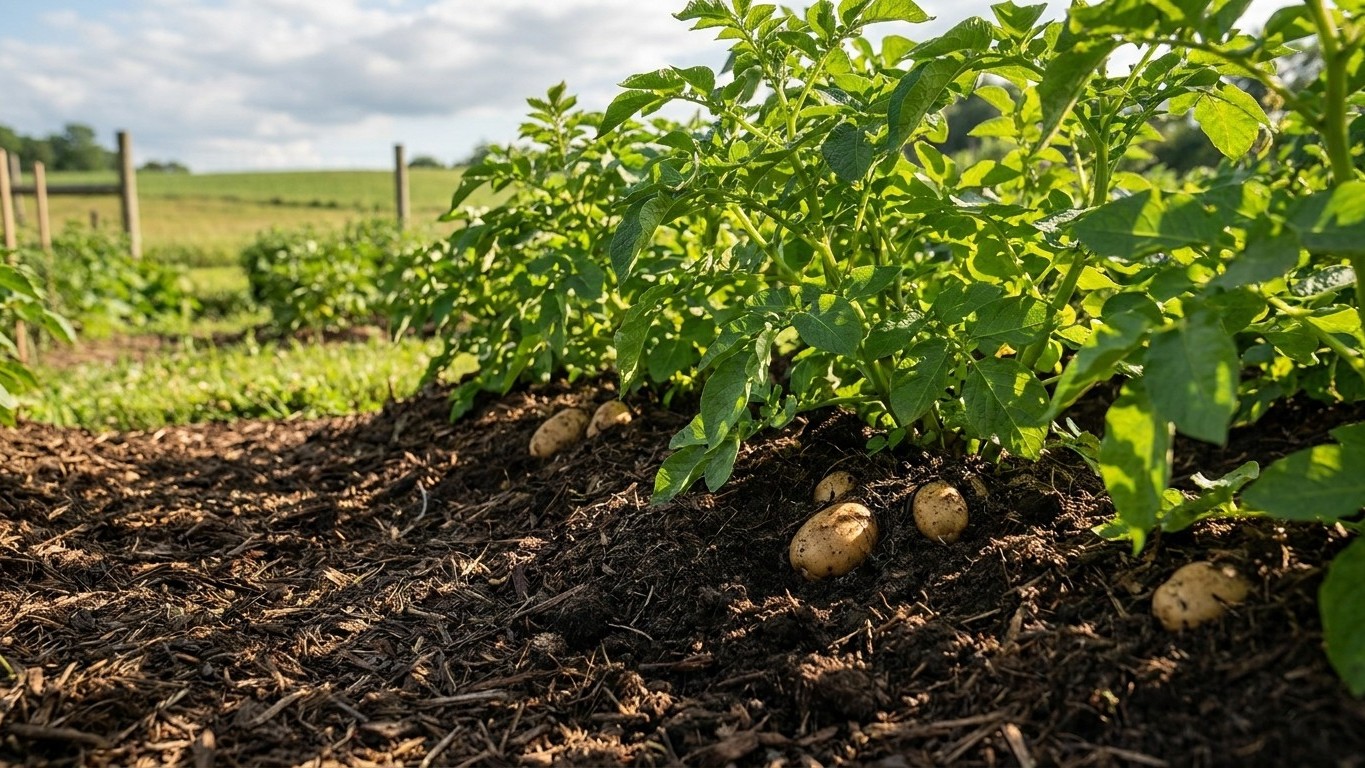

Michigan gardeners get a rare break: summer heat almost never gets high enough to stop a potato crop from sizing up. With only 10.3 days a year above 90°F at the Detroit reference station, most growers can plant a full-season crop rather than rushing to beat the heat. The real variable here is frost timing, not temperature ceilings.
The short answer

Two numbers decide how potatoes behave in this state. The first is heat load: 10.3 days a year reach 90°F or higher at Detroit, according to NOAA NCEI Climate Normals covering 1991-2020. The second is frost timing: the last spring frost falls around April 30 in the Detroit area, with early to mid May across most of the Lower Peninsula, per MSU Extension’s frost-free date data.
Put those two together and the answer is straightforward. Potato tuber set and fill get inhibited once soil temperatures climb past 90°F, according to Utah State University Extension and University of Maine Cooperative Extension fact sheets. Michigan’s soil almost never gets there. Ten days a year of 90°F air temperature translates to far fewer days of soil actually holding that heat at root depth, especially under a layer of hilled soil or mulch. That means growers here are not racing a heat clock the way a gardener in Arizona or Texas would be. A full-season crop, planted in spring and dug in late summer or early fall, is the normal path in Michigan rather than the exception.
That doesn’t mean timing is loose. The frost window still sets the planting date, and getting that wrong costs more yield here than heat ever will. Soil that’s too cold and wet when seed potatoes go in rots before it sprouts. So the priority order in Michigan is: nail When to Plant Potatoes in Michigan against frost, then pick from among the Potato Varieties That Suit Michigan by season class and end use, treat summer heat as a minor factor rather than the deciding one, and plan ahead for Harvesting and Storing Potatoes in Michigan once that full-season crop matures.
On variety choice, neither Utah State nor University of Maine publishes a days-to-maturity number for specific potatoes, and neither should a gardener plan around one. What both sources do publish is season class, which is the more honest way to think about it anyway since maturity shifts with soil temperature and daylight, not a fixed calendar count.
| Season class | Typical use | Fits Michigan’s climate because |
|---|---|---|
| Early season | Boiling, salads | Reaches harvest before peak summer heat, useful for a quick spring crop |
| Mid-season | General purpose, boiling or roasting | Matches Michigan’s long, mild-heat growing window |
| Late season | Baking, storage | Benefits from a full frost-free stretch without a 90°F ceiling to worry about |
Whichever class a grower picks, the frost date and soil temperature at planting matter more to the outcome than the variety label does.
When to plant here
The planting date isn’t guessed, it’s counted backward from the frost window using soil temperature as the trigger. Here’s the arithmetic, in order:
- Start with the local last spring frost date. In the Detroit area that’s around April 30; across most of the Lower Peninsula it runs early to mid May, per MSU Extension.
- Potatoes go into the ground once soil temperature reaches 50°F, which Utah State University Extension and University of Maine Cooperative Extension both place at roughly 14 to 21 days before the last frost date.
- Count back 14 to 21 days from your local frost date. For a Detroit-area gardener working from April 30, that lands the planting window in mid to late April.
- For counties with a frost date in early to mid May, the same 14-to-21-day count shifts planting to late April or the first week of May.
- Confirm with a soil thermometer rather than the calendar alone. A cold, wet spring can push the 50°F mark later even if the frost date hasn’t changed.
That soil-temperature trigger matters more than it sounds. Planting into soil that’s still in the 40s doesn’t kill the seed potato outright, but it slows sprouting and leaves cut seed pieces sitting in cold, wet ground long enough to rot. That single mistake, jumping the gun before the soil is actually ready, is one of the most common reasons a Michigan potato bed comes up thin.
Because the frost date itself varies by weeks across the state (a topic covered in the next-to-last section here), the safest approach is to treat “mid to late April” as a Detroit-area estimate and adjust it against your own county’s frost data before working the arithmetic above.
What the heat does to the crop
The mechanism is simple and it’s the one fact that should drive every decision on this page: once soil temperature climbs above 90°F, tuber set and fill get inhibited, according to Utah State University Extension and University of Maine Cooperative Extension. The plant doesn’t die, but it stops doing the one thing a gardener is growing it for. Existing tubers stall, new ones don’t form, and no amount of extra irrigation reverses that. Watering keeps the plant alive through heat stress, but it does not lower soil temperature enough to restart tuber development once that threshold is crossed.
In a state where the reference city logs only 10.3 days a year at 90°F air temperature, that ceiling is rarely a threat. Soil temperature at the 4- to 6-inch depth where tubers form tends to lag behind air temperature and rarely matches it hour for hour, so even on those ten-odd hot days, soil under a hilled row or straw mulch often stays well under the danger point. That’s the practical difference between Michigan and a state where 90°F days number in the dozens or more: growers there often have to treat potatoes as a spring-dug crop, pulled before peak heat arrives, while Michigan growers can generally let the crop run its full season.
That said, “rarely a threat” isn’t “never.” A run of unusually hot, dry days in July, especially in southern Lower Peninsula counties that see more of that 90°F count than the state average, can push soil temperature closer to the ceiling, particularly in unmulched, unhilled beds baking in full sun. The fix isn’t more water, it’s shade at the soil surface: hilling soil over the row and a layer of mulch both work by blocking direct sun from heating the top few inches where tubers are actually developing.
The takeaway for this state: Michigan’s heat load is low enough that a full-season crop is the normal, reliable choice, but hilling and mulch aren’t optional extras. They’re the buffer that keeps soil temperature under that 90°F line on the handful of days a year when it matters.
What goes wrong here
- Uncertified seed potatoes. Seed saved from a grocery-store potato or an uncertified source carries viruses that stunt yield and spread to next year’s bed. Buying certified seed potatoes is the one input worth not skimping on.
- Planting into cold, wet soil before it reaches 50°F. A gardener eager to beat the calendar rather than waiting for soil temperature ends up with cut seed pieces rotting in cold ground instead of sprouting. Check soil with a thermometer, not a date on the wall.
- Skipping hilling and ending up with green tubers. Tubers that push up near the surface and get exposed to sunlight turn green and develop solanine, making them bitter and unsafe to eat. Hilling soil over the row as plants grow keeps tubers covered and also helps buffer soil temperature against summer heat.
- Digging too early out of impatience. Pulling a plant before it’s finished bulking gives small, thin-skinned tubers that don’t store well. Since neither Utah State nor University of Maine publishes a fixed days-to-maturity count, the better signal is the plant itself: foliage yellowing and dying back for storage varieties, or waiting until plants flower and a bit beyond for an early new-potato harvest.
Checking this against your own county
A statewide frost date is a starting point, not a personal instruction. Elevation, distance from the Great Lakes, and simple north-south position move Michigan’s frost-free window by weeks: a county in the northern Lower Peninsula or Upper Peninsula can see its last frost well after the Detroit-area date of around April 30, while some southern counties trend earlier. The same spread applies to that 10.3-day heat count, which is measured at Detroit and won’t match every corner of the state exactly.
Before finalizing a planting date, check current soil temperature and local frost history against your own county’s numbers rather than relying on a single statewide figure. Michigan State University Extension’s outreach network, listed through the USDA NIFA Land-Grant University Extension directory, is the resource built for exactly that kind of county-level check.
Common questions
Can potatoes handle a full Michigan summer without stalling from heat?
Yes, in most of the state. With only 10.3 days a year above 90°F at Detroit, soil rarely reaches the temperature that stops tuber set and fill, so a full-season crop is the standard approach here rather than a spring-only crop.
When should I plant potatoes in Michigan?
Plant once soil temperature reaches 50°F, which falls roughly 14 to 21 days before your local last frost date. In the Detroit area, with a frost date around April 30, that lands in mid to late April; areas with a later frost date shift accordingly.
Does watering more help if a heat wave hits during the growing season?
No. Extra irrigation keeps the plant hydrated but doesn’t lower soil temperature enough to restart tuber development once soil passes 90°F. Hilling and mulch, which shade the soil surface, are what actually buffer that heat.
What variety should I choose for Michigan conditions?
Season class matters more than a specific name: early-season types work for boiling and salads, mid-season types are general-purpose, and late-season types suit baking and storage. Neither Utah State University Extension nor University of Maine Cooperative Extension publishes a fixed days-to-maturity number, so watch the plant (flowering, then foliage die-back for storage crops) rather than a calendar count.