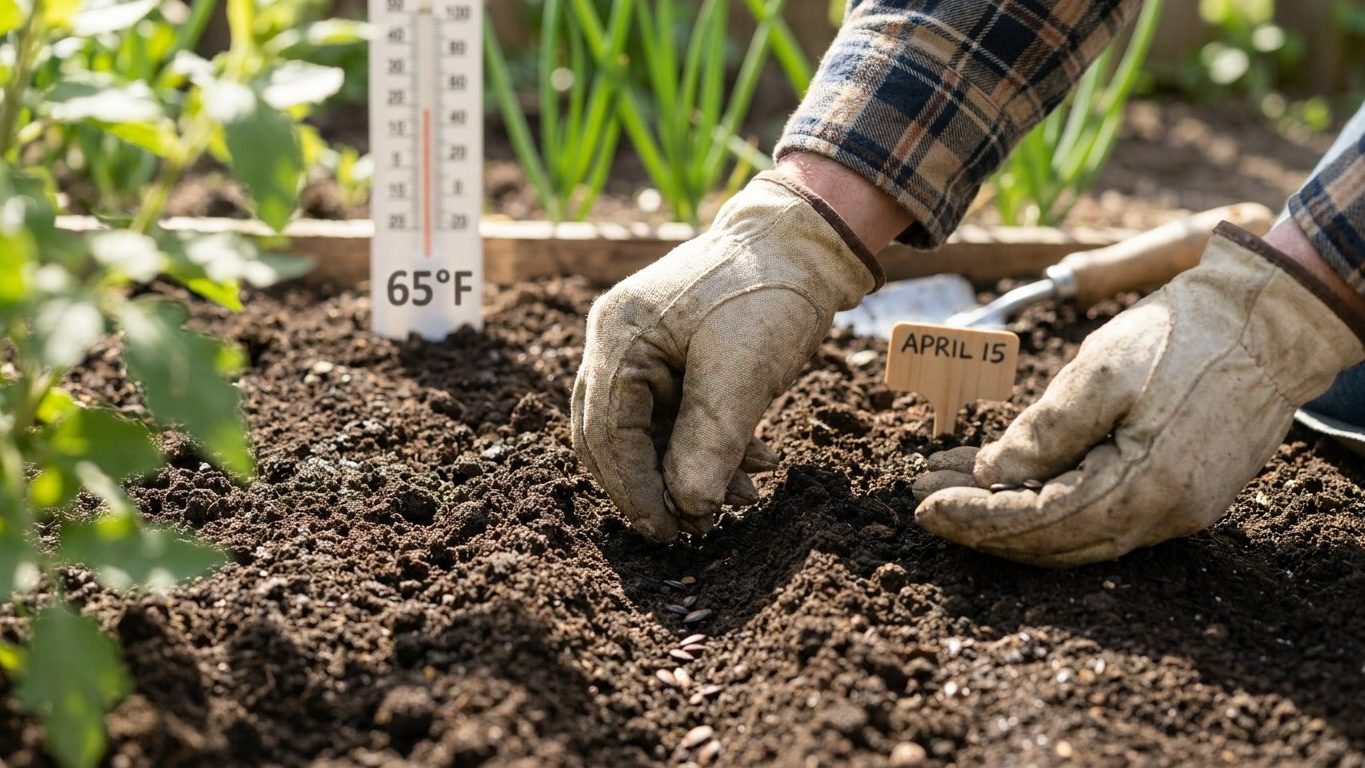

Plant Melons in Mississippi after the soil has warmed past 70°F, which typically lines up with late March through April depending on where you garden in the state. Work backward from your area’s first fall frost (November 7 to November 22 at the reference station) to make sure your variety has time to ripen before cold weather ends the season.
The short answer for Mississippi
The planting window opens once the last spring frost has passed. NOAA’s 1991-2020 climate normals put that date, at the reference weather station, somewhere between March 6 and March 22. That’s not a single day. It’s a 30-70% probability band, meaning frost still has a real chance of showing up even after March 6, and a real chance of being gone before March 22. Gardeners who plant on the earliest edge of that window are accepting some risk in exchange for an earlier harvest.
Melon seed does not care about the calendar so much as it cares about soil temperature. Germination slows dramatically below 70°F, and seedlings sulk or rot in cold, wet ground. In practice, that means most Mississippi gardeners direct-seed or transplant melons two to four weeks after the local last-frost date, once nighttime soil temperature holds steady rather than swinging back toward freezing.
On the other end of the season, the first fall frost arrives between November 7 and November 22 at the same reference station. That gives a season length, frost to frost, of roughly seven and a half to eight and a half months depending on which end of each range you land on. Melons need anywhere from 65 to 90-plus days from transplant to harvest depending on variety, so even a conservative spring start leaves a comfortable buffer before autumn cold shuts things down.
Where that buffer gets used matters. Mississippi’s summer heat load, measured by NOAA as 71.1 days a year at or above 90°F, means the crop spends a long stretch of its life under real heat stress. That’s normally good news for melons, which are heat-lovers, but it also means the planting date is less about avoiding frost damage and more about giving the vines enough runway to flower, set fruit, and size up before the days shorten and night temperatures start dropping again in October.
None of these frost dates are a promise for your particular yard. They come from one airport weather station, and NOAA’s own data shows suburban and rural gardens commonly see later spring frosts and earlier fall frosts than that station records, sometimes by one to two weeks, more if you’re at any elevation. Treat the window above as the state’s reference answer, not a guarantee for your county.
What will not work here

Slow-maturing melon varieties are not really the risk in Mississippi that they’d be further north. With frost-to-frost stretches running close to eight months, even a 95-day melon has room to work with, provided it goes in the ground promptly once soil temperature allows. The bigger failure points here are heat management and moisture, not season length.
Watering on a weekly schedule is the most common way melon crops fail in a Mississippi summer. With 71.1 days a year reaching 90°F or hotter, evaporation from leaves and soil runs high for a large chunk of the growing season. Add in that summer rainfall averages only about 14.1 inches across June, July and August combined, with June itself the driest month at 4.43 inches, and you have long stretches where a weekly soak simply doesn’t replace what the plant is losing to heat. Melons under that kind of chronic water stress drop blossoms, produce smaller fruit, and are more prone to blossom-end rot.
The reverse problem shows up just as often. When rain does arrive in a Mississippi summer, it tends to come as a thunderstorm rather than a steady soak, dumping a lot of water fast. On clay soil, common across much of the state, that water can sit for the better part of a week, which is exactly the setup that favors fungal disease on melon foliage. Vines planted too close together in humid, still air don’t dry out between rain events, and that combination, tight spacing plus a muggy Mississippi summer, is a reliable way to lose a planting to powdery mildew or downy mildew before the fruit ever ripens.
The fix isn’t a fixed watering schedule at all. It’s checking soil moisture directly and giving melons wider spacing than a seed packet written for a cooler, drier climate might suggest, so air can move between plants after a storm.
What changes across Mississippi
Mississippi sits across USDA hardiness zones 7b to 9a, and that spread means there is no single planting date that fits the whole state. The USDA system is built on one number, average annual extreme minimum winter temperature, so it’s really telling you about how far south or how close to the Gulf you are relative to winter cold, not directly about summer melon timing. But the two track together in a general way: warmer winter zones in the south of the state tend to see their last spring frost earlier and their first fall frost later than colder zones farther north.
A gardener in the northern part of the state, closer to zone 7b, should expect to plant later in spring and wrap up the melon harvest earlier in fall than someone gardening near the coast in zone 9a. That’s not a guess, it follows directly from how the frost-date range at the reference station works: the March 6 end of the spring window and the November 22 end of the fall window describe a longer, milder season, while the March 22 and November 7 dates describe a shorter one. Which end of that range applies to your specific spot depends on your zone and your local terrain, not on the state average.
Elevation and local geography push things further. Low-lying river bottoms and shaded valley gardens tend to hold cold air and see frost linger later into spring and arrive earlier in fall than the open, flat land the airport reference station sits on. This page can tell you the state’s range and explain why it varies. It can’t tell you which zone your own garden falls into. For that, check the current USDA Plant Hardiness Zone Map for your ZIP code before you lock in a planting date.
Where to check this for your own county
A state-level answer is a starting point, not a finish line. Mississippi State University Extension is the land-grant service for the state, and it publishes planting information built around county-level data rather than a single airport station’s frost normals.
When you get there, look specifically for two things. The first is a county or regional vegetable planting calendar, which will give you a recommended melon planting window based on local frost records rather than the statewide range covered here. The second is any variety trial information for melons, since Extension often tracks which cultivars have actually performed well against Mississippi’s disease pressure and heat load in field trials, rather than just what a seed catalog claims.
This matters more than it might seem. The frost dates and heat figures in this article come from one reference weather station, useful for understanding the pattern across the whole state, but not a substitute for what your county Extension office has recorded closer to your own soil. If your county’s recommended planting window differs from the range given here, go with the county figure. That’s the whole point of the extension system: it exists to correct exactly this kind of statewide generalization with local ground truth.
Extension offices can also answer the follow-up questions this page can’t, like which local pests are active in a given month or what a specific county’s typical late-spring rainfall pattern looks like. Those details change from county to county in ways a single climate normal can’t capture.
Checking this against your own garden
Every date on this page is a normal, an average built from thirty years of records at one station. Your own garden will confirm or contradict it faster than any calendar can, if you know what to watch.
Start with soil warmth, checked by feel rather than a thermometer. Dig down two or three inches in the morning. If the soil feels cool and damp rather than warmed by the sun, melon seed sitting in it is more likely to rot than germinate, regardless of what the calendar says about frost being past. Warm, slightly dry soil that crumbles easily is the sign that it’s actually caught up to the air temperature.
Next, watch for the first male flowers. Melon plants produce male blossoms before female ones, often by a week or two, and their appearance tells you the plant has moved past early vegetative growth and is gearing up to fruit. If male flowers show up much earlier or later than you’d expect from the frost-date math above, that’s useful information about how your specific microclimate runs warm or cool relative to the reference station.
Finally, track how fast true leaves develop after the seedling stage. Slow, stalled growth in what should be warm weather often points to soil that’s still colder than it feels, or to nights dropping lower than the general area’s average. Fast, vigorous true-leaf growth is the best on-the-ground confirmation that your garden’s actual conditions have caught up to the planting window this page describes.