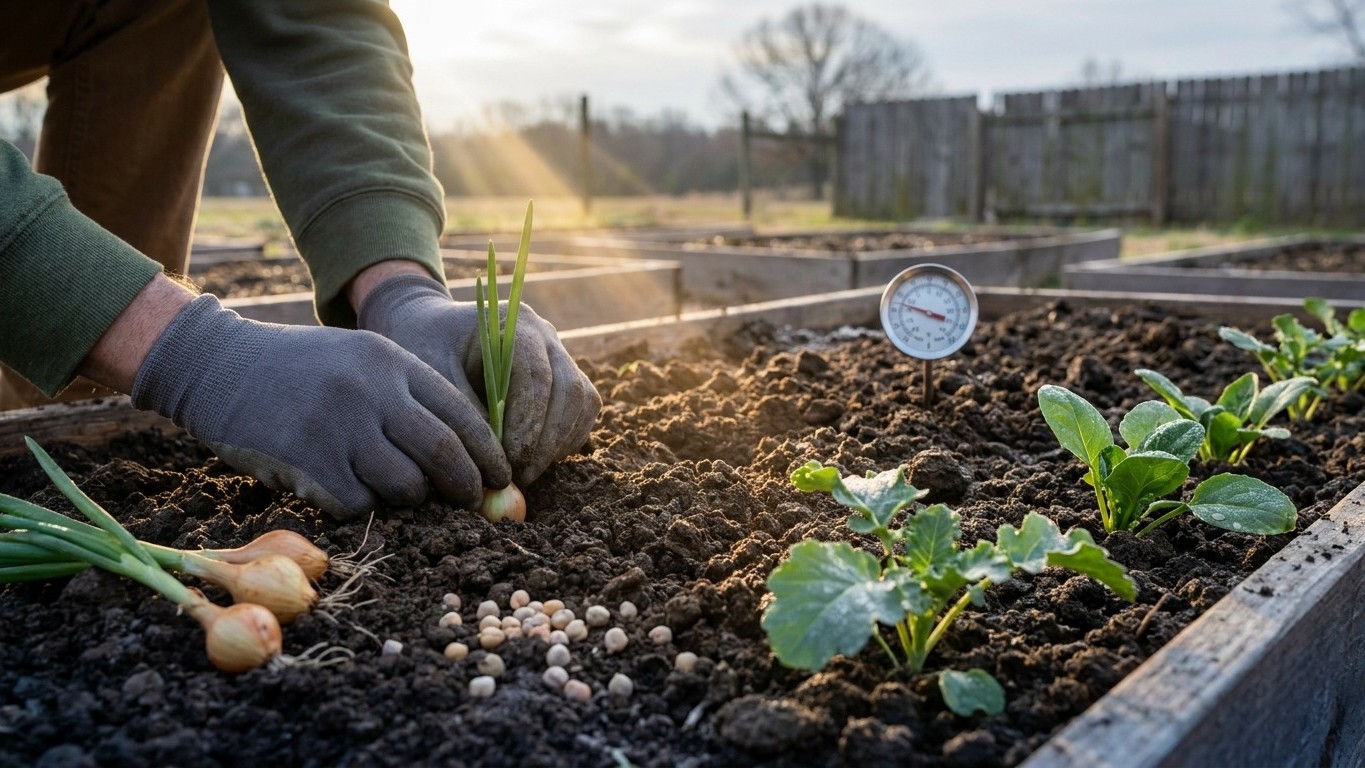

March in Mississippi sits right inside the frost transition. The reference station’s last spring freeze falls between March 6 and March 22, so early-month plantings still gamble against cold snaps while late-month beds in the southern counties often clear the danger entirely. Hardy greens, alliums, and peas go in now with confidence. Tomatoes and peppers wait.
What goes in the ground in March

Soil temperature decides what survives, not the date on the calendar. A 65-degree afternoon means nothing if the ground four inches down still reads in the 40s, and Mississippi clay holds cold longer than the air above it suggests. That’s the trap this month sets: warm sun, cold roots.
What’s safe right now runs through the cold-tolerant crowd. Onion sets, shallots, and leek starts go into workable soil without much worry. Sugar snap and English peas germinate fine in cool ground and actually prefer it. Spinach, lettuce, kale, collards, and mustard greens can go in as transplants or seed, and they’ll shrug off a light frost that would flatten a tomato seedling. Carrots, beets, radishes, and turnips do well direct-sown once the ground can be worked without clumping.
Potatoes are a classic March crop across the state, but timing them against the frost window matters. In the coastal and southern counties, where the local frost date tends to fall earlier than the reference range, seed potatoes can go in by early March. Further north, toward the state’s Zone 7b areas, waiting until closer to the March 22 end of the window reduces the risk of frost-killed foliage that sets tubers back.
The gamble list is short but tempting: tomatoes, peppers, eggplant, squash, and beans. Soil this cold slows germination to a crawl and invites rot before a seed even sprouts. These crops belong in the ground after the frost window closes, not during it, no matter how mild a given week feels. Garlic planted back in fall keeps growing quietly and needs nothing but weeding. Bare-root fruit trees, blueberry bushes, and cane fruit can still go in while they’re dormant, and this is one of the last comfortable windows to do it before active growth makes transplant shock worse.
What to start under cover
Work backward from the local last-frost date instead of a fixed day on the calendar. Tomatoes, peppers, and eggplant typically need six to eight weeks indoors before they’re ready to move outside. If a county’s last frost lands near March 22, seeds started in early to mid-January are already at transplant size by now and should be hardening off. If a gardener is only starting those seeds in March, the plants will still be small when warm weather arrives, which isn’t a disaster, just a shifted timeline.
Summer squash, cucumbers, and melons don’t need as much lead time, usually three to four weeks, so starting them under cover in March lines them up well for an April move outdoors once both air and soil have warmed past the risk window. A heat mat helps here more than a sunny windowsill does, since these seeds are fussier about root-zone warmth than about light in the first week.
The two ways this goes wrong both trace back to ignoring the frost window. Start too early and the plants outgrow their pots before it’s safe to plant them out, turning into leggy, rootbound stems that sulk for weeks after transplant. Start too late and the plant never builds enough size to handle the jump straight from indoor conditions to Mississippi’s fast-arriving summer heat. Counting backward from the actual frost range for a specific county, rather than from a generic date, is the only way to land in the middle of that.
What is ready to pick
Overwintered greens hit their best flavor right about now. Collards, kale, and turnip greens that sat through winter cold sweeten as starches convert to sugars in response to the chill, and a lot of Mississippi gardeners consider frost-touched collards better eating than anything harvested in fall. Leeks that stood through winter come out thick and mild.
Cold frames and low tunnels are still producing lettuce, spinach, and Asian greens for anyone who set them up in fall. Check daily on sunny days since these structures trap heat fast and can cook tender greens if left closed too long. Sprouting broccoli, if it made it through winter, starts throwing small side shoots this month that taste better than the main head ever did.
Stored crops need a hands-on check now rather than later. Winter squash sitting in storage since fall should get pulled out and inspected for soft spots or a sweet fermented smell, both signs it’s turning. Potatoes and onions in storage do the same: any that have gone soft or started sprouting heavily should get used first, before the rot spreads to the rest of the bin. This is also a good month for a batch of microgreens or sprouts on a windowsill, since they’re ready to eat within a week or two and don’t care what the weather outside is doing.
The jobs that matter this month
Dormant pruning has a closing window right now. Fruit trees, blueberry bushes, and bramble canes should get their structural cuts finished before buds break, since pruning after new growth starts costs the plant energy it needed for the season ahead. Once buds swell and leaves unfurl, that window is gone until the tree goes dormant again in fall.
Soil work pays off disproportionately this month because roots are about to start pulling hard on whatever nutrients are available. Turning in compost, testing pH, and amending beds now gives soil amendments time to integrate before the heavy feeding of April and May planting begins. A soil test run through the county extension office costs little and tells a gardener exactly what’s missing instead of guessing with a bag of all-purpose fertilizer.
Seed ordering has a practical deadline too, even if it doesn’t feel like one. Popular tomato and pepper varieties sell out from seed suppliers by late winter most years, and waiting until the display at the local garden center is the only option narrows choices considerably. Staking material, tomato cages, and trellis netting are worth setting up now for crops going in soon, since installing a stake around an already-sprawling plant damages roots that a pre-planted stake never would.
Rounding out the list: sharpen and clean pruning tools before they see heavy spring use, check fencing and raised bed frames for winter damage, and start planning crop rotation for beds that grew heavy feeders like tomatoes last season. None of this is glamorous. All of it saves time and money once the real planting rush starts.
What not to do in March
The most common mistake is planting warm-season crops into cold soil because a string of 70-degree days made it feel like summer arrived early. Air temperature is a poor proxy for soil temperature in Mississippi clay, which holds winter’s chill for weeks after the air has moved on. A tomato transplant set into 55-degree soil will often just sit there, stunted, even if it survives the cold instead of dying from it.
Pulling row covers and cold frame lids off permanently after a mild stretch is the second trap. The frost window running through March 22 at the reference station means a late cold snap is still well within normal, not a fluke. Covers should stay handy and go back on for any night dipping near freezing, even after a warm week suggested spring had settled in for good.
Heavy nitrogen feeding at the wrong moment causes its own problems. Dumping a high-nitrogen fertilizer on fruit trees or perennials before they’ve broken dormancy pushes soft, weak growth that’s more vulnerable to a late frost than growth that emerges on its own timeline. Better to wait for visible bud swell before feeding, and to favor a balanced or lower-nitrogen formula for anything not actively producing leafy greens right now.
Overwatering cold, wet soil rounds out the list of avoidable errors. Seeds and roots sitting in saturated, chilly ground are far more prone to rot than to drought stress this early in the season, so a light hand with the watering can matters more in March than it will in July.
Checking this against your own county
A state-wide frost window is a starting point, not a guarantee for any single backyard. Mississippi runs from Zone 7b in the northern hill country to Zone 9a along the Gulf Coast, and that spread alone can shift the safe planting date by two or three weeks between Tupelo and Biloxi. Elevation, urban heat, and low-lying frost pockets move the number further still, and gardens outside city limits typically see a later last frost and an earlier first fall frost than the airport-based figures cited here.
The Mississippi State University Extension Service publishes county-level planting guidance that accounts for these local differences far better than a single statewide date can.
Common questions
Is it safe to plant tomatoes outdoors in Mississippi in March?
Generally no, especially in the first half of the month. The reference station’s last frost falls between March 6 and March 22, and tomato seedlings can’t tolerate freezing temperatures. Waiting until after that window closes locally, and hardening off transplants first, avoids the setback of frost-damaged plants.
What vegetables can go directly into the garden in March in Mississippi?
Peas, onion sets, leeks, carrots, beets, radishes, turnips, spinach, lettuce, kale, and collards all tolerate cool soil and occasional light frost, making them the reliable direct-sow or transplant options this month.
Why do my overwintered greens taste better in March than they did in fall?
Cold exposure triggers plants like collards and kale to convert stored starches into sugars as a natural antifreeze response, which sweetens the leaves noticeably compared to how they tasted before winter set in.
How do I know if my county’s frost date is different from the state average?
Check with the Mississippi State University Extension Service for county-specific planting calendars. Rural and elevated areas typically see later spring frosts and earlier fall frosts than the airport weather stations used for statewide averages.