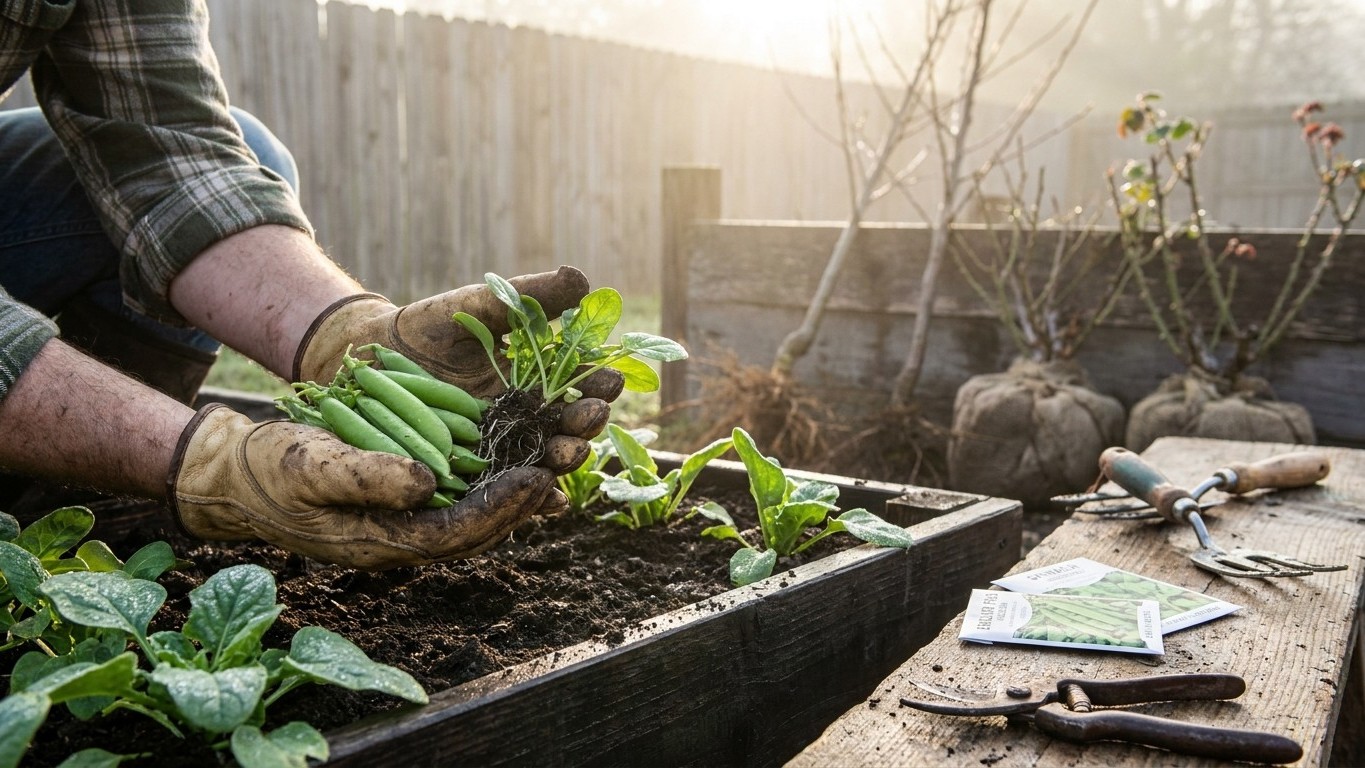

Mississippi’s frost window still has weeks to run in February, so the ground work leans toward cold-hardy crops rather than a full planting spree. English peas, onions, spinach, lettuce, and other greens can go into workable soil now, bare-root fruit trees and roses go in dormant, and tomatoes and peppers get their start indoors under lights, timed to the state’s early-to-late March frost range.
What goes in the ground in February

Soil temperature decides what survives this month, not the calendar. Mississippi’s last spring frost falls between March 6 and March 22 depending on where you sit in the state, according to NOAA’s 1991-2020 climate normals. That means most of February sits two to seven weeks ahead of that window closing. Anything that can’t shrug off a hard freeze is a gamble you don’t need to take.
What actually tolerates the cold: English peas go directly into the ground as soon as soil can be worked, since they germinate in cool soil and shrug off light frost once up. Spinach, lettuce, mustard greens, turnip greens, and radishes handle the same conditions and often taste better after a cold snap sweetens them. Carrots and beets can go in too, though they’ll germinate slowly until soil warms past the mid-40s.
Onion sets and onion transplants belong in the ground this month across most of the state, since bulbing onions need that long cool stretch to size up before summer heat hits. Shallots follow the same logic. If garlic missed its fall planting window, it’s late, but shallots and multiplier onions still have a reasonable shot if the ground isn’t frozen solid.
Bare-root and dormant planting
February is prime time for bare-root stock: fruit trees, blueberry bushes, brambles, grapevines, asparagus crowns, and roses all go in while they’re still dormant and before sap starts moving. Planting dormant avoids transplant shock and gives roots a head start before leaves demand water.
What to leave alone: tomatoes, peppers, squash, beans, and anything else that dies at 32 degrees. A warm afternoon doesn’t change the soil temperature six inches down, and a late-month cold front is still well within the historical pattern for this state.
What to start under cover
Count backward from the frost window instead of from a date on the wall. Tomatoes need roughly six to eight weeks indoors before they’re ready to go outside as sturdy transplants. If the local last frost lands anywhere in the March 6 to March 22 range, starting tomato seed under lights in February puts transplants at the right size right when the ground and air have warmed enough to hold them.
Peppers and eggplant run slower, closer to eight to ten weeks from seed to transplant-ready, and they’re fussier about cold soil even after the frost date passes. Starting them now, alongside tomatoes, keeps the whole warm-season lineup on a similar timeline instead of scrambling in April.
The two ways this goes wrong are opposite problems. Start too early and you’re nursing rootbound, leggy seedlings on a windowsill for weeks past when they should have moved to bigger pots or outside, and they’ll sulk when finally transplanted. Start too late and the transplants are still small when the soil warms, which means a slower first month of growth and a shorter harvest window before summer heat cuts production. Splitting the difference by starting in February, keyed to the six-to-ten-week backward count from your county’s typical last frost, is the safer bet than guessing off a wall calendar.
Broccoli and cabbage transplants for a spring crop should already be growing or close to transplant size by now, since they need to get into the ground early enough to mature before hot weather causes them to bolt or turn bitter.
What is ready to pick
Little comes out of open ground fresh this month, but overwintered crops are doing real work. Collards, kale, and turnip greens that made it through winter under a frost or two are often at their sweetest right now, since cold exposure converts starches to sugars in leafy brassicas. Harvest the outer leaves and let the center keep producing.
Cold frames and low tunnels planted back in fall are likely holding lettuce, spinach, and other greens that never fully stopped growing through Mississippi’s mild winter lows. Check under covers on any mild afternoon and thin or harvest what’s crowding itself.
Root crops left in the ground, carrots, beets, turnips, can generally still be pulled as needed; cold soil holds them well without much loss of quality.
Indoors, sprouts and microgreens fill the gap for households wanting something fresh right now, since they’re ready in one to two weeks from seed regardless of outdoor weather. Stored crops need a check too: go through sweet potatoes, winter squash, and cured onions and pull anything showing soft spots or sprouting before it takes down its neighbors in storage.
The jobs that matter this month
Dormant pruning tops the list, and the timing matters more than most gardeners realize. Fruit trees, grapevines, and blueberry bushes should be pruned while still dormant and before buds swell, since cuts made after growth starts waste the plant’s stored energy and open wounds during active sap flow. Miss this window and you’re pruning into spring growth instead of ahead of it.
Seed ordering has a real deadline too, even if it doesn’t feel like one. Popular varieties, especially disease-resistant tomatoes and heirloom types, sell out from seed companies well before planting season, and waiting until March often means settling for whatever’s left.
Soil testing pays off now because results take a few weeks to come back, and amendments like lime need time to adjust pH before spring planting. A test done this month gives results in hand well before the ground work of March. Mississippi State University’s Extension Service offers soil testing through county offices for gardeners who want a real number instead of a guess.
Turning compost piles, cleaning and sharpening tools before the pace picks up, and repairing raised beds or fencing while the garden is otherwise quiet all fall into the same category: small jobs that take an hour now and save a frustrated afternoon later when everything else is competing for time. Checking on stored crops for early signs of rot belongs on this list too, not as an afterthought but as routine upkeep that prevents losing a winter’s worth of squash or potatoes to one soft spot spreading through the bin.
What not to do in February
The classic mistake is trusting a warm afternoon over the calendar. A 70-degree day in mid-February doesn’t mean frost risk has passed. Mississippi’s last spring frost historically lands between March 6 and March 22 depending on location, and a cold front dropping temperatures well below freezing after a warm stretch is a normal part of the pattern here, not a fluke. Planting tomatoes or peppers outdoors because the air felt like spring is the single fastest way to lose a flat of seedlings to a late freeze.
Uncovering row covers or cold frames too early carries the same risk in reverse. A few mild days tempt gardeners to pull mulch and covers off overwintered crops, but that exposes tender new growth right before the next frost comes through. Keep protection in place until the local frost window has genuinely closed, not just when it feels over.
Nitrogen timing trips people up too. Feeding nitrogen to dormant fruit trees or perennials this early can push soft, tender growth that a late freeze then damages. Hold off on nitrogen-heavy feeding until growth is actively underway and the frost risk has meaningfully dropped, and lean on phosphorus and potassium if soil test results call for early amendments instead.
Pruning spring-flowering shrubs now, before they bloom, is another common misstep. Plants that flower on old wood, like many azaleas, lose their upcoming bloom if cut back in February. Save that pruning for right after flowering instead.
Checking this against your own county
A statewide frost window is a starting point, not a guarantee for any one backyard. Mississippi spans USDA hardiness zones 7b to 9a, and the gap between the northern hill counties and the Gulf Coast is wide enough to shift planting dates by a couple of weeks in either direction. The March 6 to March 22 frost range cited here comes from one reference weather station, and rural and low-lying gardens typically see later spring frosts and earlier fall frosts than an airport station reports, sometimes by a week or two.
Before committing seed or transplants to the ground, check your county’s typical frost pattern against the state’s own guidance. Mississippi State University’s Extension Service, at extension.msstate.edu, publishes county-level planting calendars and local contacts that account for these regional differences far better than any single statewide date can.
Common questions
Can I plant tomatoes in Mississippi in February?
Not outdoors. Start tomato seed indoors under lights this month instead, timed six to eight weeks before your local last frost, which historically falls between March 6 and March 22 depending on location. Transplant outside only after that frost risk has passed.
Is it too late to plant garlic in February?
Garlic does best planted in fall, so February plantings usually produce smaller bulbs. Shallots and multiplier onions are a better bet this month if you missed the fall window.
What vegetables can survive frost in Mississippi gardens?
Spinach, lettuce, kale, collards, turnip greens, mustard greens, English peas, carrots, and beets all tolerate the light frosts common in February across the state.
When should I stop pruning fruit trees in late winter?
Finish dormant pruning before buds swell and break. Once new growth starts, pruning wastes the tree’s stored energy and increases the risk of disease entering fresh cuts during active sap flow.