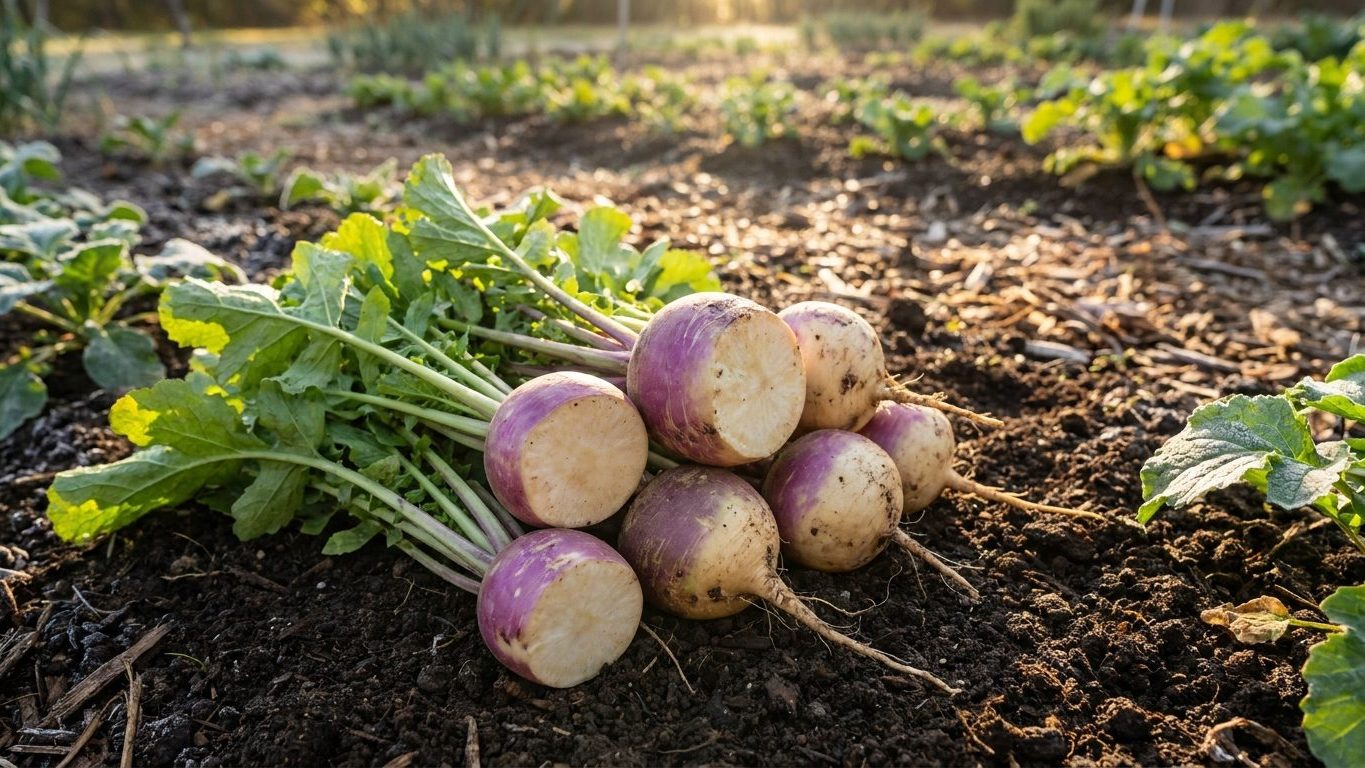

Turnips and rutabaga do best in Mississippi as a fall crop, sown as summer heat breaks and harvested through the mild winter. A spring sowing can work, but it races the heat. Dates matter less than soil, and the Jackson reference figures below show why. Your own county will run later in spring and earlier in fall.
When the soil is warm enough in Mississippi
NOAA’s 1991-2020 Climate Normals put the last spring freeze (32°F) at March 6 to March 22. That is the band where the odds of a freeze fall between 30 and 70 percent, taken from the airport weather station NOAA uses as the reference for Jackson. It is a probability, not a promise, and a late freeze can still land after that band.
It is also the reference-city figure, not a statewide guarantee. Suburban and rural gardens typically see the last spring frost one to two weeks later, and more at elevation, so check your own county before you mark a calendar.
Frost is only a proxy. A turnip seed does not care what the air did last Tuesday. It cares about the soil, and soil lags the air. After a freeze-free week, the top few inches can still be cold and soggy from winter rain. Warmth arrives after the frost risk ends, not with it. A cheap soil thermometer pushed a couple of inches down in the morning tells you more than any almanac. Rutabaga, which needs a longer stretch of cool weather to size up, is the less forgiving of the two in a Deep South spring.
Spring sowing versus fall sowing
A spring sowing here is a sprint. Roots have to size up before the heat arrives, and a crop that gets caught by it turns woody and sharp-tasting. The fall sowing runs the other way. You plant as the heat eases, and the roots grow into cooling weather, which is what they want.
To place the fall sowing, work backward from the first fall frost band in the next section. Subtract the days to maturity printed on your seed packet, then add a margin for slow late-season growth. This page gives no days-to-maturity figure of its own because it depends entirely on the type you buy.
Choose by type (small quick turnips, larger main-crop turnips, greens-type turnips, rutabaga). For named varieties that have been trialled where you live, ask Mississippi State University Extension.
How long the season lasts here
The window between the two reference-city frost bands is long. Here are the figures side by side:
| Event (Jackson reference, NOAA 1991-2020) | 32°F freeze band (30-70% odds) |
|---|---|
| Last spring frost | March 6 to March 22 |
| First fall frost | November 7 to November 22 |
Do the subtraction at the narrow end and you get 230 days, from March 22 to November 7. Take the wide end and it is 261 days, from March 6 to November 22. That is the frost-free stretch for tender crops. Turnips tolerate light frost, so their real season extends past the first fall freeze.
Gardens outside the airport lose a week or two at each end, so trim both numbers accordingly.
What does a window this long allow? First, two sowings in the same year. A spring crop can come out before the worst heat, and a fall crop can go in afterward with plenty of calendar left. Second, staggered fall sowings. Instead of one long row that ripens all at once, you can sow a short row every couple of weeks and harvest over a longer stretch. The succession approach in the Growing Turnips and Rutabaga: An Autumn Crop, Sweetened by Frost guide fits this window well.
Third, a long window removes the case for transplanting. Turnips and rutabaga resent root disturbance, and a damaged taproot often forks or stunts. In a short northern season you might consider it for a head start. Here you have the days to direct sow, so the root check never comes up.
For comparison, a neighboring state with a different season shapes the choices differently. See Growing Turnips and Rutabaga in South Carolina and Growing Turnips and Rutabaga in Virginia.
Heat and water in Mississippi
This page does not carry a verified count of days above 90°F or a summer rainfall figure for Mississippi, so it gives no numbers for either. The qualitative picture is safe to state: Mississippi summers are hot and humid, and no turnip or rutabaga wants to be growing through them. That is why the crop belongs to fall. Heat pushes roots toward woodiness and strong flavor, and it invites the fungal diseases that thrive in warm, wet weather. Sowing into cooling soil sidesteps most of that.
The facts that govern a fall crop here are cold ones. The first is the mean daily minimum of the coldest month, 36.6°F, from the Jackson reference station (NOAA Climate Normals 1991-2020). It is an average, not a record low. A typical winter night sits above freezing, though some nights fall well below it, as the frost bands show.
In practice, roots can usually stay in the ground under a mulch of straw or shredded leaves and be pulled as needed. In central and southern Mississippi the soil rarely freezes hard enough to ruin them. The USDA Plant Hardiness Zone Map (2023) places the state in zones 7b to 9a. That is a territory-wide range, built on the average annual extreme minimum temperature, so north Mississippi and the Gulf Coast will not behave the same.
The second cold fact is how much frost sweetening you get. Cold nights push roots to convert starch to sugar, and a mean coldest-month minimum of 36.6°F tells you the sweetening here is real but modest. Some nights reach freezing, and many do not. Expect milder, less dramatic sweetness than a gardener in a colder state gets after a hard freeze.
If you do lift roots (before a forecast hard freeze, or to clear a bed), inspect each one. Look for firmness, an intact skin and a clean crown. A soft patch, a weeping spot or a moldy crown ends the question, whatever the rest of the root looks like. A sound-looking surface does not make it safe to eat, and this page gives no keeping duration because none can be promised. In a damp fall, raised rows and good drainage matter more than any storage plan.
Which turnips and rutabaga suit Mississippi
This page names no varieties, and that is the right answer. Cultivar performance depends on local trials, and the only recommendation that means anything is the one tested in Mississippi soils, humidity and disease pressure. This page has no such trial data, so it will not guess. Your state extension service does. Mississippi State University Extension is the place to ask.
What this page can do is reason by type from the territory’s conditions:
| Condition here | What it favors |
|---|---|
| Long window, hot summer | Fall sowing as the main crop; a quick spring type only if it can finish before the heat |
| Humid, wet weather | Disease resistance as the first criterion when comparing seed listings |
| Hot soil at sowing | Types that size up in cool weather, with airflow and some shade at the root |
| Mild winter | Roots left in the ground under mulch rather than stored |
Rutabaga is the more demanding of the two. It needs a long, cool stretch to fill out, so it suits the earliest fall sowing that cooling soil allows. Greens-type turnips grown mainly for their tops are more forgiving.
Turnip and rutabaga are brassicas. They share their diseases and pests with cabbage, kale and mustard, and a gardener who rotates them into a bed that held any of those has rotated nothing. Keep the family in a different bed each year, and see the rotation guidance in the main turnips and rutabaga guide.
Common questions
When should I plant turnips in Mississippi?
Fall is the main sowing, timed as summer heat eases. Count back from your county’s first fall frost using the days to maturity on the packet. A spring sowing is possible after the soil has warmed past the last frost risk, but it has to finish before the heat.
Is the March 6 to March 22 date my last frost?
It is the NOAA 1991-2020 band for the Jackson reference station, where the odds of a 32°F freeze fall between 30 and 70 percent. Rural and suburban gardens often see the last frost one to two weeks later, so check your county.
Can I leave turnips in the ground over winter?
Often, yes, under mulch. The coldest month’s mean minimum at Jackson is 36.6°F, so the ground rarely freezes hard in much of the state. Inspect roots before eating, and discard any with a soft patch, a weeping spot or a moldy crown.
Can I plant turnips where cabbage grew last year?
No. Turnips and rutabaga are brassicas and share diseases and pests with cabbage, kale and mustard. Rotating into a bed that held any of them defeats the purpose.