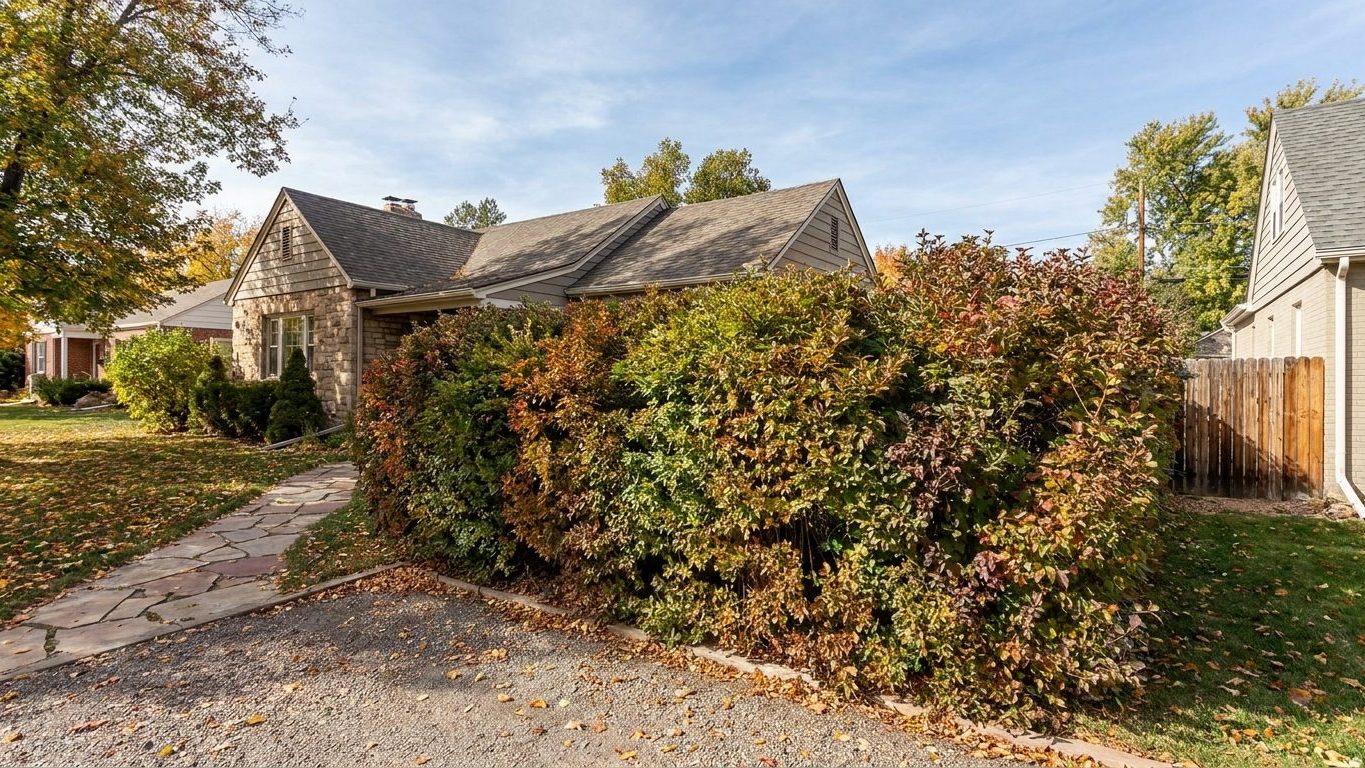

Georgia has no statewide hedge height limit. None. The number you’re looking for sits in a city or county ordinance, and it can change from one town to the next. Any site that gives you a single figure for “Georgia” is guessing. What matters is which local code governs your lot, what that code calls a hedge, and where to read the exact wording. Those three steps are below, along with the rules on branches and planting.
There is no Georgia hedge height law
Height rules for hedges and fences come from zoning, and zoning belongs to local governments. Georgia has 159 counties, and every incorporated city inside them can adopt its own code. A hedge in an unincorporated corner of one county may fall under county rules. A hedge two blocks away, across a city line, may fall under a different set entirely. Neither set is “the Georgia rule,” because that rule doesn’t exist.
The same is true in every other state. If you want to see how the answer plays out elsewhere, our pages on How High Can a Hedge Be in Alabama? What the Law Actually Says, How High Can a Hedge Be in Arizona? What the Law Actually Says and How High Can a Hedge Be in Ohio? What the Law Actually Says arrive at the same conclusion. The broader Hedges section collects the rest.
A hedge is not always a fence
Most people assume the fence limit applies to their row of arborvitae or privet. Sometimes it does. Often it doesn’t. Codes tend to handle living hedges in one of three ways:
- They fold hedges into the fence definition, so the fence height limit applies.
- They regulate fences as structures and treat living plants separately, with their own limit or a screening rule.
- They say nothing about hedges at all, which usually means no height cap on the plants themselves.
That third outcome surprises people. A city can cap a wooden fence at one height and leave a hedge unregulated, because a plant isn’t built and doesn’t need a permit. Read the exact word your code uses before you assume anything. “Fence,” “wall,” “hedge,” “shrub,” “vegetation” and “landscaping” can all lead to different sections.
The one rule that travels almost everywhere
The sight triangle is the near-universal exception. At a street corner or the end of a driveway, nothing may block a driver’s view of oncoming traffic or pedestrians, and the allowed height in that zone is usually far lower than the general fence limit. It applies even in a town with no hedge rule at all. A neat six-foot privet hedge can be perfectly legal along a side lot line and a violation the moment it wraps the corner.
How to find the rule that actually applies to you
Start with the address, not the search engine. Your property tax bill or the county assessor’s parcel lookup will tell you whether the lot sits inside a city or in unincorporated county territory. That one fact decides whose code you read. Some Georgia counties have merged with their principal city into a single consolidated government, which is another reason to confirm rather than guess from your mailing address. A “Marietta” or “Augusta” postal address doesn’t guarantee you’re inside that city’s limits.
Once you know the jurisdiction, find the code. Most American municipal codes are posted online by one of three publishers:
- Municode (library.municode.com)
- American Legal Publishing (codelibrary.amlegal.com)
- eCode360
Search the city or county name on those sites, or search the name plus “code of ordinances” and see which publisher hosts it.
Where the rule hides inside the code
Skip the general search box at first and go to the zoning chapter, sometimes called the zoning ordinance or the unified development code. Look for headings such as “fences,” “walls and fences,” “accessory structures,” “landscaping,” “screening and buffers,” or “visibility at intersections.” The hedge rule, if there is one, usually lives under one of those. Then use the search box with several words in turn: hedge, shrub, vegetation, planting, fence. Codes are inconsistent, and the term that fails in one town works in another.
Pay attention to which zoning district your lot is in. Height limits often differ between front yards and back yards, and between residential and commercial districts. Read your own section instead of assuming.
Call the people who enforce it
Online codes can lag behind recent amendments, and they rarely explain how staff apply them. A five-minute call settles both problems. Ask for the planning and zoning department (some cities call it community development), or code enforcement if you’re responding to a complaint. Three questions cover most of it:
- Does the fence ordinance apply to living hedges, or are hedges handled separately?
- Is there a height limit for my zoning district and yard location?
- Where is the sight triangle measured from on my corner or driveway?
Ask for the answer by email if you can. A written reply from staff is worth having if a neighbor ever challenges you.
| Where your lot sits | Whose rule applies | Where to look |
|---|---|---|
| Inside city limits | City zoning code | City’s code on Municode, American Legal Publishing or eCode360; city planning and zoning |
| Unincorporated county | County code | County’s published code; county planning department |
| Consolidated city-county | The unified government’s code | The unified government’s published code |
| Subdivision with an HOA | Local code plus private covenants | Recorded covenants and the HOA’s architectural guidelines |
That last row matters more than people expect. A homeowners’ association can set a stricter limit than the city, and the covenants bind you whether or not the city cares. Check both.
The branches that cross the line
Height is only half of hedge law. The other half is what happens when your neighbor’s hedge grows over your fence, or yours over theirs. Here the picture is different: instead of local ordinances, you’re mostly dealing with court decisions.
In most states, a property owner may cut back growth that crosses onto their land, up to the boundary line and no further, and at their own expense. They generally may not destroy the plant itself. That principle comes from case law, not from a statute, and it varies from state to state and sometimes between courts within a state. It is a general principle, not a statement of what Georgia courts would hold in your situation, so treat it as a starting point for a conversation with a lawyer, not a ruling.
What “up to the line” means in practice
Trimming to the boundary means trimming what hangs over your side, and nothing beyond it. Reaching across the line to prune, climbing onto the neighbor’s property without permission, or cutting the trunk in half to “fix” the overhang all go past what the principle allows. The same goes for cutting so hard the plant dies. A hedge that survives a trim is the neighbor’s property. A hedge that dies because you sheared it to a stub can turn a grievance of yours into a claim against you.
A hedge planted along the line may be treated as jointly owned in some places, and neither owner can remove it alone. If you’re not sure where the line runs, a survey settles it. Property pins and recorded plats are the evidence that matter.
Before anyone reaches for the pruning saw, talk. A neighbor who is told the hedge will be trimmed on Saturday, and offered the clippings or a shared cost, usually shrugs. Take dated photos before and after any work. If the situation has moved past a friendly chat, such as damage to a fence or foundation, a refusal to prune, or a disagreement over where the line sits, that is the point to consult a Georgia attorney. This page can’t give you legal advice, and the local code and your own facts will decide the outcome.
What to check before you plant
The cheapest hedge fix is the one you make before the shrubs go in the ground. Plant a row of fast-growing evergreens, find out three years later that the code or your HOA caps them, and you’re facing a removal job that costs far more than the original planting.
Work through this list, in roughly this order:
- Confirm the jurisdiction. City, unincorporated county or consolidated government, based on your parcel record.
- Read the right section. Look under fences, accessory structures, landscaping and screening, and note whether the code mentions hedges by name.
- Find the sight triangle. Ask where it’s measured on a corner lot or driveway, and keep plantings out of it entirely.
- Check the covenants. If there’s an HOA, get the architectural guidelines in writing.
- Call 811. Underground utilities run through many yards, and a free locate request before you dig is the standard step.
Then size the plant for what it becomes, not what it is at the nursery. The tag lists a mature height and width, and the width is the one people forget. A shrub that spreads six feet wide can’t sit eighteen inches from your fence without growing across it, which puts you right back in the branch dispute described above. Leave room for the plant to fill out inside your own line, and for you to reach the back of it with a hedge trimmer.
Keep the code section you relied on, the email from the zoning office, and the date you planted. Ordinances also get amended, so re-check before a major reshape.
Common questions
Is there a maximum hedge height in Georgia?
Not at the state level. Georgia doesn’t set one, and neither does any other state. A height cap, if one exists, comes from your city or county ordinance, and some local codes don’t limit living hedges at all. Check your own code, and check any HOA covenants that apply.
Does my city’s fence height limit apply to a hedge?
It depends on how your code is written. Some ordinances treat hedges as fences. Others regulate fences as structures and handle plants separately, or skip them. Search the code for “hedge,” “shrub” and “vegetation” as well as “fence,” and ask the planning and zoning department to confirm.
Can I trim my neighbor’s hedge where it hangs over my yard?
In most states, courts have allowed an owner to cut back what crosses the line, up to the boundary, at their own expense, without killing the plant. That’s a general principle from case law and it isn’t a statement of Georgia law. If the neighbor objects, or the plant is on the boundary, speak with an attorney before cutting.
What is a sight triangle, and does it apply to my hedge?
It’s the zone at a corner or driveway where nothing may block a driver’s view of traffic or pedestrians. The height limit inside it is typically much lower than the general fence limit, and it can apply even where no other hedge rule exists. Ask your city’s planning department how it measures the triangle on your lot, because the dimensions are set locally.