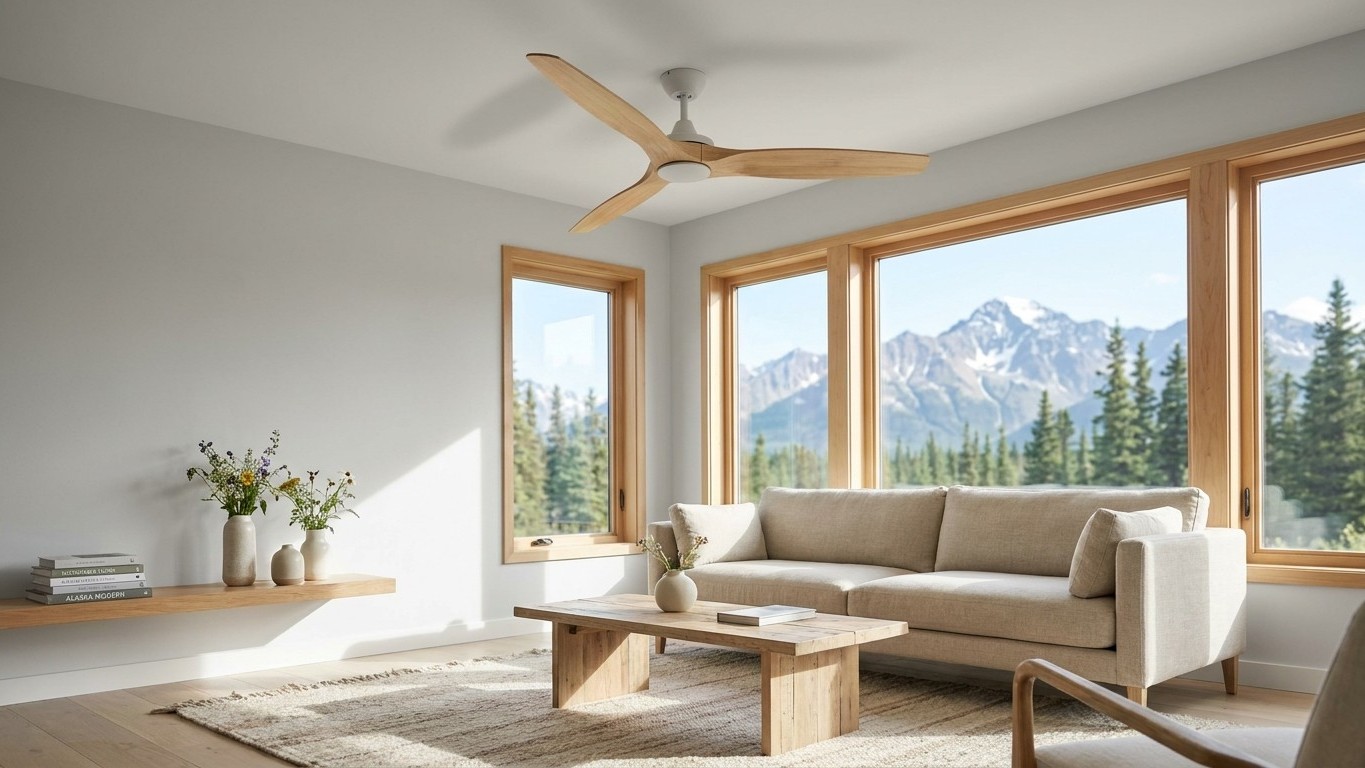

Missouri homes cool almost entirely with air conditioning, and the vast majority run a central system. 83% of homes use a central air-conditioning unit, while 95% use some form of air conditioning at all. The rest lean on window units, mini-splits, or portables, and ceiling fans back up the mechanical cooling in most houses across the state.
What homes in Missouri actually cool with
The numbers from the U.S. Energy Information Administration’s Residential Energy Consumption Survey draw a clear picture for Missouri. Ninety-five percent of homes use air-conditioning equipment of some kind. Eighty-three percent run a central air-conditioning unit, the kind tied to ductwork and a thermostat on the wall. Nineteen percent use an individual unit instead, or in addition, a ductless mini-split, a window or wall unit, or a portable model rolled in front of a hot room in July.
That gap between 95% and 83% is where the story sits. It’s the share of households leaning on something other than a whole-house system, either as their only cooling or as a supplement in a room the central system doesn’t reach. Compare that to Connecticut, where only 34% of homes have central air despite 90% having some form of air conditioning, and Missouri looks like a state that built its housing stock around ductwork from the start.
Ceiling fans show up in 81% of Missouri homes, which matters more than it sounds. A fan doesn’t lower the air temperature, but it lets a household set the thermostat a few degrees higher and still feel comfortable, since moving air speeds evaporation of sweat off skin. That’s a cheap way to stretch a central system’s effort, and it explains why so many Missouri houses have both a compressor outside and a fan turning overhead.
None of this is a recommendation for what a new homeowner should install. It’s a record of what got built and when. A share this high on central air suggests the housing stock here mostly predates the mini-split boom, or that builders assumed ductwork as standard from the ground up.
How much cooling the year actually asks for
The Kansas City reference station recorded a mean of 32.7 days a year at 90 F or higher over the 1991-2020 normals period. That’s a count of days, not an average temperature and not a statewide figure. It measures how often the air genuinely pushes past the point where a house needs mechanical help, not merely a fan and an open window.
Thirty-two days a summer at or above 90 F is a real load. It’s not Arizona’s stretch of triple digits, but it’s enough that a house without functioning air conditioning would see real discomfort for more than a month’s worth of days spread across June, July, and August. That kind of heat load is exactly the sort of number that tends to push a housing market toward central systems rather than window units, since a central system run day after day for weeks holds up better than a string of portable units cycling in different rooms.
Here’s where Missouri’s numbers actually line up: this is a state where the equipment mix matches the heat load. A meaningful stretch of 90-degree days paired with 83% central air adds up to a straightforward story. The heat is real enough to demand whole-house cooling, and the housing stock delivers it. That’s not true everywhere; a state can post a high day count and still lean on window units if its buildings are older or dominated by rentals where mini-splits went in room by room. Missouri doesn’t show that mismatch.
What the day count doesn’t tell you is how humid those 90-degree stretches feel, which is a separate question with its own figure.
Wet heat or dry heat, and what it changes
Summer in Missouri is wet by the numbers: about 14.1 inches of rain fall across June, July, and August, against 39.3 inches for the full year. June is the wettest of the three months at 5.25 inches, July follows at 4.58, and August, the driest of the summer trio, still brings 4.24 inches. That’s a measure of precipitation, not a humidity reading or dew point, and it says nothing directly about how sticky the air feels on a given afternoon.
What it does tell you, combined with a rough sense of Missouri’s climate, is that summer here isn’t a dry-heat stretch where a swamp cooler could do the job. Wet summers matter to an air conditioner because of what the machine actually does: it doesn’t just lower the temperature of the air passing through it, it also pulls moisture out of that air, condensing it on the cooling coil and draining it away. Removing that moisture takes run time, and that’s the part a lot of homeowners never think about when they size or run a unit.
In a genuinely dry climate, an air conditioner’s job is almost entirely about temperature, and a unit can cool a room fast, shut off, and leave the space comfortable. In a wetter one like Missouri’s summer, a meaningful share of the unit’s work is wringing moisture out of the air, and that only happens while the compressor is running. A unit oversized for its room cools the air fast, satisfies the thermostat, and shuts off before it’s done much drying. The room ends up cold and clammy at once, which feels wrong even though the thermometer says the job’s done.
Given Missouri’s wet-summer pattern, a few practical priorities follow:
- Favor a correctly sized or slightly undersized unit over an oversized one, since longer run times do the moisture-removal work a big compressor skips.
- Run the fan setting on “auto” rather than “on” for central systems, so moisture collected on the coil drains away instead of blowing back into the room between cooling cycles.
- Expect the system to run longer stretches through July and August, and don’t read that as a sign of an undersized or failing unit.
Sizing a room unit, from the published chart
ENERGY STAR publishes a straightforward chart matching room size to the cooling capacity a window or portable unit needs, measured in BTU per hour. It’s built for one room at a time, not a whole house, and Missouri’s numbers make clear why the individual-unit share, that 19% running mini-splits, window units, or portables, is exactly where this chart earns its keep.
| Area to be cooled (square feet) | Capacity needed (BTU per hour) |
|---|---|
| 100 up to 150 | 5,000 |
| 150 up to 250 | 6,000 |
| 250 up to 300 | 7,000 |
| 300 up to 350 | 8,000 |
| 350 up to 400 | 9,000 |
| 400 up to 450 | 10,000 |
| 450 up to 550 | 12,000 |
| 550 up to 700 | 14,000 |
| 700 up to 1,000 | 18,000 |
| 1,000 up to 1,200 | 21,000 |
| 1,200 up to 1,400 | 23,000 |
Read this table as a starting point, not a formula. The jump from one row to the next isn’t a fixed rate per square foot, so there’s no clean way to stretch it past 1,400 square feet or split its numbers into a smaller unit. ENERGY STAR publishes it this way for room air conditioners specifically, and it stops there.
Missouri’s equipment mix is mostly central, at 83%, which means most homes never need this chart at all. A central system gets sized through a load calculation that accounts for the whole house, its insulation, window area, and orientation, not a room-by-room square footage lookup. But for the 19% of Missouri households running a window unit, a mini-split head, or a portable in a room the central system doesn’t reach well, this chart is the right tool. The same warning from the rainfall section applies here with extra force: an oversized room unit is a fault, not a safety margin. It cools fast, cycles off, and never runs long enough to pull the humidity out of a Missouri summer room, leaving it cold on the thermostat and damp everywhere else.
What actually needs looking after here
Missouri’s cooling maintenance priorities follow directly from that 83% central-air share. Most homes here have ductwork, a furnace or air handler, and a compressor outside, which is a different maintenance list than a state running mostly on window units.
ENERGY STAR is direct about the single most important habit: “Inspect, clean, or change air filters once a month in your central air conditioner, furnace, and/or heat pump.” That’s monthly, not seasonally, and it covers all three pieces of equipment together, which matters because a lot of homeowners assume filter care is a furnace-only chore and let the air conditioner’s filter run dirty all summer. The payoff for staying on top of it is real: ENERGY STAR notes that “airflow problems can reduce your system’s efficiency by up to 15 percent,” and a clogged filter is the most common airflow problem there is.
For the households in that 83% running central systems, there’s a second issue worth knowing about, and it’s one a filter change won’t fix. ENERGY STAR states that “in a typical house, however, about 20 to 30 percent of the air that moves through the duct system is lost due to leaks, holes, and poorly connected ducts.” That’s air conditioned at real cost, leaking into an attic or crawlspace before it ever reaches a vent. It’s why a room that never quite cools down isn’t always a broken compressor; sometimes it’s the ductwork between the unit and the room. This caveat doesn’t apply to the roughly one in five Missouri households running only window units or mini-splits, since there’s no duct system to leak in the first place.
A seasonal pass through the cooling system, timed for spring before the first 90-degree stretch hits, covers the basics:
- Check and replace filters on the schedule ENERGY STAR recommends, monthly through the cooling season.
- For central systems, have ductwork checked for obvious leaks or disconnections, especially in an attic or crawlspace.
- Clear debris and vegetation from around the outdoor compressor unit so airflow isn’t restricted.
- For window units and mini-splits, clean or replace the filter and check that the unit sits level so condensate drains properly.
Missouri’s guides on this site for furnaces, heat pumps, and central air walk through each of these systems in more depth, which is the better next stop for anyone troubleshooting a specific system rather than the seasonal overview here.