
Wyoming homes split their cooling between two different worlds. Seventy-one percent of households run some kind of air-conditioning equipment, but only 40 percent of them have a central system. The remaining 23 percent get by on individual units, window, wall, or ductless mini-split equipment doing the job room by room. That mix, paired with a summer that’s short on both extreme heat and heavy rain, decides what’s worth buying and what’s worth maintaining here.
What homes in Wyoming actually cool with
Start with the gap, because that’s where the real story sits. Seventy-one percent of Wyoming homes report using air-conditioning equipment, and 40 percent run it through a central system. The remaining 23 percent are on individual equipment, a mini-split, a window unit, a wall unit, or a portable. In some states that gap between “has AC” and “has central AC” swallows almost the whole housing stock, Connecticut runs 90 percent AC and only 34 percent central. Wyoming’s numbers are more balanced: central still edges out individual equipment, but not by a wide margin.
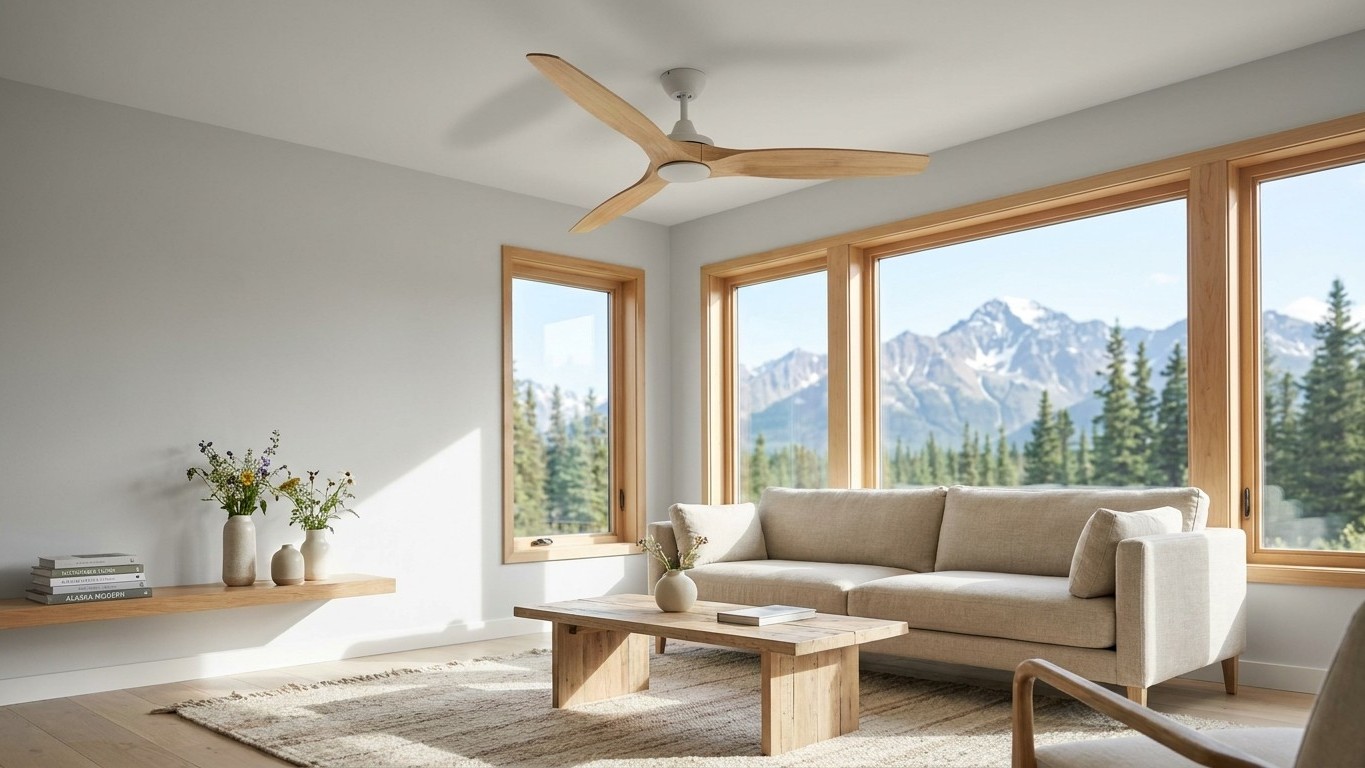
Sixty-three percent of Wyoming homes also use ceiling fans. Fans don’t lower a room’s temperature, they move air across skin and make a given temperature feel more tolerable, which is exactly the kind of low-cost supplement a state with a short, mild cooling season tends to lean on.
None of this is a recommendation for what a Wyoming household should install. A share like 40 percent central reflects what got built and wired decades ago, not a verdict on what performs best today. Central systems tend to show up where a home already had forced-air heating and the ductwork to go with it, since cooling can piggyback on infrastructure already in the walls. Individual units show up where that ductwork never existed, or where a single room needed relief without touching the rest of the house. Neither path is a mistake; they’re two different histories of the same housing stock.
It’s also worth being precise about what these figures don’t say. They don’t say how well any of this equipment performs, how old it is, or how it holds up during the hottest stretch of July. They say what’s installed, full stop. A homeowner shopping for a first air conditioner, or replacing one that’s failed, is working from a blank page regardless of what the state average says their neighbors chose.
How much cooling the year actually asks for
The number that actually measures Wyoming’s heat load is 10.4, the mean number of days a year reaching 90 F or more at the Cheyenne reference station. That’s a count of days at one weather station, not a statewide average and not a temperature reading. It’s the closest thing available to a measure of how often a home here genuinely needs mechanical cooling rather than an open window and a fan.
Ten and a half days a year is a modest heat load by national standards. States with cooling demand baked into daily life for months at a stretch post numbers several times higher. Wyoming’s summer is short, and for most of it, the outdoor air isn’t the problem.
That’s what makes the equipment mix here interesting rather than predictable. A heat load this low could easily pair with an equipment mix dominated by individual units bought as needed, a state where central air never made economic sense because there are only a handful of days a year that demand it. That’s not quite what shows up. Forty percent of homes run central systems, a real plurality, alongside a healthy 23 percent on individual equipment and 63 percent leaning on ceiling fans. The heat load and the equipment mix don’t fully match here, and the reason likely has less to do with cooling than with heating.
Wyoming winters are long and cold enough that forced-air furnace systems, and the ductwork that comes with them, are common in the housing stock for reasons that have nothing to do with summer. Once a house has ducts installed to move heated air, adding central cooling onto the same system is a smaller step than starting from nothing. That’s a plausible explanation for why central cooling holds a meaningful share here even though the actual cooling need, measured in 90-degree days, is modest. The equipment installed answers a housing-stock question as much as a climate question.
For a household deciding what to do next, the 10.4-day figure is the honest starting point. It says the cooling season here is short and the case for oversized, expensive equipment is weak. It doesn’t say central air is wrong, it says the choice probably ought to follow what’s already in the walls rather than what the summer weather alone would suggest.
Wet heat or dry heat, and what it changes
Summer rain in Wyoming totals about 5.8 inches across June, July, and August, out of roughly 15.4 inches for the full year. June runs the wettest of the three months at 2.16 inches, July close behind at 2.11, and August tapers off to the driest month of summer at 1.52 inches. Read plainly, that’s a dry summer relative to the yearly total, most of the state’s precipitation doesn’t fall during the months an air conditioner is actually running.
That figure measures rainfall, not humidity, and one can’t be converted into the other without separate data this page doesn’t have. What the rainfall number does support is a general read on how wet or dry the growing season feels, and by extension, roughly how much moisture an air conditioner has to contend with pulling out of the air, since indoor humidity in a state with dry, low-rainfall summers tends to run lower than in a state where summer rain is heavy and frequent.
An air conditioner does two jobs at once: it lowers the air temperature and it pulls moisture out of the air. The second job takes run time, since moisture only condenses out of the air stream if the unit stays on long enough for air to pass repeatedly over a cold coil. In a genuinely wet summer, a large share of a unit’s workload is that drying process, and a unit sized to blast the temperature down fast will shut off before it’s removed much moisture at all, leaving a room cold but clammy. In a drier summer like Wyoming’s, that failure mode matters less, since there’s less moisture to begin with, and the unit’s job leans much more heavily toward temperature alone.
That distinction has practical consequences for this climate specifically:
- Sizing: match the unit to the room’s square footage rather than rounding up “to be safe.” There’s less humidity load to justify extra capacity, so oversizing here buys nothing but short, wasteful cycles.
- Fan setting: an auto fan setting, which stops when the compressor stops, works fine in a dry summer since there’s little standing moisture left to actively pull out between cycles.
- Run time: short, efficient cooling cycles are appropriate given the low humidity load; there’s little reason to force longer runtimes purely for drying, unlike in a wetter climate.
Sizing a room unit, from the published chart
ENERGY STAR publishes a room-by-room chart for sizing an individual air conditioner, matching square footage to cooling capacity in BTUs per hour. It’s reproduced below exactly as published, with no rows added and no interpolation between the listed steps.
| Area to be cooled (square feet) | Capacity needed (BTU per hour) |
|---|---|
| 100 up to 150 | 5,000 |
| 150 up to 250 | 6,000 |
| 250 up to 300 | 7,000 |
| 300 up to 350 | 8,000 |
| 350 up to 400 | 9,000 |
| 400 up to 450 | 10,000 |
| 450 up to 550 | 12,000 |
| 550 up to 700 | 14,000 |
| 700 up to 1,000 | 18,000 |
| 1,000 up to 1,200 | 21,000 |
| 1,200 up to 1,400 | 23,000 |
This chart is a starting point for a single room unit, published by ENERGY STAR, and nothing more. It doesn’t scale to a whole house, and it doesn’t substitute for sizing a central system, which requires an actual load calculation that accounts for insulation, window area, orientation, and ductwork rather than square footage alone. That distinction matters in Wyoming specifically, since 40 percent of homes here already run central systems where this table simply doesn’t apply.
Where the chart earns its keep is the 23 percent of Wyoming homes running individual equipment, plus anyone adding a unit to a single bedroom, den, or sunroom that a central system doesn’t reach well. An oversized unit here isn’t a safety margin, it’s a fault: it drops the temperature fast, shuts off, and never runs long enough to do the moisture-removal half of its job, leaving the room cold on the thermostat and clammy in the air. Picking the row that matches the actual square footage, rather than rounding up, is the whole trick.
What actually needs looking after here
With central systems covering 40 percent of Wyoming homes and individual units another 23 percent, maintenance here splits along the same line as the equipment itself, and it’s worth being upfront about which advice applies to which house.
For a home on central air, ENERGY STAR’s caution on ductwork applies directly: “In a typical house, however, about 20 to 30 percent of the air that moves through the duct system is lost due to leaks, holes, and poorly connected ducts.” That’s air paid for and never delivered. A house running window or wall units instead has no ducts to lose air through, so this caution belongs to the central-air share of Wyoming’s housing stock, not to all of it.
Two other pieces of ENERGY STAR guidance apply regardless of which equipment is installed. On filters: “Inspect, clean, or change air filters once a month in your central air conditioner, furnace, and/or heat pump.” That’s a monthly task, not a seasonal one, and it covers all three systems together, a detail easy to miss for anyone assuming filter care is only a furnace chore. On why a clean filter matters: “Airflow problems can reduce your system’s efficiency by up to 15 percent.” A system that seems to be running fine can still be quietly underperforming, and the filter is the cheapest fix available for it.
A seasonal pass, ahead of Wyoming’s short cooling window, comes down to a short list:
- Check or replace filters monthly through the cooling season, on any central system, furnace, or heat pump in the house.
- For central air, have ductwork inspected periodically for leaks and loose connections, given how much conditioned air a typical system can lose before it ever reaches a room.
- For window, wall, or mini-split units, clean or replace the unit’s own filter and clear any debris from the outdoor or exterior component before the first hot stretch.
- Confirm the equipment installed matches the room or house it’s cooling, using the ENERGY STAR chart for a single room and a proper load calculation for anything central.
For equipment-specific detail, the guides on this site covering central air conditioning, ductless mini-splits, and window units each go deeper than a single seasonal checklist can.