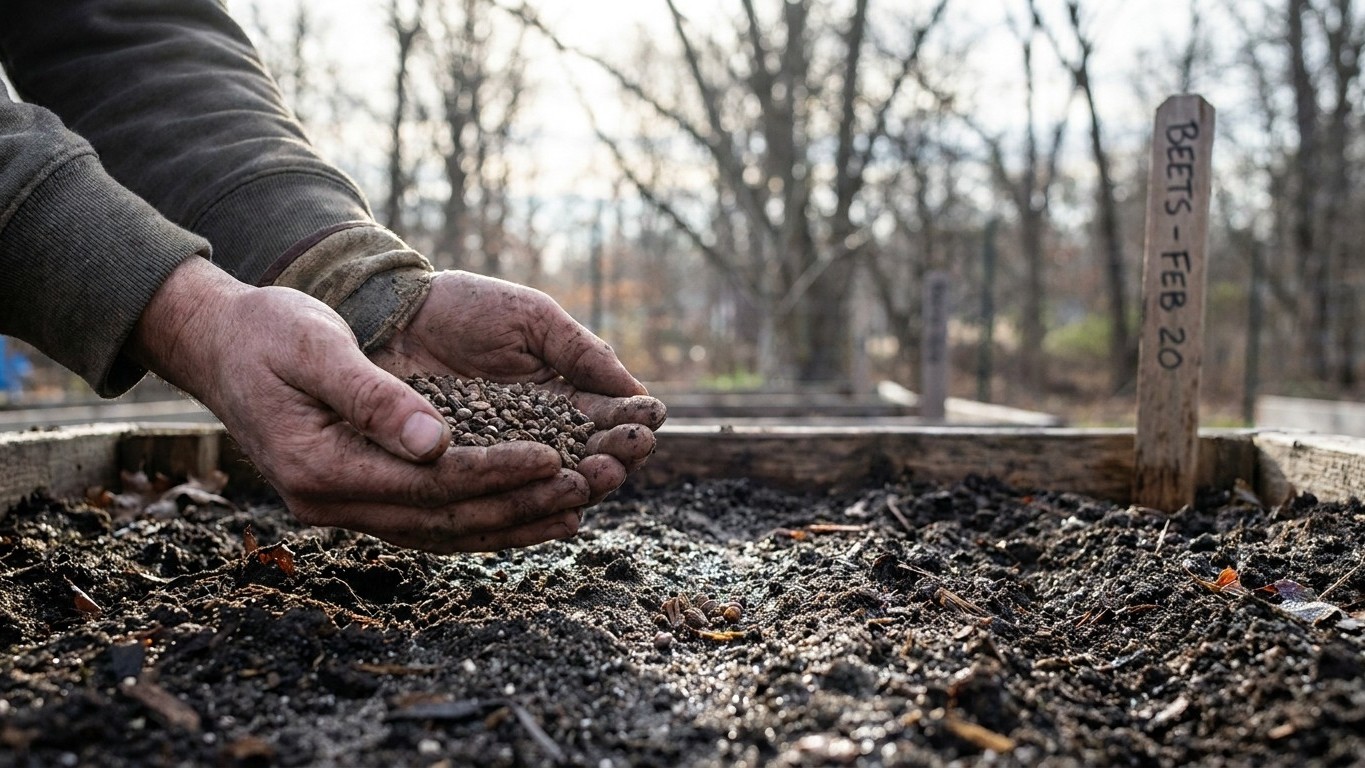

Sow beet seed directly into Missouri ground about two to three weeks before the last spring frost, which falls between April 6 and April 20 across most of the state, according to NOAA’s 1991-2020 climate normals. That puts the practical seeding window somewhere between mid-March and the first days of April, earlier south of the river, later on cold, high ground. The exact day depends on your soil, not the calendar.
The short answer
The soil the USDA lists as representative of Missouri is the Menfro series, an Alfisol formed under hardwood forest. It’s a silt loam through and through: 4 percent sand, 19 percent clay, 77 percent silt in the surface horizon, with a pH around 6.2 and organic matter close to 2.0 percent. It drains well. That’s the state’s official reference point, drawn from 319 mapped components in USDA’s soil database, and it’s worth remembering going in: Missouri holds hundreds of distinct soil series, from river-bottom silt to rocky Ozark hillside to whatever a builder graded flat and trucked in fill for. Menfro tells you what the region’s ground tends to do. It doesn’t tell you what your raised bed does.
What matters for beets is the mismatch between that soil and what the crop actually wants. Utah State University Extension is direct about it: beets prefer deep, sandy, well-drained ground rich in organic matter. Menfro is the opposite of sandy. A soil that’s 77 percent silt compacts easily and crusts over after a hard rain, which is a real problem for a seed as small and slow-germinating as beet seed. The well-drained part of Menfro’s profile helps offset that tendency, but it doesn’t erase it. Working an inch of composted organic matter into the top of the bed, and no more than that per 100 square feet, per Utah State’s guidance, loosens silt loam enough for beet roots to push through without overloading the bed with nutrients it doesn’t need.
The pH sits at 6.2, slightly on the acid side, which lands within the range beets tolerate without amendment for most gardens. Organic matter near 2 percent is middling, not rich, another reason the modest compost addition matters more on Menfro-type ground than it would on a naturally humus-heavy soil.
On heat, there’s no published count here of exactly how many days a typical Missouri summer spends above 90 degrees, so that specific figure isn’t something to guess at. What is documented is the beet’s own breaking point: Utah State puts the threshold at 85 degrees combined with water stress, the combination that turns a root woody rather than tender. That’s the number to plan a sowing date around, not a regional heat tally pulled from memory.
The six weeks that decide it here
Sowing two to three weeks ahead of a last frost that lands between April 6 and April 20 means the first six weeks after seeding, the stretch that matters most for beets, plays out somewhere between mid-March and mid-May depending on where in the state you garden. That’s a known slice of the Missouri calendar: a transition period when the ground is still shaking off winter cold and hasn’t settled into a steady warm pattern yet, and when rainfall tends to swing rather than hold steady, a wet week followed by a dry, windy one, back and forth.
That swing is exactly what makes this window risky for beets. Water stress during the first six weeks after seeding is what triggers premature flowering, known as bolting, according to Utah State’s guidance, and a beet plant that bolts early never puts real size into its root. The danger isn’t heat this early in the season; it’s a bed that dries out and cracks while the seedling is still establishing. A cold, wet March followed by a sudden dry snap in April, a pattern Missouri spring produces often enough, is the kind of stretch that catches a beet bed off guard if nobody’s watching the soil moisture.
Location shifts the calendar without shifting the risk. The Kansas City airport station runs its last-frost date a few days later than downtown, and southern Missouri sees a milder, earlier spring than the northern part of the state. So a gardener near the Bootheel might be seeding in mid-March with six vulnerable weeks running through late April, while someone on higher ground further north is seeding closer to April and running that same six-week window into May. The date moves. The rule doesn’t: whatever six weeks follow your sowing date, keep the bed from drying to the point of cracking, and don’t wait for visible wilting to water, since bolting is triggered well before the plant looks stressed.
What goes wrong here
- Crusting after early rain. Menfro’s silt-heavy surface seals over when a hard spring rain hits bare, unamended ground, and beet seedlings, already slow to emerge, can’t break through a crusted cap. Loosen the top few inches with compost before sowing, cap it at 1 inch per 100 square feet, and water newly sown rows gently rather than with a heavy stream that packs the surface down further.
- Bolting from an early dry snap. A Missouri spring that turns dry for a week or two right after sowing pushes beets into premature flowering before the root has any size. Check soil moisture by hand in the first six weeks rather than by eye, and water on a schedule through any dry stretch instead of waiting for the plant to show stress.
- Woody roots from a late sowing. Beets sown too close to summer run into soil temperatures past 85 degrees while still developing, and combined with any water stress that produces the tough, fibrous root nobody wants on the table. Count backward from the hottest part of the local summer and get seed in early enough that the root matures before that heat arrives, remembering the 60 to 80 days it takes beets to mature run from the day of seeding, not from a transplant date.
- Over-amending an already loamy soil. It’s tempting to dump extra compost into Menfro ground thinking more organic matter always helps. Utah State’s guidance caps it at 1 inch per 100 square feet for good reason: beets don’t need heavy feeding, and pushing past that amount doesn’t fix the silt problem, it just adds a new imbalance.
- Assuming your yard matches the state soil. Menfro is the USDA’s representative series for Missouri, not a description of any one garden. River-bottom ground, rocky hillside plots, and anything a house was built on can differ completely from that profile. A basic soil test is the only way to know your bed’s actual texture, pH, and organic matter before deciding how much to amend.
Common questions
Can I sow beets in Missouri in fall as well as spring?
Beets can go into a fall planting, but a specific fall sowing date for Missouri isn’t published in the frost data used on this page, which covers spring freeze probabilities only. The safest approach is to count backward from your local first fall frost by the 60 to 80 days beets need to mature from seeding, giving the root time to size up before cold shuts the season down.
How long do beets take to mature once I sow them?
Beets typically need 60 to 80 days from the day the seed goes into the ground, not from a transplant, since beets are grown from direct-sown seed rather than started indoors and moved outside. That window is what should drive both your spring sowing date and any fall planting decision.
Does variety choice matter more than timing in Missouri?
Timing and soil management do more of the work here than variety selection. The available extension guidance on beet varieties doesn’t attach specific season, color, or use data to any named type, so there’s no documented reason to favor one variety over another for Missouri’s climate specifically. Getting the sowing window and water management right matters more than which seed packet you pick.
Do I need to amend Menfro-type soil before sowing beets?
Yes, in most cases. Menfro’s silt loam texture runs heavier and more compaction-prone than the sandy, well-drained ground beets prefer, so working in composted organic matter, capped at 1 inch per 100 square feet per Utah State University Extension, helps loosen the bed enough for beet roots to develop properly. A soil test on your own ground will confirm whether your ground actually matches that Menfro profile before you amend.