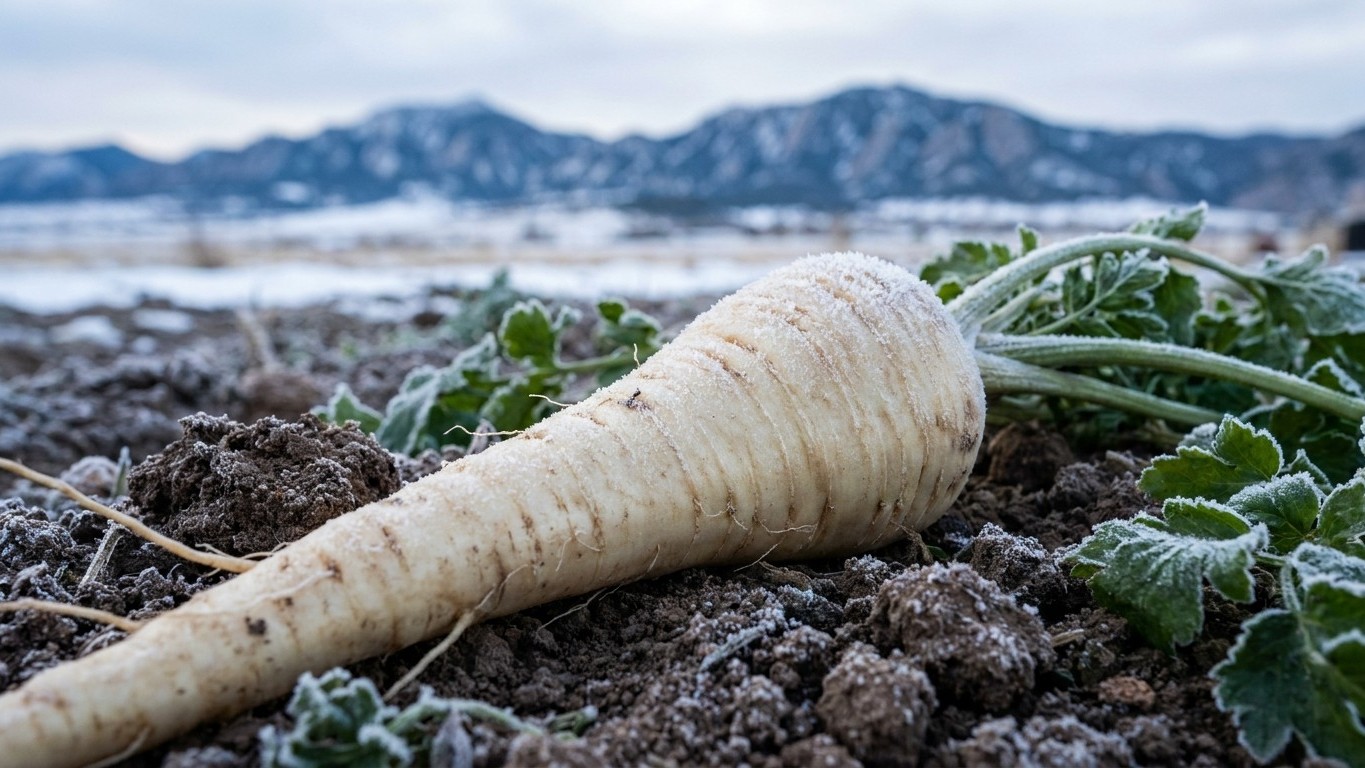

Missouri doesn’t have a parsnip specialist on record. Checking the pests University of Missouri Extension documents statewide, only two of them, Japanese beetle and spider mites, have host ranges wide enough to occasionally reach parsnip foliage. Everything else on that list belongs to squash, tomatoes, turf, or backyard shrubs, not a carrot-family root crop. What actually shows up, and when, depends less on the insect and more on Missouri’s short frost-free window.
Which pests attack parsnip in Missouri
University of Missouri Extension / MU IPM documents ten pests across Missouri gardens and landscapes: bagworms, brown marmorated stink bug, cucumber beetles, hunting billbug, Japanese beetle (Popillia japonica), spider mites, squash bug (Anasa tristis), squash vine borer (Melittia cucurbitae), tobacco hornworm, and tomato hornworm. That’s the full documented list for this territory, and it doesn’t grow just because a garden also grows parsnip.
Most of it can be crossed off right away. Bagworms feed on arborvitae, juniper, and other woody plants, so a parsnip bed gives them nothing to chew. Hunting billbug lives in turfgrass, feeding on grass crowns and roots, not a vegetable row. Cucumber beetles, squash bug, and squash vine borer are all built around cucurbits, cucumbers, squash, melons, and none of them wander over to a root crop with no resemblance to a vine. Tobacco hornworm and tomato hornworm stay on nightshades: tomato, pepper, potato, tobacco. A pest that only bores into a squash stem or strips a tomato leaf has no reason to touch a carrot-family taproot. Brown marmorated stink bug has a wide diet, but it targets fruiting structures, tree fruit, tomatoes, peppers, not the foliage of a root vegetable, so it doesn’t belong on this list either.
That leaves two. Japanese beetle adults feed on foliage from more than 300 plant species, broad enough that parsnip tops can get skeletonized along with everything else in the yard during a heavy beetle year. Spider mites go even wider: they’re generalist sap feeders that show up on almost anything under enough heat and dryness, including the ferny foliage of a carrot-family crop. Neither one is a parsnip specialist. Both are opportunists that happen to have a diet broad enough to include it.
This is a short list, and it stays short. University of Missouri Extension documents these two as the only plausible foliage feeders on parsnip in this state; nothing else on the statewide pest list has a legitimate reason to be there.
When each one shows up, and what it does first
Parsnip is sown directly in the row, not transplanted, roughly two to three weeks before the last spring frost, which falls between April 6 and April 20 in the Kansas City reference area. Seed is slow: germination takes 14 to 21 days, and gardeners who don’t expect that often assume the seed failed and re-till bare soil that was actually just working through it. Parsnip needs 100 to 120 days from seeding, not from transplanting, so any feeding pressure that thins young foliage in the first six weeks costs the root more recovery time than it would cost a faster-growing crop.
Once true leaves are up, the plant enters the stretch where generalist feeders become relevant. Japanese beetle adults show up during the hottest, most humid run of the growing season, and the first sign is rarely the beetle itself. It’s the leaf: ragged holes between the veins, leaving a lacy skeleton where solid green tissue used to be, usually starting on the uppermost leaflets and working down as beetles cluster together to feed.
Spider mites arrive on a different trigger entirely, heat combined with dryness rather than a calendar date. The first sign is fine yellow stippling on the top surface of the leaf, almost like the foliage has been dusted, followed by a bronze or gray cast as feeding continues. Fine webbing on the underside of the leaf, visible if you turn one over and look closely, confirms mites rather than something else. Both problems tend to worsen through the driest weeks of summer and ease once the plant reaches the cooler stretch heading into the October 18 to October 29 fall frost window, the same stretch that eventually sweetens the root.
Telling the damage apart from everything else
Not every rough-looking parsnip leaf or misshapen root is a pest. A forked root has two separate causes here, and they are not the same problem: heavy or stony ground that splits the taproot as it grows around an obstruction, and overwatering that encourages secondary roots to branch off instead of one clean taproot pushing down. Neither one leaves chewed foliage or webbing behind, which is the tell that points away from an insect entirely.
| Symptom | Likely cause | What distinguishes it |
|---|---|---|
| Ragged holes, lacy skeleton pattern on leaves | Japanese beetle feeding | Clusters of beetles visible on the foliage itself, usually the top leaves first |
| Yellow stippling, bronze cast, fine webbing underneath | Spider mites | Webbing on the leaf underside, worse in hot, dry stretches |
| Forked or split root | Heavy/stony soil, or overwatering | Check soil texture near the root and watering frequency separately; they don’t share a fix |
| Bitter, starchy root at harvest | No frost exposure yet | Sweetness comes from several weeks of frosty weather after harvest maturity, not from the plant’s cold hardiness |
| Yellow or spotted leaves, no insects present | Fungal leaf issue or nutrient stress | No feeding damage or webbing points away from the two pests above |
None of this replaces a look from someone trained to see it. If foliage damage doesn’t match either pattern above, or a root problem doesn’t fit heavy soil or overwatering, that’s a case for the county extension office rather than a guess.
What actually works here, and what is a waste of time
Timing beats treatment on a crop with this short a foliage-feeding window. A floating row cover set in place at sowing, before the 14 to 21 days of germination even finish, blocks a beetle problem the bed never had time to develop. Because parsnip doesn’t need pollinators to produce the root (that only matters if seed is being saved), the cover can stay on for most of the season without costing the harvest anything. Handpicking works too, knocking Japanese beetles into a container in the cooler part of the morning when they’re sluggish, and it scales fine for a home garden row that’s nowhere near field-size.
Spider mites respond better to habit changes than to any spray. Consistent watering through the hottest stretch removes the drought stress that triggers outbreaks in the first place, and a firm spray of water on the underside of leaves physically knocks mites and webbing off the plant. Letting the soil dry out repeatedly during the growing season is the single habit most likely to bring mites back.
What wastes time: treating a forked or split root with anything sprayed on foliage does nothing, because the cause sits in the soil, not on the plant. And broad general treatments aimed at mites often backfire, since mites are arachnids rather than insects and repeated applications can knock out the small predators that would otherwise keep mite numbers down on their own. Anything beyond a cover and consistent watering is a question for University of Missouri Extension, which knows what’s actually labeled for use in this state.
Where to check this for your own county
University of Missouri Extension documents this pest list at the state level, and a county office is where it turns into something specific to one garden. A pest list documented for the whole state says nothing about what’s active in one county’s soil this season. Missouri’s frost dates alone shift enough to matter: the Kansas City reference station runs about five days later in spring than downtown, and southern Missouri is milder still, which changes when a cover goes on, when seed goes in the ground, and how long the foliage-feeding window stays open.
A county extension agent can confirm whether beetle or mite pressure has actually been reported nearby this season, something a statewide list can’t do. That’s a five-minute call, and it beats guessing from a photo search or assuming every ragged leaf is the same problem a neighbor had three counties over.
Common questions
Does parsnip attract more pests than carrots in Missouri?
University of Missouri Extension’s documented pest list doesn’t single out either crop. The same two generalists, Japanese beetle and spider mites, are the ones broad enough in diet to reach both.
Will a row cover left on all season hurt the root?
No. Parsnip doesn’t need insect pollination to form the taproot, so a cover can stay in place through most of the growing season without affecting the harvest.
Why does my parsnip taste bland even with no pest damage at all?
That’s not a pest issue. The root needs several weeks of frosty weather after it reaches maturity to convert stored starch into sugar; a mild stretch with no real frost leaves it starchy no matter how clean the foliage looked all season.
Is a forked root a sign of insect damage underground?
Not based on what’s documented here. Forking traces to heavy or stony soil, or to overwatering, neither of which involves the pests on this state’s list. Check soil texture and watering separately before assuming an insect is involved.