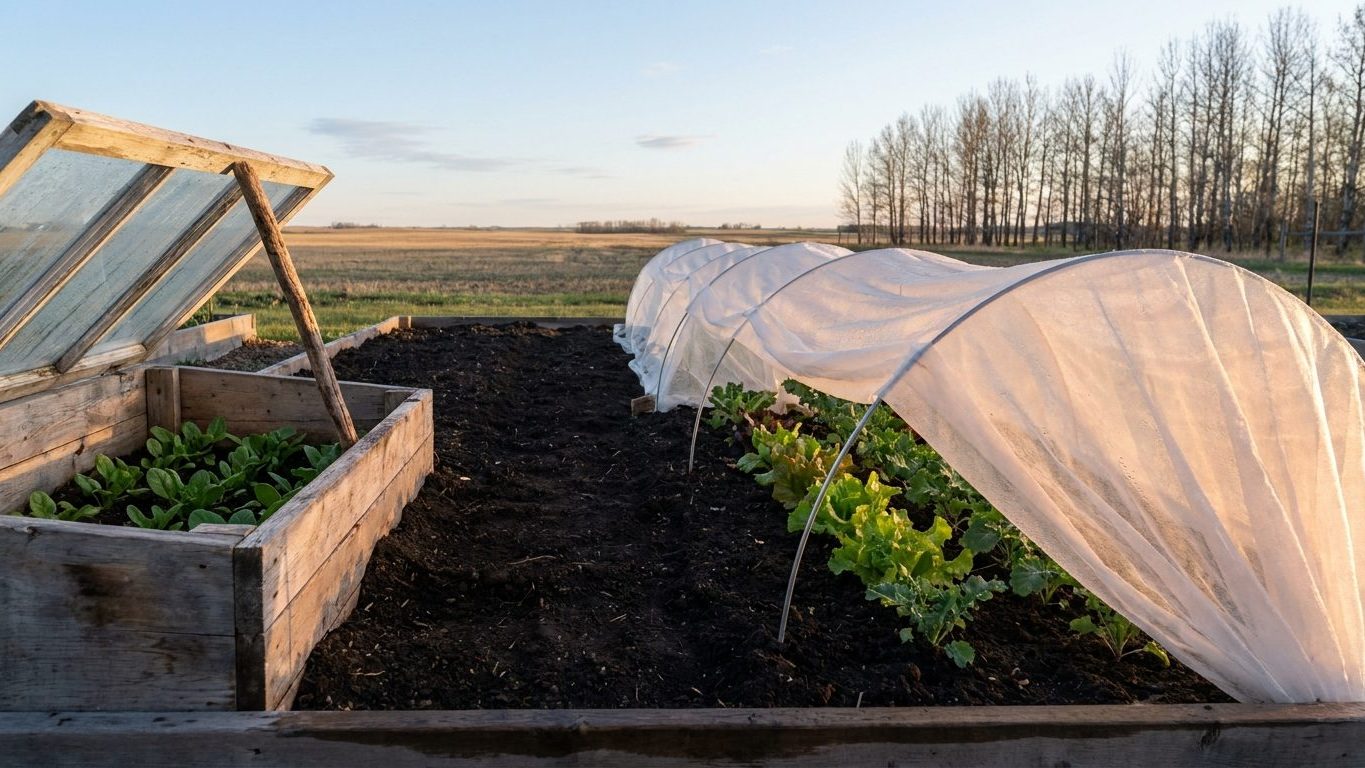

Lightweight row cover over wire hoops is the best all-round season extender for most Missouri gardens. A cold frame carries hardy greens through winter, and an unheated high tunnel pays off for anyone who wants tomatoes earlier and salad in January. Each one gains a few weeks at the edges of the season. None of them turns a Missouri winter into a growing season.
The short answer for Missouri
Start with the frost window, because it tells you how much room covers have to work. At Kansas City International (the reference station), the dates when the chance of a 32°F freeze sits between 30 and 70 percent run from April 6 to April 20 in spring. In fall, the same band runs from October 18 to October 29. Those are freeze probabilities, so a freeze after April 20 is less likely but still possible. The station sits well north of the city. Downtown runs about five days earlier in spring, and southern Missouri is milder still.
Coldest-month numbers matter just as much. The mean daily minimum in the coldest month is 19.5°F, so plenty of January nights fall below that. A single layer of row cover adds only modest protection. That is enough for a light freeze in early April or late October. It is not enough to protect a tomato plant in January.
Which season extender works best in spring?
For the spring edge, low tunnels and row covers do the most for the least money. Lay spun-fabric cover over hoops in late March and you can set out cool-season crops such as lettuce, spinach, kale, and broccoli transplants ahead of the open-ground schedule. Clear plastic tunnels warm up faster than fabric. They need venting on sunny days or the plants cook. For tomatoes and peppers, water-filled wraps or a cloche around each plant give you a few early weeks. Black plastic mulch warms the soil for warmth-loving crops.
Which season extender works best for fall and winter?
In fall, the same row cover that started the spring crop protects the tail end of the summer garden through the first light freezes. Past that, cold frames and high tunnels take over. A cold frame is a bottomless box with a clear lid, set over spinach, lettuce, mâche, or scallions. An unheated high tunnel does the same job on a larger scale, and a row cover draped inside it adds a second layer on the coldest nights. Hardy greens hold their leaves through freezing weather under this kind of protection. They grow slowly in midwinter, so think of it as harvesting what you planted in fall, not growing new crops.
| Extender | Best use in Missouri | Main risk |
|---|---|---|
| Floating row cover | Light freezes in spring and fall, insect screening | Wind lifts it if edges are not pinned |
| Low tunnel (hoops plus plastic) | Early cool-season crops, fall greens | Overheating on sunny days |
| Cold frame | Winter greens, hardening off seedlings | Needs opening on mild days |
| High tunnel | Early tomatoes, winter greens at larger scale | Wet snow and wind damage |
| Black plastic mulch | Warming soil for squash, melons, sweet potatoes | Dry soil if drip water is skipped |
More on the full range of options is in Extending the Growing Season in Missouri.
What will not work here
Overwintering tender crops under a single cover fails. With a coldest-month mean minimum of 19.5°F, lettuce under row cover may hold and tomatoes will not. Peppers, basil, and beans die at the first hard freeze whatever you drape over them. The crops that survive winter here are the ones that tolerate freezing on their own: spinach, kale, collards, mâche, carrots, and scallions. The cover just shaves the worst edges off the weather.
Sealed plastic on a sunny day is the next failure, and it happens often because Missouri weather swings hard in spring and fall. A cold March morning can turn into a warm afternoon fast. Seedlings under closed clear plastic overheat in a few hours, and humid air under the plastic invites disease. Vent tunnels on mornings that promise sun, and close them before the evening chill sets in.
Another loser is using covers to ripen warm-season crops after the frost window. The October band runs from the 18th to the 29th, and by then days are short at 39.30 degrees north (the latitude of the Kansas City reference station). A row cover can hold off the first frost, but it cannot make up for weak light and cool nights. Green tomatoes that have not colored by the first hard freeze are better picked and ripened indoors than nursed under fabric for another month.
Late fall sowing under cover fails too. Direct-sown crops like spinach, lettuce, radishes, and carrots count their packet days from sowing, so work backward from the October window. Then add extra time, because growth slows as days shorten. A sowing in late October under a tunnel will sit as tiny seedlings all winter and give you nothing until spring. Fall crops need to be close to full size by the time the days get short, which for most gardeners means sowing in late summer. Warm soil makes lettuce germination unreliable then, so shade the seed row or sow in the cooler evening hours.
Finally, light hoops and thin plastic do not last through a Missouri storm season. Spring winds can lift anything that is not pinned or buried at the edges. Wet snow and ice storms can crush a tunnel built from thin conduit. Anchor the ends, brush heavy snow off, and use sturdier hoops if the tunnel is staying up all winter.
What changes across Missouri
No single answer covers the state. USDA hardiness zones here run from 5b to 7b on the 2023 USDA Plant Hardiness Zone Map, which is built on the average annual extreme minimum temperature. That is a wide spread, from the northern tier near the Iowa line to the Bootheel and the southern border. Frost dates move with it.
Gardeners in the north should expect later spring starts and an earlier fall. Covers go on sooner in October there, and a heavier fabric or a double layer earns its keep. The hardiest winter crops, like spinach and kale, give the safest results, and a cold frame or high tunnel makes the most difference. Gardeners in the south can start sooner in spring and get more from a simple row cover. They also hit summer heat earlier, so plastic tunnels need venting or removal sooner, and cool-season crops bolt faster.
Hilly ground adds a second layer of variation. Cold air drains downhill and pools in low spots and hollows, so a garden at the bottom of a slope can frost while one up the hill stays clear. Open fields and exposed ridgetops cool fast on clear nights. Gardens near houses, walls, or stands of trees run a little warmer.
A hardiness zone tells you which perennials and overwintered crops survive the cold. It does not predict your last frost date. To find your own zone, use the USDA Plant Hardiness Zone Map and look up your ZIP code.
Where to check this for your own county
The state office to start with is University of Missouri Extension. It runs county offices, and those are where the useful local detail sits. Look for the planting calendar written for your county or region. A calendar built from nearby weather records will beat any statewide window, including the one above, because it reflects your own average freeze dates. Extension offices can also tell you which row cover weights and tunnel designs have worked for gardeners near you, and what wind and snow loads to plan for.
Checking this against your own garden
Your own observations beat every date here. Three are worth watching, and none needs an instrument.
- Soil warmth by feel. Push your hand into the bed in early spring. Soil that feels cold and damp after a week of mild weather is a slow spot, and warm-season transplants will sit there doing nothing. A bed that feels noticeably warmer is a good place for your earliest plantings.
- First male flowers on squash. Male blooms open before female ones. If they show up weeks earlier in one corner of the yard, that corner is your warmest microclimate. Take covers off during the day once flowers open, or pollinators cannot reach them.
- First true leaves on seedlings. The first pair of leaves after sprouting are not the true leaves. The next set, the true leaves, show the plant is established and growing. Seedlings that reach this stage under cover days before those in open ground tell you how much extra warmth the cover is giving you.
Keep a note of the dates each year. After two or three seasons, you will know when your own yard warms up, where frost settles first, and when covers need to go on. The guide to When to Cover Your Garden in Missouri covers the timing in more detail.
Common questions
Is row cover or a cold frame better for Missouri gardens?
Row cover is more flexible and cheaper. It protects crops from light freezes and goes over whatever is growing. A cold frame holds heat better on cold nights and is better for winter greens. Many gardeners use both: row cover for spring and fall, and a cold frame for the coldest months.
Can I grow vegetables all winter in Missouri with a hoop house?
Hardy greens will hold and can be harvested through winter in a tunnel or cold frame. Spinach, kale, mâche, and scallions are the usual choices. Growth is slow in midwinter because days are short, so plant in late summer or early fall and harvest as you go.
Do plants under cover need watering?
Yes. Plastic and tunnel covers block rain, so beds can dry out while the surface looks fine. Fabric row cover lets some water through, but check the soil by hand. Water in the morning on a mild day so the foliage can dry before the cold night.
When should covers come off in spring?
Remove or vent them on sunny days once nights stay above freezing, and take them off completely when plants outgrow the hoops or when flowering crops need pollinators. Keep the cover handy until well after the last frost window, because a late freeze can still arrive after April 20 at the reference station.