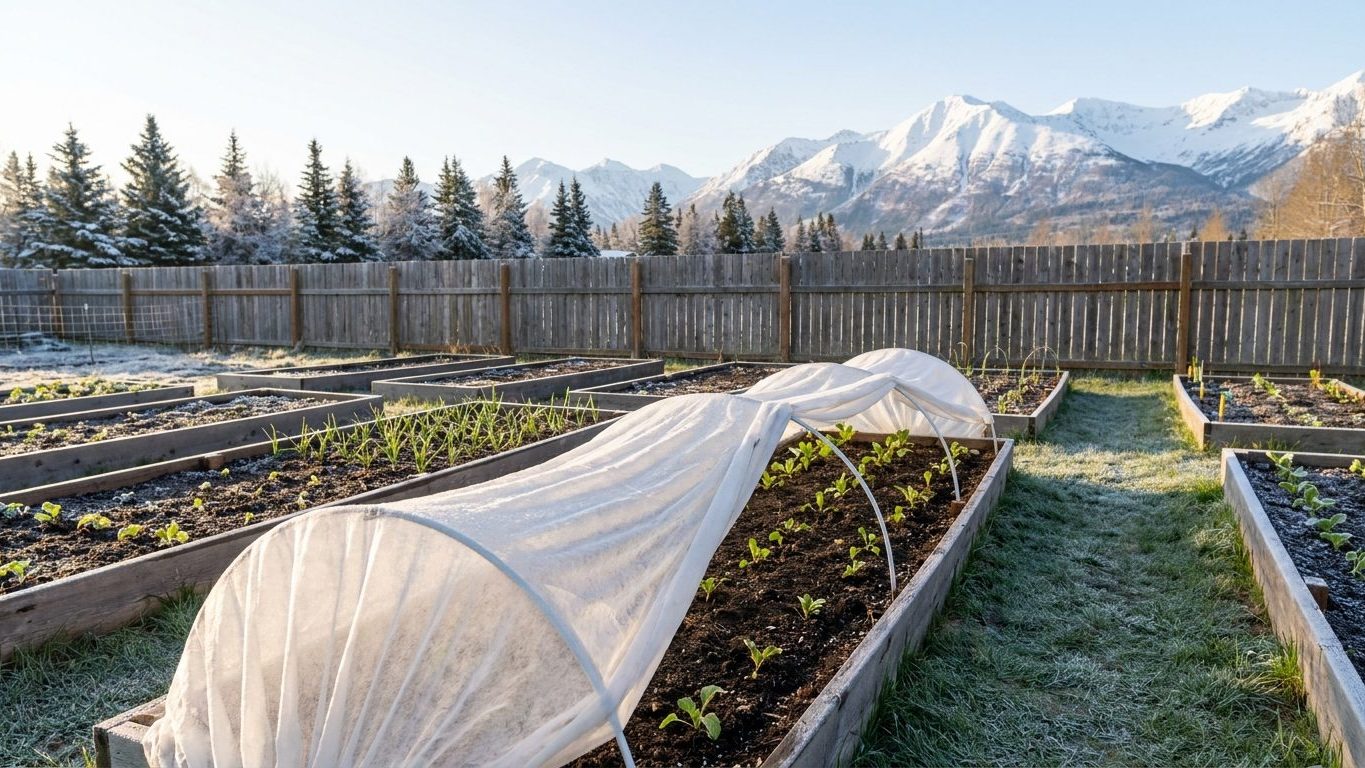

Cover your garden on any night the forecast calls for 32°F or lower. In Missouri that means watching from early April through at least April 20, then again from mid-October on. Those windows come from Kansas City’s frost records, and they shift across the state. The calendar tells you when to have covers ready, and the forecast tells you which night to put them on.
The short answer for Missouri
Around Kansas City, the last spring freeze falls between April 6 and April 20, and the first fall freeze between October 18 and October 29. Tender crops such as tomatoes, peppers, beans and squash need cover on any night inside or near those windows when the forecast dips to freezing. Hardy crops like spinach, lettuce, peas and kale need cover only for hard freezes, and mostly when you want them to grow faster or hold longer.
What do those frost dates actually measure?
They come from the NOAA 1991-2020 Climate Normals for Kansas City International Airport (MCI). Each date marks a probability level for a 32°F freeze, and the 30 to 70 percent band is what gives you the two-week spread. Inside that band a freeze is still a live possibility in any given year, and in some years it arrives after the later date.
The station sits well north of the city. Downtown Kansas City runs about five days earlier in spring, and southern Missouri is milder still. A gardener in the southern half should shift the spring window earlier and the fall window later, but should still keep covers within reach.
| Season | Date band at Kansas City (MCI) | What to do |
|---|---|---|
| Last spring freeze | April 6 to April 20 | Keep covers handy for tender transplants; use them on freezing nights |
| First fall freeze | October 18 to October 29 | Pull covers out by mid-October; use them when a freeze is forecast |
When do covers pay off most?
Fall is where covers earn their keep. The first freeze is often light, and a warm spell can follow it. A sheet or row cover over peppers or tomatoes during a cold snap can extend the harvest. In spring the payoff comes from planting a little ahead of the safe date and protecting those plants on the few cold nights that follow. For choosing between fabric, cloches and tunnels, see Which Season Extenders Work in Missouri.
What will not work here
Planting tender crops on April 6 because that is the first date in the band will fail in many years. The band says a freeze is still possible, so the safer move is to wait until you are past April 20, or to plant earlier and stay ready to cover. Missouri springs often swing from warm afternoons to a freezing night within days, and that swing is what catches people.
Why won’t a cover carry warm crops through a Missouri winter?
The mean daily minimum in January, the coldest month at Kansas City, is 19.5°F. An average night that cold is well beyond what a single layer of fabric handles for tomatoes, peppers or cucumbers. A cover traps a little heat that the soil released during the day. It cannot make up a gap of that size. Plan on protecting hardy crops through winter and letting tender ones end with the first hard freeze.
Light is the other limit. At about 39.30 degrees north (the latitude of Kansas City, so check your own if you live far from it), daylight shrinks fast in November and December. Even where a cover keeps leaves from freezing, growth nearly stops because days are short. A cover holds a crop that is already nearly grown. It will not help a late seeding catch up. For fall greens and roots, sow early enough that they are close to full size when the first freeze band arrives.
What goes wrong with covers on sunny spring days?
Clear plastic or a closed low tunnel can overheat plants on a bright afternoon, even when the night before was freezing. Vent or pull covers back on sunny days and close them again before dusk. Fabric laid directly on leaves also conducts cold, so support it with hoops or stakes when a hard freeze is expected. In the open parts of the state, wind can lift unpinned edges overnight, so weigh them down with soil, boards or landscape staples.
Heat stored in water jugs works for a mild frost, but at the colder end of the state it will not hold a plant through a deep freeze.
What changes across Missouri
Missouri spans USDA hardiness zones 5b to 7b, so there is no single answer. The USDA system rests on one variable, the average annual extreme minimum temperature, and the state’s spread from north to south is wide. Zone 5b conditions in the far north sit far from zone 7b in the Bootheel, and the best planting and covering dates differ accordingly.
The Kansas City dates used above reflect one spot in the northwest. A gardener in northern Missouri should expect spring frost to linger a little longer and the first fall freeze to arrive a little sooner, which shortens the season on both ends. That reader should keep covers out longer in April and set them out earlier in October. In the southern half of the state, the reverse holds: spring warms earlier, fall holds on longer, and the cover window narrows.
Elevation and terrain shift things too. In the Ozarks, cold air drains into low hollows and pools there on still, clear nights. A garden at the bottom of a slope can freeze while one higher up stays above 32°F. Gardens near large buildings, pavement or south-facing walls tend to run warmer.
Latitude matters as well. The 39.30 degrees north figure belongs to Kansas City. A gardener near the Iowa line or the Arkansas border sits a few degrees away from it, and should treat the dates here as a starting point.
No one should guess their own zone. The USDA Plant Hardiness Zone Map lets you enter a ZIP code and see your zone directly. For a broader look at methods that fit these conditions, start with Extending the Growing Season in Missouri.
Where to check this for your own county
University of Missouri Extension is the place to confirm your local timing. Its county offices serve every part of the state, and the staff know the local frost patterns, soil types and common problems. Search the site for your county, then look for two things: a planting calendar that fits your area, and results from vegetable varieties that have been trialled near you.
A local calendar tells you the sowing and transplant dates that suit your county. Variety trials show which tomatoes, peppers, greens and brassicas have actually done well in similar soil and weather. If you cannot find either online, call or visit your county extension office. Many also run Master Gardener programs, and those volunteers often know the quirks of local microclimates better than any chart.
A county recommendation beats a statewide one. The dates in this article are built from Kansas City records and give a sound starting point for the northwest, but a county in the Ozarks or the Bootheel may differ. Use the state-level numbers to plan, then adjust to what your county says.
Checking this against your own garden
What you see in your own beds outranks every date here. Three signs cost nothing to watch and tell you a lot about your own microclimate.
- Soil warmth by feel. In spring, push your hand a few inches into the bed in the morning. If it feels cold and damp, tender seedlings will stall even on a frost-free night. A bed that feels warm earlier than your neighbor’s has a head start, perhaps from a south-facing wall or good drainage.
- The first flush of male flowers on squash. Male blooms open before the female ones. If they show up earlier in one corner than another, that corner runs warmer, and it is the better spot for your earliest planting.
- The first true leaves on seedlings. The first pair that appears is the seed leaf. The next pair, the true leaves, shows the plant has settled in. If they come slowly, the bed is cold, shaded or wet. If they come fast, you can move up your dates slightly next year.
Write down what you see and the date. Over time, those notes will tell you more about your garden than any chart, and you can compare them with what your county extension office recommends.
Common questions
Should I cover plants when frost is forecast, or only when it’s below freezing?
Cover when the forecast low is 32°F or lower, and also on clear, still nights when the forecast is a few degrees above that. Frost can form on low ground and open beds before the official temperature reaches freezing.
Is it too early to cover in March?
Not for hardy crops. Spinach, lettuce, peas and kale can go out under cover well before the April 6 to April 20 band. Tender transplants are a different matter, and they should wait or stay protected well past that band.
Do I need to uncover plants during the day?
With breathable row cover, usually not. With clear plastic or a closed tunnel, yes: vent or remove it on sunny days so plants do not overheat, and close it again by late afternoon.
Can covers extend the season past the first fall freeze?
Yes, for a while. Tomatoes and peppers can often be held through the first light freeze, and hardy greens can keep going much longer. The hard freezes of winter are more than a cover can handle for warm-season crops.